

Views: 233 Author: Evercross Bridge Publish Time: 2026-08-25 Origin: Evercross Bridge


Content Menu
● What Is a Steel Truss Bridge?
● What Does a Truss Bridge Look Like?
● How Does a Steel Truss Bridge Carry Loads?
● Main Benefits of Prefabricated Steel Truss Bridges
>> 1. Strong Load Capacity With Efficient Material Use
>> 2. Flexible Span and Configuration Options
>> 3. Faster On-Site Construction
>> 4. Suitable for Difficult and Remote Locations
>> 5. Long-Term Maintainability
● Steel Truss Bridge Types Explained
>> Bailey Bridge and Modular Panel Bridge
>> K-Truss and Other Heavy-Duty Configurations
● How to Select the Right Steel Truss Bridge
● Why Factory Fabrication Matters
>> 1. What is the main advantage of a steel truss bridge?
>> 2. How long can a prefabricated steel truss bridge span?
>> 3. Are Bailey bridges permanent or temporary?
>> 4. How quickly can a modular steel bridge be installed?
>> 5. What information is needed for a steel bridge quotation?
>> 6. What is the difference between a truss bridge and a beam bridge?
>> 7. How can steel truss bridges resist corrosion?
● Request a Steel Truss Bridge Proposal
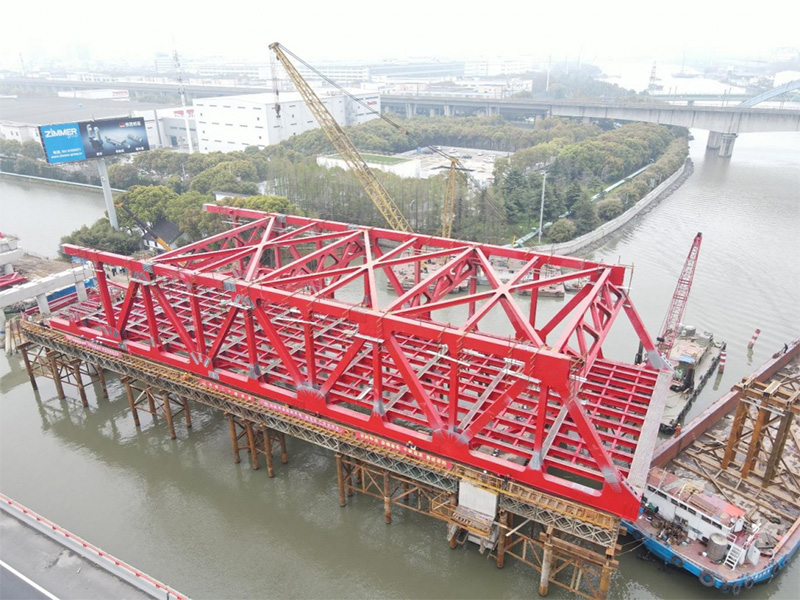
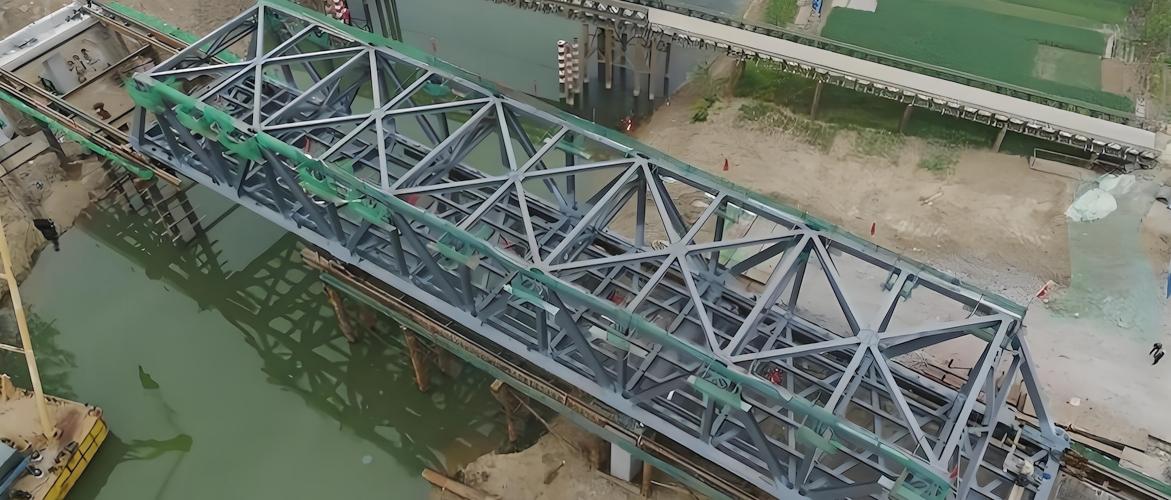
A steel truss bridge is easy to recognize by its repeating triangular framework. Those connected vertical, horizontal, and diagonal steel members distribute loads efficiently across the bridge structure, making truss bridges a proven option for highways, rural access roads, rail crossings, pedestrian routes, industrial facilities, disaster recovery, and temporary emergency access.
For project owners, engineers, and contractors, the real value is not simply the bridge's distinctive appearance. A well-engineered prefabricated steel truss bridge can combine high load capacity, modular transportability, rapid installation, long service life, and adaptable span configurations. At Evercross Bridge, we apply more than 30 years of steel bridge manufacturing experience to deliver complete solutions—from structural design and fabrication through shipping and installation support—for projects in more than 50 countries.
A steel truss bridge is a bridge whose main load-carrying structure is formed from interconnected members arranged primarily in triangles. A triangle is geometrically stable: unlike a four-sided frame, it resists changing shape when force is applied. In bridge engineering, this allows the individual members to transfer force mainly as tension or compression rather than relying only on bending resistance.
The typical components of a steel truss bridge include:
- Top chord: The upper horizontal or near-horizontal member, which commonly resists compression under gravity loading.
- Bottom chord: The lower member, which commonly resists tension.
- Diagonal members: Members that channel shear forces through the truss panels.
- Vertical members: Members that connect upper and lower chords and help support the deck system.
- Floor beams and stringers: Structural elements that transfer vehicle, pedestrian, or railway loads from the deck into the truss.
- Bridge deck: The driving, walking, or rail-supporting surface.
- Bearings and abutments: Components that transfer bridge reactions safely into the foundations and ground.
This structural principle is the reason truss bridges have remained relevant for more than a century. The visual pattern may be familiar, but contemporary steel truss bridges can be engineered with modern steel grades, bolted or welded connections, corrosion-protection systems, modular components, and site-specific loading requirements.
From the side, a truss bridge often looks like a row of repeating triangles. The road deck may sit:
- Between the trusses, with truss walls rising on both sides of the roadway.
- Below the truss, known as a through-truss arrangement.
- Above the truss, known as a deck-truss arrangement.
- Along the lower chords, typical of many modular Bailey bridge and panel-bridge systems.
A through-truss bridge is one of the most recognizable forms. Vehicles pass through the structural frame, while the side trusses rise above deck level. This arrangement is frequently selected when structural depth below the deck is limited or when the bridge must achieve a strong, visually clear load path.
Bridge arrangement | What it looks like | Typical application | Key consideration |
Through truss bridge | Side trusses extend above the road deck | Road, railway, heavy-duty crossings | Requires adequate vertical clearance above the deck |
Deck truss bridge | Truss structure is mainly below the deck | Elevated roads, pedestrian crossings | Requires adequate structural clearance below |
Pony truss bridge | Side trusses rise beside the deck but have no overhead bracing | Shorter road or pedestrian spans | Suitable only where lateral stability and design loads permit |
Bailey/panel bridge | Repetitive standardized steel panels form a modular truss | Emergency, military, rural access, temporary or permanent crossings | Can be transported in pieces and assembled on site |
Modular steel truss bridge | Factory-fabricated truss modules assembled or launched into position | Infrastructure, industrial, remote-area projects | Requires early planning for transport and lifting/launching |
A bridge does not simply "hold weight." It manages a combination of permanent, moving, environmental, and operational forces throughout its service life.
For a road bridge, the structural design may account for:
- Dead load: The self-weight of the steel truss, deck, pavement, railings, utilities, and permanent accessories.
- Live load: Trucks, cars, maintenance vehicles, pedestrians, bicycles, or rail traffic, depending on the project.
- Dynamic effects: Impact, vibration, braking, acceleration, and vehicle movement.
- Wind load: Pressure and suction forces acting on the bridge and vehicles.
- Seismic load: Earthquake-induced forces in applicable regions.
- Hydraulic and environmental exposure: Flood levels, debris impact, scour risk, corrosion, temperature changes, humidity, salt spray, and rainfall.
- Construction-stage load: Forces that occur during launching, lifting, assembly, or temporary support operations.
When a truck travels across a truss bridge deck, its load moves through the deck system and floor beams into the side trusses. The triangular framework transfers those forces toward the bearings, abutments, piers, and foundations. Individual members are designed so that their size, connection details, and bracing arrangement can safely resist the expected force combinations.
This is why bridge selection should never be based on span length alone. A 30-meter bridge carrying pedestrians, a 30-meter bridge carrying overloaded mining trucks, and a 30-meter emergency bridge required after flooding may all need very different structural systems, decks, foundations, corrosion specifications, and installation plans.
The triangular truss geometry is structurally efficient because it organizes members to handle tension and compression. This can reduce unnecessary bending demand and allow engineers to create robust structures for substantial loads.
Steel is particularly suitable for bridge applications because it provides a high strength-to-weight ratio. A lighter superstructure can also reduce demands on foundations and substructures, which may be valuable at river crossings, remote sites, or locations with challenging ground conditions.
A modular steel truss bridge can be designed around the project rather than forced into a single fixed layout. Depending on engineering requirements, designers can adjust:
- Clear roadway width
- Single-lane or two-lane configuration
- Pedestrian or vehicle separation
- Span length and number of spans
- Design vehicle and load rating
- Deck type, including steel, timber, concrete, or composite options
- Sidewalks, guardrails, lighting brackets, and utility supports
- Galvanized, painted, or specialized corrosion-protection systems
This adaptability makes steel truss bridges useful for public infrastructure, construction-site access, agriculture, ports, mining operations, humanitarian access routes, and rural connectivity projects.
For remote or high-disruption locations, the construction method can be as important as the bridge structure. Prefabricated bridge elements and systems are manufactured off-site or near the project site, then transported and assembled, lifted, launched, rolled, or slid into place.
The U.S. Federal Highway Administration notes that prefabricated bridge elements and systems can provide advantages in construction time, safety, environmental impact, constructability, and cost. Off-site fabrication under controlled conditions can also reduce the amount of complex work required in the river, roadway, or active work zone.
For an emergency bridge project, this can mean restoring access more quickly than a fully site-built alternative—provided that the site survey, foundation readiness, transportation route, erection equipment, and installation method are planned early.
A steel truss bridge can be supplied as transportable modules or standardized panels. This approach is especially valuable where the site has limited infrastructure, restricted crane access, seasonal weather constraints, river-crossing challenges, or urgent access needs.
For example, a modular Bailey bridge system can be delivered in manageable components, assembled near the site, and launched across a prepared crossing. The exact method depends on bridge geometry, terrain, lifting capacity, foundation conditions, and local safety requirements.
Steel bridges require proper inspection and maintenance, but their components are accessible and repairable. A project's long-term performance depends on sound engineering, quality fabrication, suitable coating systems, drainage design, inspection access, and timely maintenance.
In coastal, tropical, high-humidity, or industrial environments, corrosion protection should be treated as a design requirement—not a finishing detail. Project teams should define the expected exposure environment before selecting galvanizing, paint systems, duplex coatings, deck details, drainage provisions, and maintenance intervals.
A Bailey bridge is a modular, pre-engineered steel truss bridge system historically developed for rapid deployment. Its repeated panelized structure allows components to be transported, assembled, strengthened with additional panels where required, and installed with methods such as launching.
Modern panel bridges continue to be used for emergency access, temporary detours, remote roads, disaster response, military logistics, and selected permanent applications. Their value lies in standardization, transport efficiency, and adaptable assembly—not in a one-size-fits-all design.
A Warren truss uses a repeating series of equilateral or near-equilateral triangles. It is visually clean and can distribute loads across a regular diagonal pattern. Variations may include vertical members for additional support and practical deck connections.
A Pratt truss typically uses vertical members and diagonals that slope toward the center of the span. Under typical gravity loading, its diagonals commonly work in tension. The configuration has long been used in steel bridge engineering because it provides a clear and efficient structural arrangement.
A Howe truss reverses the diagonal orientation relative to a Pratt truss. Historically common in timber bridges, the arrangement may also be adapted for steel applications depending on load paths, fabrication strategy, and design requirements.
K-truss arrangements use subdivided web members that resemble the letter "K." They can be considered where panel lengths, member forces, or structural depth call for a more refined load distribution. The right configuration should be chosen by a qualified bridge engineer based on span, load, clearance, transport constraints, fabrication efficiency, and local code requirements.
Before requesting a quote, project teams should prepare the following information. This reduces redesign cycles and helps the manufacturer propose a technically sound, commercially realistic solution.
1. Define the bridge use. Is the bridge for pedestrians, cars, trucks, emergency vehicles, mining equipment, rail, or mixed traffic?
2. Confirm the required span and width. Provide the clear span, roadway width, deck elevation, approach geometry, and any required sidewalks or utility corridors.
3. Identify design loads and governing standards. State the required vehicle loading, local design code, seismic zone, wind conditions, and any owner or government specifications.
4. Assess site conditions. Share topographic data, geotechnical information, flood levels, river behavior, foundation concept, and access-road limitations.
5. Choose a construction method early. Consider whether the bridge will be crane-lifted, incrementally launched, assembled in place, or installed by another approved method.
6. Specify durability requirements. Define the project environment: inland, coastal, tropical, desert, industrial, high-altitude, or flood-prone.
7. Plan international delivery. For export projects, verify container limits, oversized-cargo routes, port handling, customs documentation, local installation resources, and spare-parts requirements.
> Expert perspective: In international bridge delivery, "fast installation" starts long before the bridge arrives on site. It starts with a realistic survey, load definition, shipping plan, erection sequence, and clearly assigned responsibilities between the owner, contractor, engineer, and manufacturer.
A steel bridge's reliability is influenced by much more than the final drawing. It depends on material traceability, cutting accuracy, hole alignment, welding procedures, dimensional control, surface preparation, coating quality, trial assembly where appropriate, packaging, and transport protection.
For prefabricated bridge projects, controlled manufacturing can shift a large part of the critical work away from unpredictable field conditions. FHWA guidance describes prefabricated systems as bridge components or larger systems manufactured off-site or near-site to reduce on-site construction time and mobility impacts.
At Evercross Bridge, our approach is built around a complete supply chain:
- Structural bridge design and technical coordination
- Steel bridge fabrication and modular component production
- Quality control and inspection support
- Export packing and international transportation coordination
- Installation guidance and project-specific technical support
With annual production capacity of 100,000 tons and successful delivery experience across more than 200 large government infrastructure projects in Southeast Asia, Africa, and Latin America, Evercross Bridge helps clients move from preliminary requirement to deployable steel bridge solution.
The main advantage is its efficient load distribution. The triangular framework allows the bridge to carry substantial loads while using material strategically. This makes steel truss bridges suitable for road, industrial, emergency, and remote-area applications.
The achievable span depends on the bridge type, design load, roadway width, truss depth, material grade, site conditions, and governing design code. Do not select a bridge based on a standard span chart alone; request an engineered proposal for the actual project conditions.
They can be either. Bailey and panel bridge systems are frequently used for temporary or emergency access, but appropriately engineered, protected, installed, and maintained systems may also serve long-term applications.
Installation time varies significantly by span, bridge weight, foundation readiness, weather, site access, equipment availability, crew experience, and erection method. Prefabrication can reduce on-site work, but it does not eliminate the need for detailed construction planning.
Provide the required span, clear width, design load, bridge usage, site photos, location, local design standard, geotechnical or foundation information if available, corrosion environment, and desired delivery schedule.
A beam bridge primarily resists loads through bending in its main beams or girders. A truss bridge uses a triangulated arrangement of members to distribute force through tension and compression, often making it efficient for longer spans or heavier loads.
Protection may include hot-dip galvanizing, paint systems, duplex coatings, effective drainage design, sealed details where appropriate, routine inspection, and timely maintenance. The correct system depends on the corrosion category and expected service environment.
Whether you need a Bailey bridge for emergency access, a modular steel bridge for a remote road, or a custom heavy-duty truss bridge for government infrastructure, the best solution begins with project-specific engineering.
Contact Evercross Bridge today with your span, width, load requirement, site location, and delivery schedule. Our engineering and manufacturing team can help evaluate the right prefabricated steel bridge configuration, technical specification, transport plan, and installation approach for your project.
1. Areté Structures. "[What Does a Truss Bridge Look Like & What Are the Benefits?]"
2. Federal Highway Administration. "[Accelerated Construction]." FHWA Work Zone Management Program.
3. Federal Highway Administration. "[New FHWA Manual Presents State of the Practice for Accelerated Bridge Construction]."
4. Federal Highway Administration. "[Steel Bridges]." FHWA Office of Bridges and Structures.
5. Federal Highway Administration. "[Accelerated Bridge Construction: Experience in Design, Fabrication, and Erection of Prefabricated Bridge Elements and Systems]." Publication No. FHWA-HIF-12-013.
6. Short Span Steel Bridges. "[Advantages of Steel Truss Bridge Construction]."
7. AASHTO/NSBA Steel Bridge Collaboration. "[Guidelines to Design for Constructability and Fabrication]."


