

Views: 221 Author: Evercross Bridge Publish Time: 2026-07-29 Origin: Evercross Bridge


Content Menu
● Why bridge type matters in real projects
● The main types of pedestrian bridges
>> Suspension pedestrian bridges
>> Modular prefabricated steel footbridges
● Common pedestrian bridge applications
● How to choose the right bridge type
>> 1. Define the crossing purpose
>> 2. Measure the span and site geometry
>> 3. Assess environmental exposure
>> 4. Review installation constraints
>> 5. Consider lifecycle cost, not only initial cost
● Why steel remains a preferred bridge material
● Design considerations that affect performance
● Why prefabrication is changing the market
● Procurement checklist for buyers
● Case-based thinking for better decisions
● Expert insight from the steel bridge industry
● Choose the Right Steel Footbridge
● Frequently Asked and Questions regarding Footbridges
>> 1. What are the different types of pedestrian bridges?
>> 2. Which pedestrian bridge type is best for short spans?
>> 3. When should a truss bridge be used?
>> 4. Are suspension bridges only for scenic projects?
>> 5. Why are modular steel footbridges popular?
>> 6. Why choose steel for a pedestrian bridge?
Pedestrian bridges are more than simple crossings. In modern infrastructure, they serve as essential connections between communities, parks, campuses, industrial sites, transit corridors, and public spaces. The right bridge improves safety, enhances accessibility, shortens travel distance, and can even become a landmark within the surrounding environment.
For buyers, engineers, and project owners, understanding the different types of pedestrian bridges is the first step toward choosing the right solution. Not every site needs the same bridge structure. A short-span urban crossing may be best served by a beam bridge, while a long or difficult span may require a truss bridge, a suspension bridge, or a prefabricated modular steel footbridge. Material selection matters too, and for many projects, steel remains the most practical and reliable choice because it offers strength, design flexibility, fast fabrication, and long service life.
Choosing a pedestrian bridge is not only a structural decision. It also affects project cost, construction time, long-term maintenance, user comfort, and the visual identity of the site. A well-selected bridge can solve access problems efficiently for decades. A poorly selected one can create maintenance issues, installation delays, or unnecessary expense.
The best bridge type depends on several practical factors:
- Span length.
- Site conditions.
- Load requirements.
- Installation constraints.
- Corrosion exposure.
- Budget and lifecycle cost.
- Aesthetic expectations.
- Construction timeline.
For example, a pedestrian bridge in a city park does not face the same demands as a bridge crossing a highway, railway, or flood-prone river. A bridge for a remote tourism site may need to be delivered in prefabricated sections, while a bridge inside an industrial area may need higher durability and easier inspection access. Because of this, bridge selection should always begin with the actual project environment, not with the bridge type alone.
The most common pedestrian bridge structures can generally be grouped into beam bridges, truss bridges, suspension bridges, and modular prefabricated steel systems. Each has strengths and limitations, and each is suited to different project goals.
Beam bridges are the simplest and often the most cost-effective pedestrian bridge type. They rely on horizontal beams or girders to support the deck. Because the structural concept is straightforward, beam bridges are widely used for short spans and relatively simple site conditions.
Their main advantages are efficiency, easy fabrication, and predictable performance. They are especially suitable for parks, residential developments, school campuses, utility corridors, and drainage crossings. When the span is moderate and the design needs are straightforward, a beam bridge can be an excellent solution.
Beam bridges are also attractive from a procurement perspective because they often require less engineering complexity than other bridge types. That can shorten design time and simplify the fabrication process. For projects with limited budgets or aggressive schedules, this is a major advantage.
However, beam bridges are not always the best choice for longer spans or sites with demanding architectural requirements. When the crossing becomes too long, beam members may become larger or less efficient, which can increase material usage and shipping complexity. In those cases, a truss or modular steel solution may be more suitable.
Truss pedestrian bridges use a framework of connected structural members arranged in triangular shapes. This design distributes loads efficiently and creates high strength with relatively controlled material use. Truss bridges are among the most versatile pedestrian bridge solutions because they can handle medium to long spans while remaining structurally efficient.
They are commonly used in urban crossings, park systems, river crossings, industrial access routes, and transportation projects where a clear structural form is acceptable or even desirable. In many cases, the truss itself becomes part of the architecture. This makes truss bridges especially appealing when the bridge must be both functional and visually distinctive.
One of the biggest advantages of a truss bridge is stiffness. That matters because pedestrian bridges must not only carry loads safely but also provide a comfortable walking experience. Excessive movement or vibration can make users feel uneasy even if the bridge remains structurally sound. A properly designed truss system can help control these effects.
Truss bridges are also a strong fit for prefabrication. Steel truss members can be manufactured in a controlled factory environment, tested for quality, and shipped to the project site for assembly. This approach improves consistency and can reduce on-site labor requirements. For overseas projects, especially in markets such as Southeast Asia, Africa, and Latin America, this can be a major benefit.
Suspension bridges are often used when the span is long or the site conditions make conventional support systems difficult. In a suspension bridge, the main load-bearing elements hang from cables or similar tension members. This creates a visually striking structure, often associated with scenic or landmark projects.
Suspension pedestrian bridges are frequently chosen for destinations such as parks, canyon crossings, mountain routes, tourism developments, and special public spaces. Their aesthetic value is often a major part of the appeal. They can create a memorable user experience and become a defining feature of the site.
That said, suspension bridges are usually more complex to design and build than beam bridges or many truss bridges. They require careful attention to load distribution, anchorage, vibration behavior, and installation planning. If the bridge must remain comfortable under pedestrian traffic, dynamic performance becomes particularly important.
Because of this complexity, suspension bridges are not always the first choice for standard municipal or industrial projects. They are more suitable when the crossing distance, site topography, or design vision justifies the added engineering effort.
Modular prefabricated steel footbridges are becoming increasingly important in modern infrastructure delivery. These bridges are manufactured in sections in a controlled factory setting and then transported to the site for quick assembly. In some cases, the entire bridge can be delivered as a pre-engineered system.
This approach offers several advantages. First, it reduces on-site construction time. Second, it improves quality control because key components are fabricated under stable conditions. Third, it helps minimize site disruption, which is critical for projects near roads, schools, rail lines, or operating industrial facilities.
Modular steel bridges are especially useful for emergency bridge replacement, temporary access, remote locations, and projects with short shutdown windows. They are also attractive in export projects because they can be shipped efficiently and installed with limited local fabrication support.
For clients seeking a balance of speed, durability, and predictable performance, modular steel can be one of the most practical solutions available.
Pedestrian bridges are used in many different settings, and the right design depends heavily on how the bridge will be used. A simple footbridge in a park may have very different design priorities from a bridge in a logistics facility or on a government infrastructure corridor.
Typical applications include:
- Urban parks and greenways.
- Bicycle and pedestrian routes.
- School and university campuses.
- Highway or railway crossings.
- River and canal crossings.
- Tourism and scenic areas.
- Industrial sites and logistics zones.
- Temporary or emergency crossing needs.
In park and recreational settings, appearance and user comfort often matter most. In infrastructure or industrial settings, the priorities may shift toward durability, maintenance access, and installation speed. In emergency or replacement projects, lead time and modular delivery become critical.
Choosing the correct bridge type is a process that should balance engineering, budget, and operational goals. A simple checklist can help project owners make better decisions.
Start by identifying the exact function of the bridge. Is it for pedestrians only, or will it also support bicycles, maintenance carts, or occasional service vehicles? The answer affects load assumptions, deck width, and structural design.
Span length is one of the first technical filters. Short spans may suit beam bridges, while medium and long spans often call for truss or suspension systems. Site geometry also matters. If the bridge must cross a road, waterway, or rail line, clearance requirements will influence the structure type and elevation.
A bridge exposed to coastal air, humidity, heavy rainfall, de-icing chemicals, or industrial pollutants needs stronger corrosion protection. This can affect the choice of steel grade, coating system, connection detail, and inspection schedule.
Some sites allow conventional heavy construction equipment. Others do not. If the site is congested, remote, or difficult to access, prefabrication and modular assembly may provide major advantages. In many projects, site access is just as important as the structural span.
A low purchase price does not always mean a good investment. A bridge that is easier to inspect, maintain, and repaint may have a lower total cost over time than a cheaper bridge that requires frequent intervention. Lifecycle thinking is especially important for public infrastructure buyers.
Steel continues to be one of the most widely used materials for pedestrian bridges because it combines strength, flexibility, and fabrication efficiency. It can support a range of structural forms, from simple beams to complex trusses and modular systems. It is also well suited to prefabrication, which helps reduce construction time and improve quality control.
For buyers, steel has several clear advantages:
- High strength-to-weight performance.
- Good span capability.
- Flexible design options.
- Efficient factory fabrication.
- Easier transport in modular sections.
- Compatibility with protective coating systems.
- Strong performance in both permanent and emergency projects.
Another reason steel remains relevant is that the industry has become more transparent about sustainability and performance. Worldsteel's Sustainability Indicators 2025 report reflects broader reporting across economic, environmental, social, and governance metrics, which shows that steel is no longer just a construction material but also part of a more accountable industrial ecosystem. For many buyers, this matters when comparing infrastructure materials on both performance and responsibility.
A good pedestrian bridge is not defined by appearance alone. Several technical details affect whether the bridge will feel safe, durable, and comfortable for users over time.
Pedestrian bridges can be sensitive to movement. If the structure vibrates too much, users may feel discomfort even when the bridge is structurally safe. That is why stiffness, damping, and dynamic analysis are important parts of bridge design.
The bridge deck should provide safe walking conditions in wet and dry weather. Proper slip resistance, drainage, and detailing help reduce long-term maintenance and improve user confidence.
Steel bridges need the right coating or protective system for the local environment. In some cases, galvanization, paint systems, or hybrid protection may be appropriate. The best choice depends on climate, exposure level, and maintenance expectations.
Connections affect both structural performance and long-term serviceability. Good connection design supports fabrication accuracy, simplifies assembly, and reduces the risk of long-term deterioration.
A bridge should be designed not only to be built, but also to be maintained. Components that can be inspected and serviced more easily will usually deliver better long-term value.
Prefabrication is transforming how many bridge projects are delivered. Instead of building everything on site, manufacturers can produce major bridge components in a controlled facility, test quality before shipment, and then complete final assembly at the project location.
This method offers several practical benefits:
- Shorter site construction time.
- Better quality consistency.
- Reduced weather-related delays.
- Improved worker safety on site.
- Easier export and long-distance shipping.
- Lower disruption to local traffic and users.
For government infrastructure projects, prefabrication can be especially valuable because it helps control schedules and reduces the risk of site overruns. For industrial clients, it supports planned shutdown windows. For remote or overseas projects, it simplifies logistics and makes delivery more predictable.
Before selecting a bridge supplier, it is useful to review the following points:
1. Does the supplier have experience with similar bridge types?
2. Can they provide engineering design support?
3. Do they have in-house fabrication capacity?
4. What quality control procedures are used?
5. What corrosion protection system is recommended?
6. Can they support transport and installation planning?
7. Do they have reference projects in similar environments?
8. Can they provide after-sales support and technical documentation?
These questions help buyers compare suppliers beyond surface-level marketing. A strong supplier should be able to explain not only what the bridge is, but also why it is the right solution for the project.
A simple bridge type comparison can help clarify project decisions.
Project scenario | Best-fit bridge type | Main reason |
Small park crossing | Beam bridge | Simple, economical, efficient. |
Medium-span river crossing | Truss bridge | Strong, efficient, and adaptable. |
Scenic mountain walkway | Suspension bridge | Visually striking and suitable for difficult terrain. |
Highway replacement project | Modular steel footbridge | Fast installation and minimal disruption. |
Industrial access crossing | Prefabricated steel bridge | Durable, maintainable, and customizable. |
This kind of decision-making is more useful than asking which bridge type is "best" in general. In practice, the best bridge is the one that fits the site, the budget, and the long-term operating plan.
From a project delivery standpoint, the most successful pedestrian bridges are usually the ones that are planned holistically from the beginning. That means designers, manufacturers, transport teams, and installation teams all need to work from the same assumptions.
In real procurement work, delays often happen when the bridge is designed without fully considering transportation size limits, site access, foundation constraints, or installation sequence. The most efficient bridge projects are those where the manufacturer is involved early and can help anticipate these issues before fabrication starts.
For global buyers, this is especially important. A bridge that works well in one country may need adaptation for another market because of local codes, logistics, climate, or site conditions. A good steel bridge partner should be able to guide the client through these differences and provide a solution that is technically sound and practical to install.
Understanding the different types of pedestrian bridges helps buyers make better decisions, reduce risk, and choose the right structure for each project. Beam bridges are efficient for shorter spans. Truss bridges offer strength and versatility. Suspension bridges suit long or scenic crossings. Modular steel footbridges are ideal for fast-track and emergency delivery.
For projects that need strength, speed, and long-term reliability, steel remains one of the most practical materials available. The best results come from choosing a bridge system that matches the site, the load, the environment, and the project timeline.
If you are planning a steel footbridge, truss bridge, emergency bridge, or prefabricated pedestrian bridge project, contact Evercross Bridge to discuss design, fabrication, transport, installation, and turnkey delivery support.
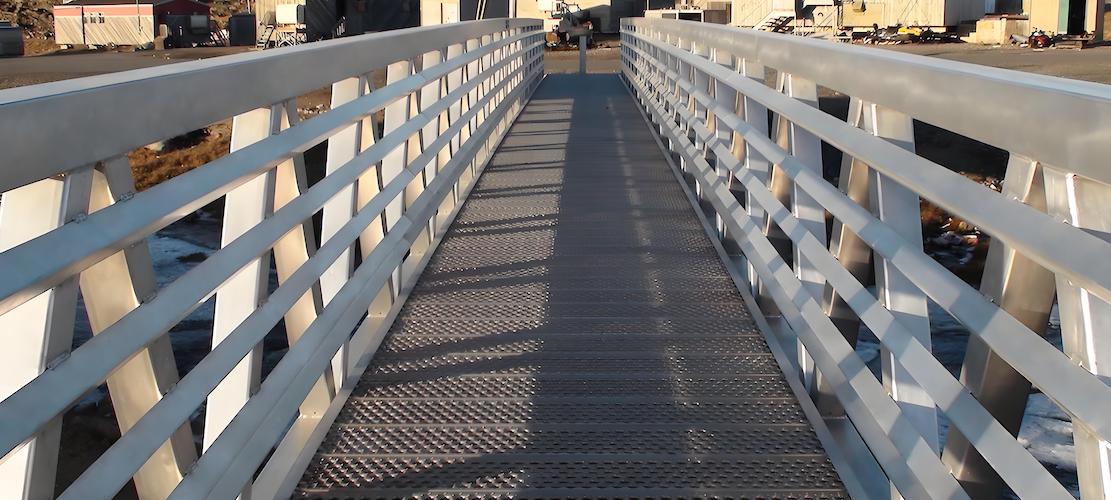
The main types include beam bridges, truss bridges, suspension bridges, and modular prefabricated steel footbridges.
Beam bridges are often best for short spans because they are simple, efficient, and cost-effective.
A truss bridge is a strong choice when the project needs medium or long span capability, higher stiffness, and efficient steel use.
No. They are often used for scenic projects, but they can also be practical for long spans or difficult terrain.
They are popular because they can be prefabricated, shipped efficiently, and installed quickly with less site disruption.
Steel offers strength, design flexibility, good span capability, and strong compatibility with prefabrication and protective coatings.
1. Google Developers. Creating Helpful, Reliable, People-First Content. [developers]
2. Areté Structures. 3 Different Types of Pedestrian Bridges. [aretestructures]
3. World Steel Association. Sustainability Indicators 2025 Report. [worldsteel]
4. AASHTO Journal. AASHTO Updates Pedestrian Bridge Design Guide. [aashtojournal]
5. AASHTO Store. Transportation Publications and Bridge Standards. [store.transportation]


