

Views: 211 Author: Evercross Bridge Publish Time: 2026-10-14 Origin: Evercross Bridge


Content Menu
● What Is a Reinforced Type 200 Bailey Bridge?
>> Double-Row Double-Layer Reinforced Configuration
>> Triple-Row Single-Layer Reinforced Configuration
● Double-Double vs. Triple-Single: Practical Comparison
● How Structural Depth, Loads, and Deflection Affect Selection
>> Increased Depth Can Help, but There Is No Universal Stiffness Ratio
>> A "50-Ton Truck" Is Not a Complete Loading Specification
>> Deflection Requires More Than a Simplified Beam Formula
● Which Configuration Should You Consider for Nepal?
>> Applicable Scenarios of Double-Row Double-Layer Reinforced 200 Type Bailey Bridge
>>> Large-scale water conservancy projects
>>> Key transportation lines in mountainous areas
>>> Permanent and semi-permanent bridge projects
>> Applicable Scenarios of Triple-Row Single-Layer Reinforced 200 Type Bailey Bridge
>>> Temporary construction access bridges
>>> Small-span river-crossing bridges in remote areas
● Why Flood and Foundation Checks Can Override the Truss Choice
● Installation and Transportation: Compare the Complete System
>> Standard Panels Do Not Become Larger Because They Are Stacked
>> Check the Bridge During Erection, Not Only After Completion
● A Five-Step Selection Process for Contractors
>> Step 1: Define the Crossing
>> Step 3: Establish the Governing Requirements
>> Step 4: Compare Feasible Configurations
>> Step 5: Approve the Delivery Package
● Compare Lifecycle Cost, Not Steel Price Alone
● Find the Right Reinforced Type 200 Bailey Bridge With Evercross
>> Is Double-Double Always Stronger Than Triple-Single?
>> Is Triple-Single Better for Spans Above 25 Meters?
>> Which Configuration Should Carry a 50-Ton Vehicle Across a 28-Meter Opening?
>> Can Both Configurations Use the Same Panels?
>> Which Configuration Is Faster to Install?
>> Can a Temporary Bailey Bridge Become a Permanent Crossing?
Choosing a reinforced Type 200 Bailey bridge means matching the truss configuration to your span, vehicle loads, site conditions, and installation method. A double-row double-layer reinforced bridge offers increased structural depth. A triple-row single-layer reinforced bridge adds parallel trusses without a second story. Neither configuration is automatically the better choice for every project.
For contractors developing hydropower access, temporary roads, or emergency crossings in Nepal, the practical question is straightforward: which arrangement can satisfy the required performance with a workable delivery and erection plan?
From our perspective at Evercross Bridge, selection should begin with the design basis, not a headline tonnage. A responsible recommendation combines structural calculations, foundation information, transport constraints, and the intended operating conditions.
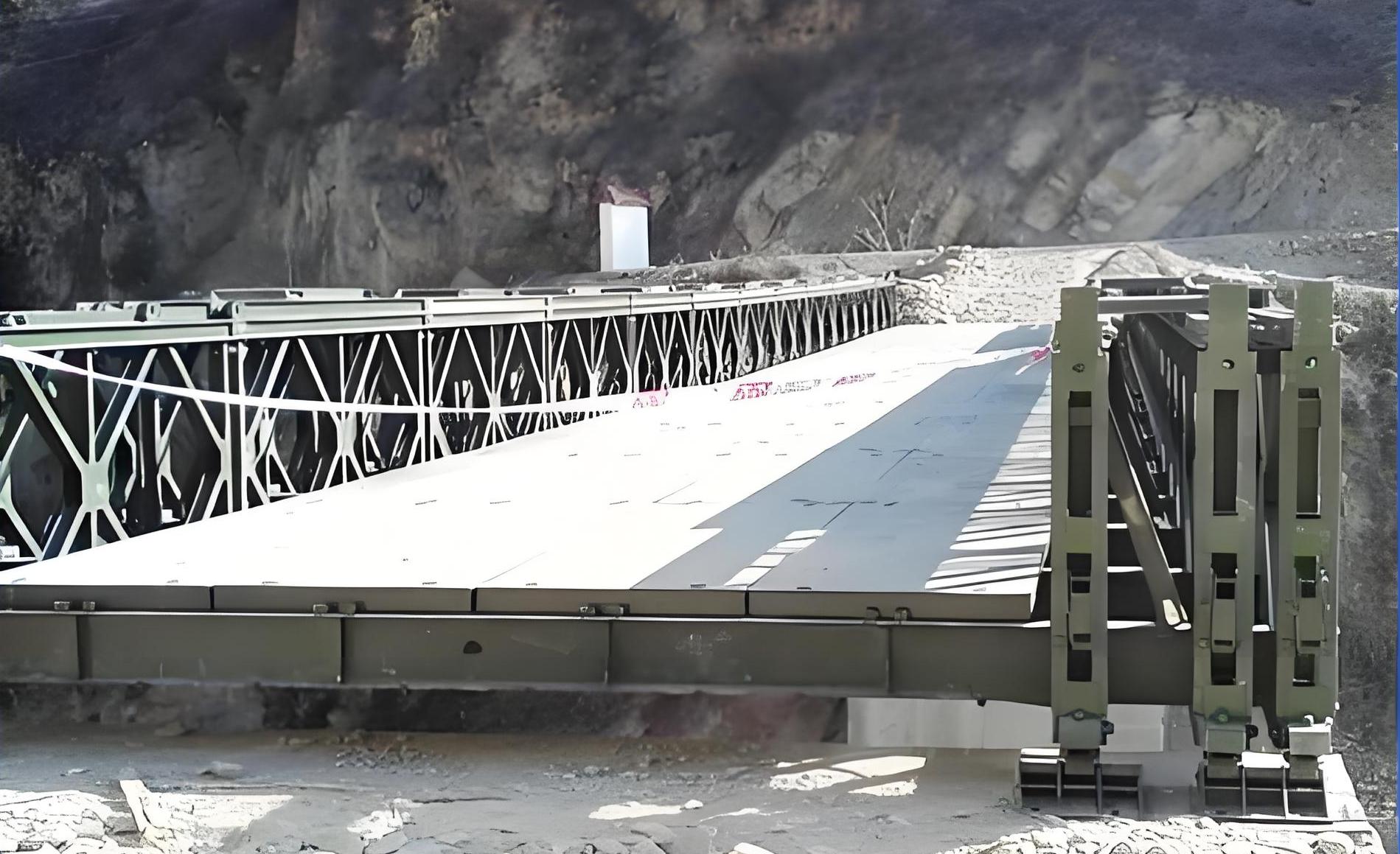
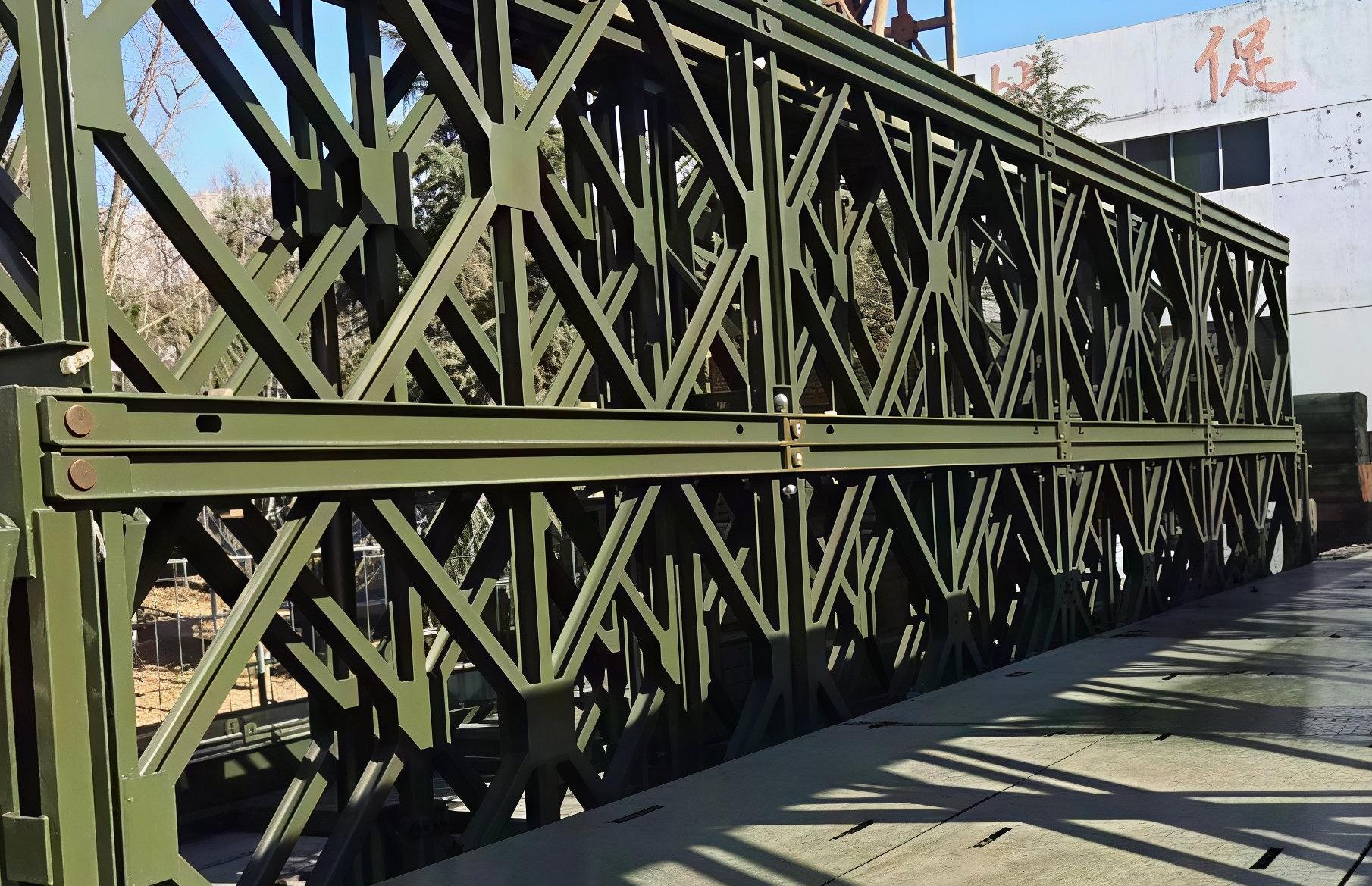
A Type 200 Bailey bridge is a modular prefabricated steel bridge assembled from truss panels, transoms, deck components, bracing, connections, and bearings. Published Compact 200 product information commonly specifies panels approximately 3.048 meters long and 2.134 meters high. Buyers should confirm dimensions and compatibility against the selected manufacturer's drawings.
"Reinforced" generally refers to additional structural elements, such as reinforcing chords. It does not establish a universal load rating. Capacity depends on the complete bridge arrangement, including span, roadway width, steel specifications, connections, decking, and support conditions.
This arrangement uses two parallel truss rows and two vertically stacked stories on each side of the roadway.
Its principal distinguishing feature is increased truss depth. The upper and lower stories must work together through the specified connections and bracing. Historical Bailey bridge manuals identify this arrangement as double-double construction, although their load tables should not be applied directly to modern Type 200 products.
This arrangement uses three parallel truss rows and one story on each side.
It adds structural members alongside the existing rows rather than above them. The complete bridge still requires transverse members and bracing. Describing it as merely a "planar bearing system" overlooks the assembled bridge's three-dimensional behavior.
Configuration abbreviations can vary between commercial documents. Ask suppliers to provide a cross-section drawing rather than relying on an abbreviation alone.
The table below compares configuration characteristics, not guaranteed load ratings. Final selection requires project-specific calculations and an approved component schedule.
Selection factor | Double-row double-layer reinforced | Triple-row single-layer reinforced |
Truss arrangement per side | Two rows, two stories | Three rows, one story |
Main geometric distinction | Greater structural depth | More parallel truss rows |
Panel positions per typical bay, both sides | Eight | Six |
Assembly consideration | Upper-story handling and connections | Additional side-row connections |
Site-space consideration | Vertical working access | Space for wider truss groups |
Transport comparison | Check total packing list | Check total packing list |
Final approval | Calculated strength, serviceability, stability, and erection checks | The same checks are required |
The panel-position comparison assumes complete, uniform configurations. It excludes reinforcing chords, launching equipment, and other components. It is not a substitute for a bill of materials.
Adding a second story changes the distance between the principal upper and lower chord groups. This can improve vertical bending performance when the connections and bracing allow the assembly to act as designed.
Adding a third parallel row can also increase structural capacity. Its effectiveness depends on load distribution and the details connecting the rows.
These are structural principles, not permission to publish a fixed performance multiplier. A claim that one Type 200 configuration is always twice as stiff as another needs calculations for the actual products being compared.
Two vehicles with the same gross weight can produce different bridge effects because their axle loads and axle spacing differ.
Before requesting a heavy-duty Bailey bridge, provide:
- Gross vehicle weight and maximum individual axle loads.
- Axle spacing, wheel spacing, and tire contact information.
- Expected vehicle frequency and operating speed.
- Whether vehicles can meet or queue on the bridge.
- Any exceptional construction equipment or abnormal transport loads.
The selected configuration must be evaluated for the actual span and traffic conditions. Historical Bailey manuals likewise relate posted capacity to both bridge arrangement and span rather than treating configuration as a single tonnage rating.
The expression f=5qL^4/(384EI) describes a particular idealized beam under uniformly distributed loading. It does not independently verify a modular bridge carrying moving vehicles.
A project analysis must address the appropriate loading model and structural behavior. Panel connections, fit-up, and joint movement also matter. Published HD200 information specifically discusses joint arrangements and camber intended to manage deformation.
Camber should not be presented as additional load capacity. It is part of the geometry and serviceability strategy.
Nepal has complex terrain, with mountains and valleys accounting for most of the area, numerous rivers, frequent natural disasters such as monsoons and floods, and great differences in engineering requirements of different regions. According to the performance characteristics of the two types of bridges, their applicable scenarios in Nepal are clearly divided.
This type of bridge is mainly suitable for scenarios requiring large load-bearing capacity, small deflection and long-term use, especially in Nepal’s large-scale engineering construction and key transportation lines:
Nepal has many water conservancy projects such as hydropower stations. For example, in the Manang Marsyangdi Hydropower Station project in Nepal, a 200 Type Bailey Bridge with a single span of 27.432 meters and a design load of 50 tons is needed to meet the passage of heavy construction equipment and materials. The double-row double-layer reinforced type can fully meet the load requirements of such projects, ensure the stability and safety of the bridge during long-term use, and provide reliable support for the smooth progress of the project.
In the mountainous areas of Nepal, some roads need to cross deep valleys and large rivers. The bridges on these lines need to bear the passage of heavy vehicles such as trucks and engineering vehicles for a long time. The double-row double-layer reinforced type has high vertical stiffness and bearing capacity, which can effectively avoid bridge deformation and ensure the smooth flow of transportation.
For some areas where permanent bridges are difficult to build in a short time, the double-row double-layer reinforced 200 TypeBailey Bridge can be used as a semi-permanent bridge. Its high durability and low later maintenance cost can meet the long-term use needs, and it can be disassembled and reused when the permanent bridge is completed, realizing the efficient use of resources.
This type of bridge is mainly suitable for scenarios requiring large span, quick assembly, good lateral stability and small load, especially in Nepal’s emergency rescue and temporary engineering construction:
Nepal is prone to natural disasters such as floods and landslides, which often cause bridge damage and cut off traffic. The triple-row single-layer reinforced type can be quickly assembled, which can restore traffic in a short time, provide convenient conditions for emergency rescue materials transportation and personnel transfer, and reduce the loss caused by natural disasters. For example, in the construction of the Bailey Bridge over the Tilave River in Parsa, Nepal, the quick assembly of the bridge is required to restore the traffic between Birgunj and rural areas as soon as possible, and the triple-row single-layer type is an ideal choice due to its simple assembly and strong adaptability.
In the construction of roads, hydropower stations and other projects in Nepal, temporary access bridges are often needed to connect the construction site and the external road. The triple-row single-layer reinforced type has the advantages of simple assembly, low cost and strong transportation adaptability, which can meet the temporary use needs of the construction site and control the project cost.
In the remote mountainous areas of Nepal, some small rivers need to build small-span bridges to facilitate the travel of local residents. The triple-row single-layer reinforced type has a large span, good lateral stability, and can adapt to the narrow road conditions in remote areas. It is an economical and practical choice for local residents to travel.
A stronger superstructure cannot compensate for an inadequate foundation.
For a river crossing, engineers must investigate scour, channel behavior, foundation conditions, and the hydraulic opening. FHWA's HEC-18 treats scour evaluation as a design and inspection issue and calls for hydraulic studies and subsurface information when determining probable scour depth.
For buyers, this means the bridge request should include:
1. Surveyed river and bank geometry.
2. Available flood-level and flow information.
3. Geotechnical information at the proposed supports.
4. Existing erosion or channel-migration observations.
5. Debris conditions and access after heavy rainfall.
Do not select double-double because it supposedly "resists floods better," or triple-single because it supposedly "resists wind better." Both need the relevant load combinations, bracing, supports, and site checks.
If both options use the same Type 200 panel system, stacking panels into two stories does not enlarge each individual panel.
The transport difference comes from component quantities, weights, packing arrangements, and additional equipment. Transoms, decking, bearings, and launching components also need to reach the site.
Before choosing between configurations, request:
- Total shipping weight and packing dimensions.
- The heaviest and longest individual components.
- Container or truck loading plans.
- Unloading and storage requirements.
- A transport-route assessment for restricted roads.
Do not promise small-vehicle transport without checking the complete component schedule.
A launched bridge experiences support conditions that differ from its final operating arrangement. The launching nose, rollers, temporary supports, and assembly sequence therefore require their own planning.
Historical Bailey manuals contain different launching arrangements for different configurations. Modern Type 200 installations should follow the selected system's approved erection design, not an improvised adaptation of those historical instructions.
The fastest installation is the one with a verified method and prepared site—not necessarily the bridge with fewer stories.
Confirm the required clear opening, proposed bearing positions, roadway width, approach geometry, and pedestrian provision.
Submit vehicle schedules and axle information. Identify exceptional equipment separately from ordinary traffic.
Agree on the applicable design requirements with the owner and reviewing engineer. Include strength, deflection, stability, durability, and operating restrictions.
Request both alternatives against the same design basis. Compare calculations, component quantities, support reactions, packing lists, and erection methods.
Require drawings, inspection documentation, installation instructions, maintenance requirements, and clearly assigned responsibilities.
This process turns a product comparison into a defensible procurement decision.
The lowest factory quotation may not produce the lowest project cost.
Compare the complete scope:
Cost category | Information to request |
Bridge supply | Included components, coating, decking, and accessories |
Logistics | Freight, inland transport, unloading, and storage |
Installation | Equipment, temporary works, labor, and supervision |
Foundations | Reactions, bearing requirements, and interface responsibilities |
Operation | Inspections, coating repairs, deck maintenance, and traffic controls |
Future relocation | Dismantling, inspection, replacement parts, and reassembly |
Reusable modular components can support future deployments, but there is no defensible universal reuse count. Condition, damage, corrosion, connection wear, and the next project's requirements must be assessed.
Ask suppliers to distinguish confirmed scope from assumptions and exclusions. That makes competing quotations much easier to compare.
The best configuration is the one that meets the engineering requirements and can be delivered, installed, and maintained under real site conditions.
Evercross Bridge has more than 30 years of industry experience, serves over 50 countries, has an annual production capacity of 100,000 tonnes, and has delivered more than 200 major government infrastructure projects.
We provide integrated support covering bridge design, production, transportation, and installation.
Send Evercross your surveyed crossing dimensions, roadway width, vehicle axle schedule, site photographs, foundation information, and required opening date. Request a configuration comparison with drawings, calculations, a packing list, and an installation proposal—not simply a price per tonne.
No universal answer applies to every Type 200 product and span. Double-double provides greater structural depth, while triple-single adds parallel rows. Compare the complete systems using the same loads and design requirements.
There is no universal 25-meter selection threshold. Span capability depends on loading, roadway width, reinforcement, components, and structural checks. Choose from approved calculations, not a general span rule.
Treat double-double as a candidate, not an automatic approval. Provide the vehicle's axle information and surveyed opening. The supplier must verify the actual modular span and every relevant component.
They may use the same panel family within a compatible manufacturer's system. Confirm panel geometry, steel specifications, connections, and reinforcement details. Do not assume interchangeability between different suppliers.
A single-story arrangement can avoid upper-story assembly, but total installation time also depends on foundations, available stock, equipment, crew experience, weather, and the erection method. Request a site-specific schedule.
Modular panel bridges can serve temporary and permanent applications, but the proposed use must satisfy the appropriate design, durability, foundation, inspection, and operating requirements. Temporary acceptance should not be treated as permanent approval.
- U.S. War Department, TM 5-277, *Fixed Steel Panel Bridge, Bailey Type*[radionerds]
- ESC, *Modular Steel Bridge—Panel Type (Bailey) System*[escpile]
- *Compact 200 Bailey Bridge*[baileybridgesolution]
- Federal Highway Administration, *Evaluating Scour at Bridges, Fifth Edition*, HEC-18, 2012 [fhwa.dot]
- Evercross Bridge, *Steel Bailey Bridge[baileybridgesolution]


