

Views: 221 Author: Evercross Bridge Publish Time: 2026-03-26 Origin: Evercross Bridge


Content Menu
● Critical Safety Protocols for Proximity Installation
>> 1. Strategic Positioning for Corrosive Environments
>> 2. Management of Thermal Hazards
>> 3. Positioning Based on Gas Density
● Engineering Resilience: Why Modular Steel Matters
● Comparative Overview: Steel Temporary Bridge Solutions
● Industry Best Practices: Beyond Installation
● Partner with Industry Experts
● Frequently Asked Questions (FAQ)
In the modern infrastructure landscape, steel temporary bridges serve as critical lifelines, providing rapid accessibility for construction, disaster recovery, and traffic management. At Evercross Bridge, we understand that these structures are not mere commodities; they are engineered solutions that must seamlessly integrate into complex site environments—frequently in close proximity to critical utility networks. Ensuring the absolute safety and structural integrity of these installations is our highest priority, as improper planning can lead to catastrophic operational failure, environmental hazards, and severe project delays.
This suggestion provides an industry-focused analysis of best practices for installing steel temporary bridges, specifically addressing the technical requirements for site integration near pipelines and utility corridors.
When installing a prefabricated highway steel bridge or modular trestle alongside existing utility assets, engineers must prioritize the prevention of physical damage and the mitigation of secondary hazards, such as leaks or thermal degradation. Compliance with international standards [steelconstruction] [strukturas] is non-negotiable.
If a project necessitates installing a bridge conduit parallel to pipelines carrying corrosive materials, the bridge structure must be positioned strictly above the pipeline .
- The Rationale: In the event of a pressurized leak, corrosive liquids or vapors will follow a downward or outward trajectory. By elevating the bridge, you prevent structural compromise caused by chemical degradation and reduce the risk of on-bridge personnel being exposed to hazardous substances.
For installations involving high-temperature pipelines, such as industrial steam lines or hot oil carriers, the bridge structure must be installed beneath the heat source.
- The Rationale: Excessive heat can alter the material properties of high-strength steel, potentially reducing load-bearing capacity or causing thermal expansion stress. Positioning the bridge below the heat source allows natural convection to dissipate heat away from the structural components, maintaining the bridge's original design parameters.
The placement of temporary bridges near flammable or explosive gas pipelines is governed by the gas's buoyancy relative to air :
- Heavier-than-Air Gases (e.g., Propane, Butane): The bridge must be installed above the pipe. Heavier gases sink; placing the structure above keeps the bridge outside the immediate accumulation zone in the event of a leak.
- Lighter-than-Air Gases (e.g., Methane, Natural Gas): The bridge must be installed below the pipe. Lighter gases rise; keeping the bridge below ensures the structure remains outside the primary dissipation path of the leaking gas.
> Expert Insight: Early consultation with utility owners is a cornerstone of professional project management. Requesting "Crossing and Encroachment" guidelines before site mobilization can prevent thousands of dollars in unnecessary re-work and ensure full regulatory compliance [enbridge].
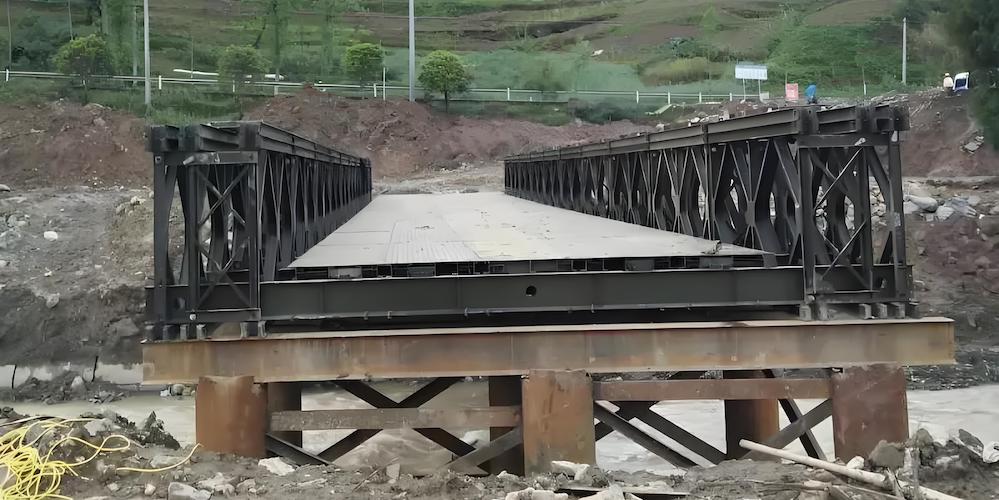
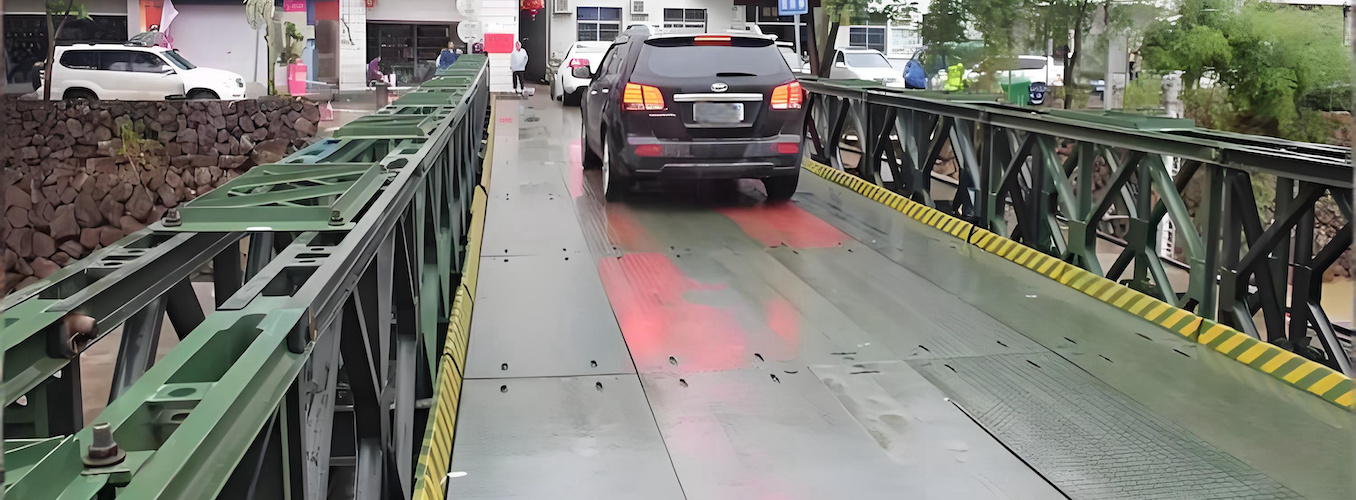
Evercross Bridge is dedicated to pushing the boundaries of infrastructure capability. Modular steel bridges—often referred to as Bailey-type or panel bridges—offer unparalleled flexibility for modern projects .
- Rapid Deployment: Prefabricated components are designed for fast assembly, often using crane-assisted placement, which is essential for emergency response after natural disasters .
- Load Flexibility: Engineered systems can be adjusted to handle diverse traffic, from heavy construction machinery to emergency support vehicles [shortspansteelbridges] .
- Maintainability: Unlike concrete, high-grade structural steel can be visually inspected and rehabilitated without replacing the entire span, significantly reducing long-term costs .
Feature | Steel Modular Bridge | Conventional Construction |
Speed | Extremely High (Days) | Slow (Weeks/Months) |
Equipment | Minimal; Standard Cranes | Heavy; Specialized Equipment |
Reusability | Fully Dismantlable/Reusable | Single-use/Permanent |
Labor | Reduced On-site Requirement | High Skilled On-site Demand |
Safety does not end once the bridge is erected. An effective site-specific safety plan is vital [jpoperations].
1. Routine Inspection: Establish a schedule for inspecting bridge bearings and truss connections to address wear promptly [eandhmanufacturing].
2. Clearance Signage: Always install high-visibility signage indicating maximum vertical and horizontal clearance, especially for sites with mixed-vehicle traffic [bridgemastersinc].
3. Environmental Protection: Where bridges span waterways, implement measures to prevent debris from entering the water, such as mesh in-fill panels [mh].
The safety and durability of your project depend on the reliability of your temporary bridge supplier. At Evercross Bridge, we provide more than just steel; we provide a complete engineering solution—from initial design to on-site installation guidance.
Contact our expert engineering team today to discuss your project requirements and ensure your next bridge installation meets the highest international safety and performance standards.
1. Q: How does a temporary bridge supplier ensure safety in proximity to underground utilities?
A: Suppliers provide detailed load calculations, foundation design assistance, and technical consultation to align with utility owner requirements, often utilizing non-destructive excavation methods for foundation work [enbridge] [usbr].
2. Q: What standards govern temporary steel bridge fabrication?
A: Fabrication is typically guided by international standards such as EN 1090 (manufacturing) and Eurocode 3 (structural design), ensuring component consistency and structural reliability [strukturas].
3. Q: Are modular bridges suitable for long-term use?
A: Yes, while categorized as temporary, modular steel bridges are often robust enough for multi-year or even permanent application with a proper maintenance regimen .
4. Q: What is the biggest advantage of modular bridges in disaster recovery?
A: The primary benefit is rapid speed of construction. Because the components are prefabricated, site assembly happens in days, restoring critical access for aid and infrastructure recovery immediately .
5. Q: How do I choose the correct load rating for my temporary bridge?
A: Load rating should be based on the heaviest anticipated vehicle, such as heavy-duty cranes or emergency fire trucks, and calculated in accordance with AASHTO HL-93 or local bridge design specifications [enbridge] [shortspansteelbridges].
- [1] [SCI_P185 Guidance Notes on Best Practice in Steel Bridge]
- [2] [Temporary Bridges: Key Safety Considerations and Standards]
- [3] [Eurocode 3 and EN-1090 for Bridge Construction]
- [4] [Evercross Bridge Company Profile & Projects]
- [5] [10 Essential Safety Tools for Bridge Workers]
- [6] [Caltrans Temporary Structures Manual]
- [7] [Temporary Bridge Installation Requirements Explained]
- [8] [AISC Steel Bridge Erection Guide Specification]
- [9] [Steel temporary bridges for quick infrastructure repair]
- [10] [14 Reasons to Use Structural Steel For Bridges]
- [11] [Modular bridges: A climate-resilient solution]
- [12] [Crossing and Encroachment Guide (Enbridge)]
- [13] [Comprehensive Guide to Underground Utility Installation]
- [14] [Temporary Steel Bridges for Emergencies]
- [15] [Building Resilience: The Role of Steel in Disaster Relief]
- [16] [Engineering and O&M Guidelines for Crossings]
- [17] [Effective Methods to Protect Underground Utilities]
- [18] [Modular Bridges for a changing climate]


