

Views: 221 Author: Evercross Bridge Publish Time: 2026-11-17 Origin: Evercross Bridge


Content Menu
● Key Takeaways: How to Source a Bailey Bridge in Indonesia
● Why Indonesia Needs Reliable 321 Type Bailey Bridges in 2026
>> Infrastructure Development and Emergency Access
>> Why Hot-Dip Galvanized Bailey Bridges Are Suitable for Indonesia
● Step 1: Confirm ASTM A709 Material Requirements and 321 Type Bailey Bridge Specifications
>> 1.1 Understand ASTM A709 Structural Steel
>> 1.2 Select the Correct 321 Type Bailey Bridge Configuration
>> 1.3 Specify Hot-Dip Galvanizing Requirements
● Step 2: Choose a Qualified Bailey Bridge Manufacturer and Verify Its Experience
>> 2.1 Compare Local and International Bridge Suppliers
>> 2.2 Verify Manufacturing Qualifications and Quality Control
>> 2.3 Why Evercross Bridge Is a Practical Manufacturing Partner
>> 2.4 Learn from Our Indonesia Emergency Bridge Project Experience
● Step 3: Complete Indonesian Compliance, Inspection, and Delivery Planning
>> 3.1 Check Indonesian SNI and Project-Specific Requirements
>> 3.2 Prepare Import Documentation Before Shipment
>> 3.3 Conduct Third-Party Quality Inspection
>> 3.4 Plan Transportation, Installation, and Maintenance
● Practical Procurement Checklist: What Should Indonesian Buyers Include in an RFQ?
>> Three Questions We Ask Before Quoting a Bridge Project
● Secure Your 321 Type Bailey Bridge for Indonesia with Confidence
>> 1. What is an ASTM A709 321 Type Bailey Bridge?
>> 2. Why should Indonesian buyers choose a hot-dip galvanized Bailey bridge?
>> 3. How long does it take to manufacture and deliver a 321 Type Bailey Bridge to Indonesia?
>> 4. What certifications should I check when choosing a Bailey bridge manufacturer?
>> 5. Does an ASTM A709 Bailey Bridge automatically meet Indonesian SNI requirements?
>> 6. Can a 321 Type Bailey Bridge be used for emergency infrastructure restoration?
>> 7. Does Evercross Bridge provide installation and international delivery support?
Indonesia's growing infrastructure requirements and challenging geographical conditions have increased demand for reliable, rapidly deployable bridge systems. For government agencies, EPC contractors, and infrastructure developers, sourcing an ASTM A709 321 Type Bailey Bridge Hot-Dip Galvanized for Indonesia involves more than comparing prices. It requires careful material verification, structural engineering, corrosion protection, supplier evaluation, and import planning.
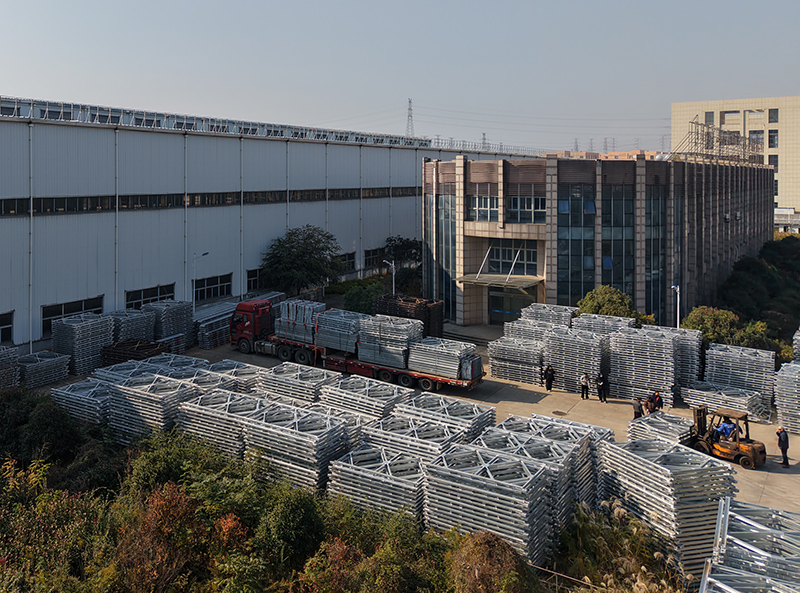
At Evercross Bridge, we have more than 30 years of experience manufacturing modular steel bridges, Bailey bridges, and emergency bridge systems. We provide integrated solutions covering engineering design, manufacturing, quality inspection, transportation, and installation support. Our production base in Zhenjiang, Jiangsu, China, covers 47,000 square meters, including 22,000 square meters of manufacturing workshops, with lifting equipment capable of handling loads up to 100 tons.
Having delivered bridge solutions to more than 50 countries, we understand that Indonesian projects require particular attention to tropical corrosion, heavy vehicle traffic, transportation conditions, and local technical requirements.
In this guide, we explain three practical steps to source the right 321 Type Bailey Bridge in Indonesia in 2026, based on our manufacturing experience and project procurement practices.
Step 1: Confirm technical specifications. Verify the bridge configuration, ASTM A709 material requirements, structural loading, and hot-dip galvanizing specifications.
Step 2: Evaluate the manufacturer. Check manufacturing capabilities, quality certifications, inspection procedures, and completed international projects.
Step 3: Manage procurement and delivery. Coordinate Indonesian regulatory requirements, third-party inspection, shipping, installation, and after-sales support.
Indonesia's geography presents unique infrastructure challenges. Its thousands of islands, mountainous terrain, river crossings, and remote communities require transportation infrastructure that can adapt to different geographical conditions.
Bridge failures caused by floods, landslides, and other natural disasters can interrupt transportation, emergency services, and local economic activities.
The Indonesian government's emergency response experience demonstrates the practical value of modular bridge systems. In March 2025, Indonesia's Ministry of Public Works completed a 30-meter Bailey bridge in Jambi following road subsidence. The bridge underwent a loading test and entered service with a maximum permitted load of 20 tons.
sahabat.pu.go.id
This example highlights an important consideration: a bridge must be designed around actual loading and site conditions, not simply its advertised span.
Indonesia's tropical environment exposes steel structures to high humidity, rainfall, and, in coastal locations, salt-laden air.
Without suitable corrosion protection, these conditions can accelerate steel deterioration and increase maintenance requirements.
A hot-dip galvanized Bailey bridge offers several practical advantages:
Corrosion resistance: A zinc coating provides a protective barrier against environmental exposure.
Long-term maintenance planning: Appropriate galvanizing can reduce the frequency of protective coating maintenance.
Modular transportation: Individual components can be transported and assembled according to project requirements.
Flexible configurations: Bridge length, width, deck arrangement, and structural capacity can be engineered for different applications.
For Indonesian infrastructure projects, we recommend specifying the corrosion environment and expected service conditions before selecting the galvanizing system.
The first step is to establish exactly what the project requires. A reliable bridge procurement specification should clearly distinguish the structural system, steel grade, design loads, and corrosion protection.
ASTM A709/A709M is a specification covering structural steel for bridge applications. It includes carbon steel, high-strength low-alloy steel, and other specified material categories.
Depending on the selected grade, the specification addresses chemical composition, tensile properties, and applicable impact-testing requirements.
ASTM Store
One important technical clarification is that 321 Type Bailey Bridge does not mean ASTM A709 Grade 321. The 321 designation refers to the bridge type or configuration, while ASTM A709 identifies the structural steel specification.
When preparing a purchase order, we recommend confirming:
Technical Item |
What Buyers Should Verify |
Steel specification |
Applicable ASTM A709/A709M edition |
Steel grade |
Grade 36, Grade 50, or another engineer-approved grade |
Material traceability |
Heat numbers and mill test certificates |
Mechanical properties |
Yield strength, tensile strength, and elongation |
Impact requirements |
Applicable Charpy V-notch testing |
Welding |
Approved welding procedures and inspection requirements |
At Evercross Bridge, we recommend matching material selection to structural calculations rather than choosing a steel grade based solely on its nominal strength.
A 321 Type Bailey Bridge is a modular steel truss bridge assembled from standardized structural components.
Its configuration can be adapted to different project requirements through engineering design.
Before requesting a quotation, determine:
1. Required span: What is the distance between the bridge supports?
2. Traffic requirements: Will the bridge carry pedestrians, light vehicles, heavy trucks, or construction equipment?
3. Bridge width: Is a single-lane or double-lane arrangement required?
4. Site conditions: Are there riverbanks, floodplains, mountainous approaches, or restricted construction areas?
5. Installation conditions: Is crane-assisted installation possible, or is incremental launching preferred?
Our D-type modular bridge solutions have achieved tested single-span configurations of up to 91 meters, subject to the applicable structural design and project conditions.
This capability should not be interpreted as a universal span limit for every 321 Type configuration. Each bridge requires project-specific structural verification.
Hot-dip galvanizing protects fabricated steel components through a metallurgically bonded zinc coating.
For fabricated steel bridge components, ASTM A123/A123M-24 provides an established specification for zinc coatings applied through the hot-dip process.
ASTM Store
We recommend including the following requirements in the technical specification:
Applicable galvanizing standard and edition.
Minimum coating thickness based on steel material category and thickness.
Coating adhesion and visual acceptance criteria.
Inspection methods and sampling frequency.
Repair procedures for damaged galvanized areas.
Separate requirements for bolts, nuts, and other fasteners.
Our recommendation: Do not accept a quotation that simply states "hot-dip galvanized" without identifying the coating standard and inspection requirements.
Once the technical requirements are clear, the next step is identifying a manufacturer capable of delivering the complete bridge system.
For overseas infrastructure projects, supplier selection should consider engineering competence, production capacity, material traceability, and international delivery experience.
Indonesian contractors may consider domestic suppliers, international manufacturers, or a combination of both.
Evaluation Factor |
Indonesian Supplier |
International Manufacturer |
Local communication |
Often convenient |
Depends on regional support |
Manufacturing options |
Depends on factory capability |
May offer broader configurations |
Import procedures |
Usually simpler |
Requires import coordination |
Engineering customization |
Supplier-dependent |
Supplier-dependent |
Transportation |
Potentially shorter |
Requires international shipping |
Project experience |
Verify local references |
Verify overseas references |
We do not recommend selecting a manufacturer based on geographical location alone. The better choice is the supplier that can meet the project's technical requirements, delivery schedule, and quality expectations.
Before signing a contract, we encourage buyers to conduct a structured supplier assessment.
Important documents and evidence include:
ISO 9001 quality management certification.
ISO 14001 environmental management certification.
ISO 45001 occupational health and safety certification.
Material mill test certificates.
Welding procedure specifications and welder qualifications.
Factory inspection and testing records.
Previous bridge project references.
Production capacity and manufacturing schedules.
It is also important to distinguish between a company's management-system certification and product-specific approval. An ISO certificate alone does not establish that an individual bridge complies with every project requirement.
At Evercross Bridge, we combine more than three decades of steel bridge manufacturing experience with engineering, production, and international project delivery.
Our main manufacturing advantages include:
Company Capability |
Details |
Industry experience |
More than 30 years |
Headquarters |
Shanghai, China |
Manufacturing base |
Zhenjiang, Jiangsu, China |
Factory area |
47,000 m² |
Workshop area |
22,000 m² |
Maximum lifting capacity |
100 tons |
Annual production capacity |
30,000 tons |
International business |
More than 50 countries |
Project experience |
Over 200 major government infrastructure projects |
We have supplied modular steel bridges, Bailey bridges, and emergency bridge solutions to customers in Papua New Guinea, Colombia, Malaysia, Myanmar, Ecuador, Laos, Cambodia, Tanzania, and Mozambique.
Our certifications and qualifications include recognition as a National High-Tech Enterprise in China, a Steel Structure Manufacturing Enterprise Qualification Certificate, and ISO 9001, ISO 14001, and ISO 45001 certifications, alongside relevant international project qualifications such as CIDB, COC, and PVOC.
For Indonesian buyers, our value is not limited to supplying steel components. We can coordinate the complete project process, including:
Preliminary technical consultation.
Bridge configuration and engineering design.
Material procurement and manufacturing.
Quality inspection and documentation.
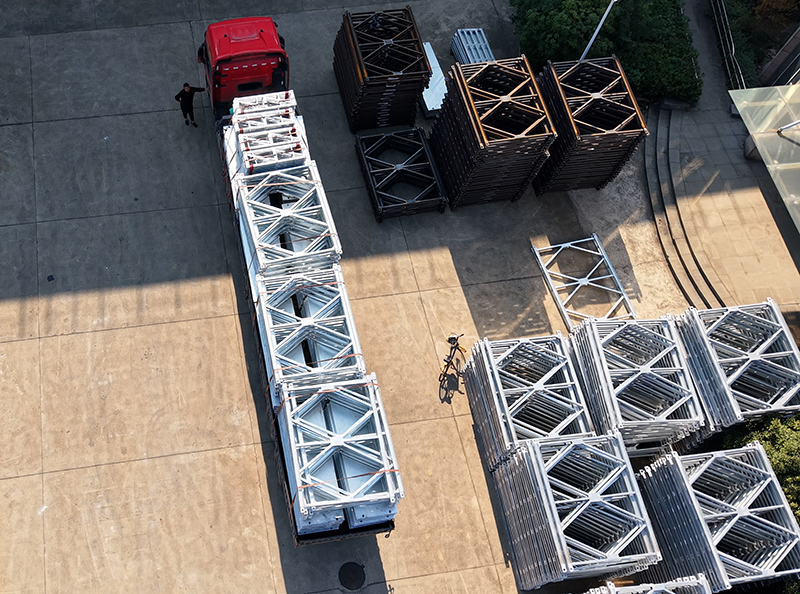
Export packaging and international transportation.
Installation guidance and technical support.
In 2025, Evercross Bridge supplied five 321 Type Bailey Bridges for emergency relief in Indonesia, responding to urgent infrastructure requirements following landslide damage.
This project experience reinforced several lessons for our engineering and delivery teams:
First, preparation determines response speed. Modular components, clear manufacturing schedules, and organized documentation help shorten procurement and delivery coordination.
Second, bridge configuration must reflect actual site conditions. Span, loading, foundation conditions, and installation access all influence the final design.
Third, supplier support must continue beyond manufacturing. Technical documentation, installation guidance, and component identification are important for successful field deployment.
We believe this experience provides a practical reference for Indonesian contractors planning future emergency bridge projects.
Even a technically suitable bridge can experience costly delays if procurement documents, import arrangements, or delivery planning are incomplete.
For 2026 projects, we recommend addressing these matters before production begins.
SNI (Standar Nasional Indonesia) is Indonesia's national standards framework.
However, not every international steel product automatically requires the same mandatory SNI certification. Applicability depends on the relevant product category, technical regulations, and project specifications.
For bridge projects, buyers should also consider applicable Indonesian bridge engineering standards.
For example, Indonesia's Ministry of Public Works lists SNI 1725:2016, concerning bridge loading, within its bridge and tunnel standards resources. Its applicability and current status should be confirmed against the latest official standards register before design approval.
We recommend that buyers confirm the following with their Indonesian consulting engineer or authorized project representative:
Applicable bridge loading combinations.
Vehicle load classification.
Structural design and safety requirements.
Material acceptance and testing requirements.
Required product certification, if applicable.
Inspection and approval procedures.
Important: ASTM compliance should not automatically be treated as a substitute for Indonesian project approval. Both requirements should be addressed in the technical specification.
Import regulations can change, so the Indonesian importer should verify the applicable requirements for the exact HS code and product description.
Indonesia's Ministry of Trade issued Regulation No. 16 of 2025 on Import Policy and Arrangements, which was subsequently amended. In June 2026, the Ministry announced Regulation No. 18 of 2026, introducing further adjustments to import procedures.
Depending on the classification and applicable import controls, buyers may need to arrange:
Document |
Purpose |
Commercial Invoice |
Declares transaction value |
Packing List |
Identifies shipment contents |
Bill of Lading |
Confirms sea transportation |
Certificate of Origin |
Identifies country of origin |
Mill Test Certificates |
Verifies steel material properties |
Inspection Reports |
Records quality verification |
Import Approval (PI) |
Required where applicable |
Surveyor Report |
Required where applicable under import controls |
We advise Indonesian importers to confirm whether Import Approval (Persetujuan Impor or PI), technical verification, or a Surveyor Report is required before shipment.
The applicable requirements should be checked with Indonesian customs brokers and the relevant authorities rather than assumed from previous projects.
Quality inspection should take place before the bridge leaves the manufacturing facility.
At Evercross Bridge, we recommend organizing inspection around four important areas:
Inspection Stage |
Main Inspection Items |
Recommended Records |
Material inspection |
Steel grade, dimensions, traceability |
Mill test certificates |
Fabrication inspection |
Welding, hole positions, dimensions |
Welding and dimensional reports |
Galvanizing inspection |
Coating thickness, surface condition |
Galvanizing inspection report |
Final inspection |
Component quantity, marking, packaging |
Final inspection report |
For hot-dip galvanized components, inspectors should pay attention to coating consistency, uncoated areas, excessive zinc accumulation, and damage caused by handling.
Critical connections, including pins, bolts, and other hardware, should also be checked against their applicable specifications.
International transportation is an important part of Bailey bridge procurement.
Before shipping to Indonesia, we recommend preparing a detailed logistics plan covering:
Port of loading and destination port.
Containerized or break-bulk transportation arrangements.
Component dimensions and package weights.
Protective packaging and moisture prevention.
Customs clearance and inland transportation.
Site unloading and lifting equipment.
Installation sequence and technical supervision.
The bridge should arrive with a complete component inventory, assembly drawings, and installation instructions.
After installation, a maintenance plan should include periodic inspections of structural connections, deck components, drainage, galvanized surfaces, and areas exposed to mechanical damage.
A galvanized bridge is not maintenance-free. Regular inspection remains necessary to maintain safe operating conditions throughout its service life.
Based on our experience with international bridge projects, we recommend that buyers prepare a complete Request for Quotation (RFQ) rather than sending only a bridge length and asking for a price.
The following checklist helps reduce technical misunderstandings and unnecessary procurement delays.
RFQ Category |
Information to Provide |
Bridge type |
321 Type Bailey Bridge |
Material |
ASTM A709/A709M grade and edition |
Surface treatment |
Hot-dip galvanizing standard |
Bridge span |
Required clear span in meters |
Bridge width |
Single-lane or double-lane |
Loading capacity |
Design vehicle and applicable load class |
Installation |
Launching or crane-assisted installation |
Project location |
City, island, and site conditions in Indonesia |
Delivery |
Destination port and required delivery date |
Documentation |
Material certificates, inspection reports, and drawings |
When customers approach us for a modular steel bridge, we generally start with three questions:
1. What is the required span and loading capacity? This determines the structural configuration and material requirements.
2. Where will the bridge be installed? Environmental exposure, foundation conditions, and access restrictions influence engineering and galvanizing decisions.
3. What is the expected delivery and installation schedule? This helps us organize manufacturing, inspection, transportation, and technical support.
Providing these details early allows our engineering team to prepare a more accurate technical proposal and commercial quotation.
Sourcing an ASTM A709 321 Type Bailey Bridge Hot-Dip Galvanized for Indonesia in 2026 requires three essential steps: confirming technical specifications, selecting a qualified manufacturer, and organizing compliance and logistics before shipment.
For Indonesian infrastructure projects, the right bridge solution must combine structural reliability, appropriate corrosion protection, efficient transportation, and practical installation support.
At Evercross Bridge, we bring more than 30 years of manufacturing experience, a 47,000 m² production facility, an annual production capacity of 30,000 tons, and experience delivering more than 200 major government infrastructure projects across international markets.
Our five-bridge emergency supply experience in Indonesia in 2025 also gives us practical insight into the importance of responsive manufacturing and coordinated project delivery.
Are you planning to purchase a 321 Type Bailey Bridge for an Indonesian infrastructure or emergency restoration project in 2026?
Contact Evercross Bridge today. Send us your required span, loading capacity, bridge width, project location, and delivery schedule. Our engineering and sales teams can help you evaluate the appropriate bridge configuration, material specifications, galvanizing requirements, and export solution.
Evercross Bridge – Your Partner for Reliable Modular Steel Bridge Solutions.
It refers to a 321 Type modular Bailey bridge specified with structural steel meeting the applicable ASTM A709/A709M requirements. The 321 designation identifies the bridge configuration, while ASTM A709 specifies the bridge steel material requirements. The selected grade must be confirmed through the engineering specification.
Hot-dip galvanizing provides a protective zinc coating that helps steel resist corrosion caused by moisture and environmental exposure. It is particularly useful in Indonesia's humid, rainy, and coastal environments. The required coating specification should be established according to the steel component and exposure conditions.
The schedule depends on bridge span, loading requirements, order quantity, manufacturing capacity, galvanizing arrangements, inspection, and shipping conditions. We recommend requesting a project-specific production and delivery schedule from the manufacturer before placing an order.
Buyers should examine ISO 9001, ISO 14001, and ISO 45001 certifications, along with relevant steel manufacturing qualifications, material mill certificates, welding inspection records, galvanizing reports, and completed project references. Product-specific compliance must also be verified separately.
No. ASTM A709 compliance and Indonesian SNI requirements are different matters. Whether SNI certification or other Indonesian technical approvals are required depends on the product classification, applicable regulations, and project specifications. Buyers should confirm requirements with the relevant Indonesian authorities and project engineers.
Yes. Modular Bailey bridges are widely used for temporary access, emergency transportation restoration, and other applications where rapid deployment is important. However, the structural configuration, foundations, loading capacity, and installation method must be checked for each site.
Yes. Evercross Bridge provides integrated project support covering engineering consultation, bridge design, manufacturing, quality inspection, export packaging, international transportation coordination, and installation guidance. The exact scope of services can be agreed upon according to project requirements.
1. ASTM A709/A709M – Standard Specification for Structural Steel for Bridges[ASTM A709/A709M Official Standard]
2. ASTM A123/A123M-24 – Standard Specification for Zinc (Hot-Dip Galvanized) Coatings on Iron and Steel Products[ASTM A123/A123M-24 Official Standard]
3. Indonesia Directorate General of Highways (Bina Marga). SNI 1725:2016 – Pembebanan untuk Jembatan. Official bridge loading standard document. The current applicability and replacement status should be verified with BSN before project design approval.
4. Indonesia Ministry of Trade – Regulation No. 16 of 2025[Permendag No. 16 Tahun 2025]
5. Indonesia Ministry of Trade – Regulation No. 18 of 2026[Ministry of Trade – Regulation No. 18 of 2026]
6. Indonesia BNPB – Post-Disaster Bailey Bridge Installation[BNPB – Bailey Bridge Installation in West Sumatra]


