

Views: 221 Author: Evercross Bridge Publish Time: 2026-01-21 Origin: Evercross Bridge


Content Menu
● Introduction to Steel Temporary Bridges
>> What Are Steel Temporary Bridges?
● Key Features of Steel Temporary Bridges
>> 1. Modular Design for Rapid Assembly
>> 3. Durability and Longevity
● Connection Methods in Steel Temporary Bridges
● Types of Steel Temporary Bridges
● Benefits of Using Steel Temporary Bridges
>> 2. Environmental Considerations
>> 3. Versatility in Applications
● Case Studies and Real-World Applications
>> 1. Emergency Response in Natural Disasters
● Frequently Asked and Questions regarding Steel Temporary Bridges
>> 2. What are the latest innovations in steel temporary bridge design and construction techniques?
>> 3. What types of projects typically require steel temporary bridges?
>> 4. How long can steel temporary bridges remain in place?
Steel temporary bridges, often referred to as modular or prefabricated bridges, are essential structures designed for quick assembly and disassembly. These bridges are engineered to meet the demands of various applications, including construction sites, emergency situations, and as detours during bridge repairs. Their versatility and efficiency make them a critical component in modern infrastructure development. This article explores the characteristics, advantages, and applications of steel temporary bridges, providing valuable insights for engineers, contractors, and decision-makers in the field.
Steel temporary bridges are constructed using high-strength steel components that allow for rapid installation and flexibility in design. These structures are specifically engineered to support heavy loads and can be adapted to various site conditions, making them suitable for a wide range of environments. Unlike traditional bridges, which require extensive groundwork and time-consuming construction processes, temporary bridges can be deployed quickly, making them ideal for urgent infrastructure needs. Their ability to provide immediate access in critical situations underscores their importance in both urban and rural settings.
One of the standout features of steel temporary bridges is their modular design. Each bridge consists of standardized components that can be easily transported and assembled on-site. This modularity allows for:
● Quick Installation: Most temporary bridges can be set up within a day, significantly reducing downtime and allowing for immediate use. This rapid deployment is particularly beneficial in emergency situations where time is of the essence.
● Flexibility: Components can be customized to fit specific site requirements, including span length and load capacity. This adaptability ensures that the bridge can meet the unique challenges posed by different environments, whether it be a construction site, a natural disaster area, or a temporary detour.
Steel temporary bridges are designed to handle substantial loads, making them suitable for various applications, including:
● Heavy Equipment Transport: Ideal for construction sites where heavy machinery needs to cross, these bridges can support the weight of cranes, trucks, and other large vehicles, ensuring that operations can continue without interruption.
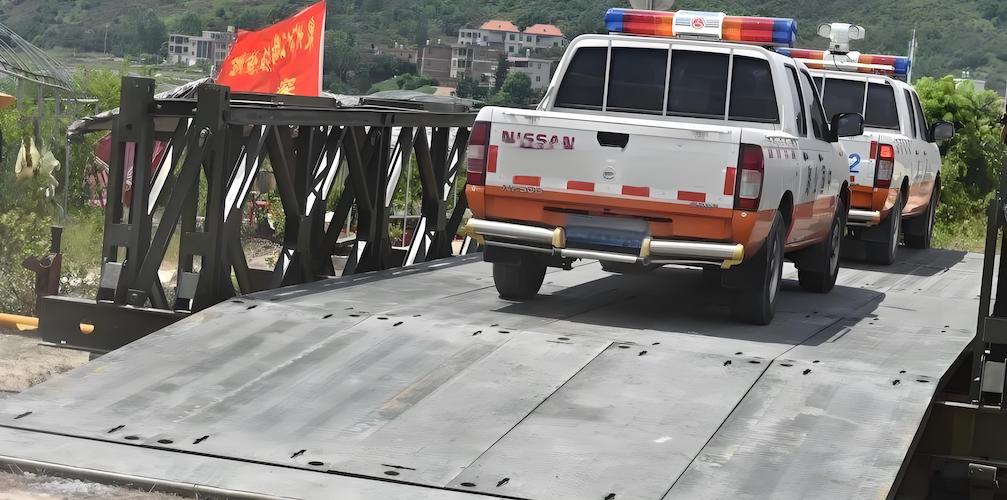
● Emergency Response: Used in disaster recovery scenarios to restore access quickly, these bridges can be deployed in areas affected by floods, earthquakes, or other emergencies, facilitating rescue operations and the delivery of essential supplies.
Constructed from high-tensile steel, these bridges are resistant to environmental factors such as corrosion, extreme temperatures, and heavy rainfall. This durability ensures that they remain functional and safe for extended periods, even in challenging conditions. The longevity of steel temporary bridges reduces the need for frequent replacements, making them a cost-effective solution for both temporary and long-term applications.
Temporary bridges offer a cost-effective solution for infrastructure needs. Their quick installation reduces labor costs, and their modular nature allows for reuse in different projects, maximizing investment. Additionally, the ability to quickly deploy these structures minimizes the economic impact of construction delays, making them an attractive option for municipalities and private contractors alike.
The connection methods used in steel temporary bridges are crucial for their structural integrity and ease of assembly. Here are the primary connection types:
● Advantages: Welded connections provide strong joints that can accommodate various angles and shapes without the need for additional components. This method enhances the overall strength of the bridge, ensuring it can withstand significant loads and stresses.
● Disadvantages: Welding requires skilled labor and can be time-consuming compared to other methods. Additionally, the quality of the welds must be carefully monitored to ensure safety and reliability.
● Types: Bolted connections can be categorized into standard and high-strength bolts, each serving different load requirements and structural needs.
● Advantages: They are easy to install and disassemble, making them suitable for temporary applications. This ease of use allows for quick adjustments or repairs if necessary.
● Disadvantages: Requires pre-drilled holes, which can increase manufacturing complexity. Furthermore, the presence of bolt holes can weaken the structural integrity of the components if not designed properly.
● Advantages: Riveted connections are known for their reliability and ability to handle dynamic loads, making them suitable for bridges that experience frequent traffic or heavy usage.
● Disadvantages: They can be labor-intensive and noisy during installation, which may not be ideal in urban environments where noise regulations are in place.
Steel temporary bridges can be classified based on their structural design and load-bearing systems:
● Description: These bridges consist of horizontal beams supported at each end, ideal for short spans. Their straightforward design allows for quick construction and minimal site preparation.
● Applications: Commonly used for pedestrian crossings and light vehicle traffic, beam bridges are often seen in parks, construction sites, and temporary detours.
● Description: Arch bridges utilize a curved structure to distribute weight, reducing the need for extensive support. This design not only enhances aesthetic appeal but also improves structural efficiency.
● Applications: Suitable for larger spans and aesthetic applications, arch bridges are often used in scenic areas where visual impact is a consideration.
● Description: Composed of interconnected triangles, truss bridges are efficient in handling loads and are known for their strength-to-weight ratio.
● Applications: Often used in railway and highway applications, truss bridges can span significant distances while maintaining structural integrity.
● Description: These bridges use cables to support the deck, allowing for long spans without intermediate supports. Their design is particularly effective in areas where traditional supports are impractical.
● Applications: Ideal for crossing wide rivers or valleys, suspension bridges are often used in major transportation routes and urban infrastructure.
Steel temporary bridges provide a stable and secure crossing for vehicles and pedestrians, minimizing risks associated with construction zones or damaged infrastructure. Their design often includes safety features such as guardrails and non-slip surfaces, ensuring safe passage for all users.
Modern temporary bridges are designed to minimize environmental impact. They often require less ground disturbance and can be constructed using eco-friendly materials, making them a sustainable choice for temporary access while preserving the natural landscape.
These bridges are suitable for a wide range of applications, including:
● Construction Projects: Providing access for heavy machinery and materials, temporary bridges facilitate efficient workflow and reduce delays.
● Emergency Situations: Restoring access after natural disasters or accidents, these bridges play a crucial role in emergency response efforts.
● Utility Work: Facilitating the movement of personnel and equipment across obstacles, temporary bridges ensure that essential services can continue without interruption.
Steel temporary bridges can be tailored to meet specific project requirements, including load capacity, span length, and site conditions. This adaptability makes them a preferred choice for various industries, allowing for innovative solutions to unique challenges.
In the aftermath of hurricanes and floods, steel temporary bridges have been deployed to restore access to affected areas. For instance, during Hurricane Katrina, temporary bridges were crucial in providing emergency access for rescue operations, allowing first responders to reach stranded individuals and deliver essential supplies.
Many construction companies utilize temporary bridges to maintain traffic flow while building or repairing permanent structures. This approach minimizes disruption and enhances safety for both workers and the public, ensuring that projects can proceed on schedule.
Steel temporary bridges have a long history of use in military operations, providing rapid deployment solutions in conflict zones. Their ability to support heavy military vehicles makes them invaluable in logistics and supply chain operations, allowing for efficient movement of troops and equipment.
Steel temporary bridges are a vital component of modern infrastructure solutions, offering rapid, flexible, and durable options for various applications. Their modular design, high load capacity, and cost-effectiveness make them an ideal choice for construction, emergency response, and utility projects. As the demand for quick and reliable infrastructure solutions continues to grow, steel temporary bridges will play an increasingly important role in meeting these needs.
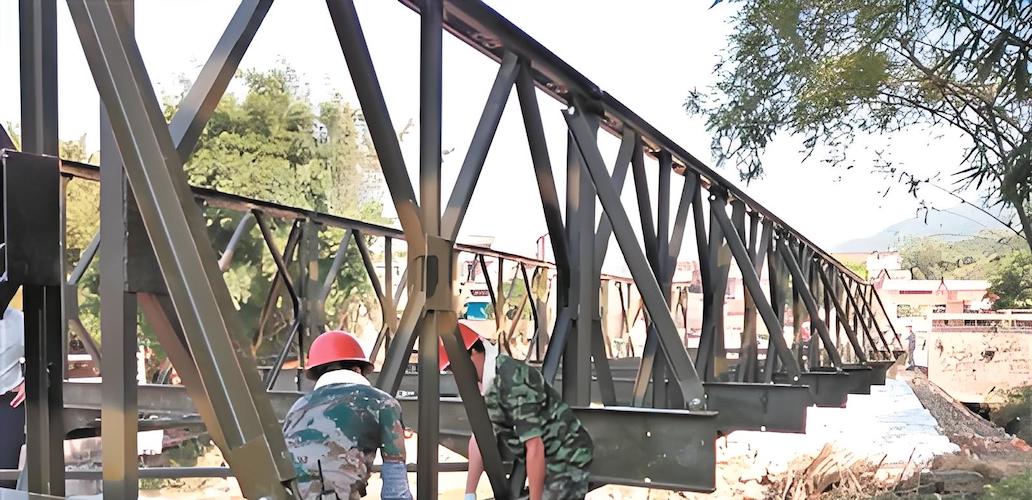
Steel temporary bridges are often considered more environmentally friendly than other temporary bridging solutions, such as wooden or concrete alternatives. Steel is a recyclable material, and many modern steel bridges are designed to minimize ground disturbance during installation. Additionally, steel bridges can be prefabricated off-site, reducing construction waste and the need for extensive site preparation. In contrast, wooden bridges may require the harvesting of trees, and concrete production is energy-intensive, contributing to higher carbon emissions.
Recent innovations in steel temporary bridge design include the use of advanced materials, such as high-strength steel alloys, which enhance load capacity while reducing weight. Additionally, modular construction techniques have improved, allowing for quicker assembly and disassembly. Some manufacturers are also incorporating smart technology, such as sensors for real-time monitoring of structural integrity and load conditions. These advancements not only improve safety but also increase the efficiency of temporary bridge deployment in emergency situations.
Steel temporary bridges are commonly used in various projects, including:
● Construction Sites: To provide access for heavy machinery and materials while permanent structures are being built or repaired.
● Emergency Response: In disaster recovery scenarios, such as after floods or earthquakes, to restore access quickly.
● Utility Work: To facilitate the movement of personnel and equipment across obstacles, ensuring that essential services can continue without interruption.
● Military Operations: For rapid deployment in conflict zones, allowing for efficient logistics and supply chain management.
The duration that steel temporary bridges can remain in place depends on several factors, including the design, load conditions, and environmental factors. Generally, these bridges are designed for temporary use, often lasting from a few months to several years. However, with proper maintenance and monitoring, some steel temporary bridges can be used for extended periods, especially in situations where they are needed for ongoing construction or emergency access. Regular inspections are crucial to ensure their safety and functionality over time.


