

Views: 211 Author: Evercross Bridge Publish Time: 2026-07-03 Origin: Evercross Bridge


Content Menu
● What Is a Bailey Bridge and a Conventional Concrete Bridge?
>> Bailey Bridge – Modular Prefabricated Steel for Rapid Access
>> Conventional Concrete Bridge – Permanent, Heavier Civil Structures
● Key Comparison for Post‑Earthquake Logistics
● Why Bailey Bridges Excel in Post‑Earthquake Logistics
>> Speed of Deployment and Logistical Agility
>> Access to Remote and Challenging Sites
● Structural Performance and Resilience After Earthquakes
>> Steel Modular Systems Under Dynamic Loads
>> Concrete Bridges under Seismic Stress
● Lifecycle Costs and Long‑Term Strategy
>> Cost Efficiency of Prefabricated Steel in Emergency Phases
>> Concrete Bridges as Long‑Term Assets
● Real‑World Case Insights from Evercross Bridge
>> Cross‑Continent Government Infrastructure Experience
>> How Prefabricated Steel Bridges Support National Resilience
● Practical Steps for Decision‑Makers After an Earthquake
>> Step‑by‑Step Bridge Strategy for Logistics Recovery
● User Experience and Safety for Road Operators and Communities
>> UX on the Road – What End Users Feel
● Where to Use Bailey Bridges vs. Concrete Bridges After Earthquakes
>> Ideal Use Cases for Bailey Bridges
>> Ideal Use Cases for Conventional Concrete Bridges
● FAQ: Bailey Bridge vs Conventional Concrete Bridge
Bailey bridges and conventional concrete bridges play very different roles in post‑earthquake logistics, and understanding those differences is critical for emergency planners, government buyers, and engineering teams.
In earthquake‑hit regions, rapid, safe, and reliable connectivity is often the difference between an efficient relief operation and a logistical bottleneck. As a steel bridge specialist with over 30 years of engineering and field experience, having personally participated in modular bridge deployments in Southeast Asia, Africa, and Latin America, I have seen how prefabricated Bailey bridges outperform conventional concrete bridges in the critical first weeks after a disaster. [baileybridgesolution]
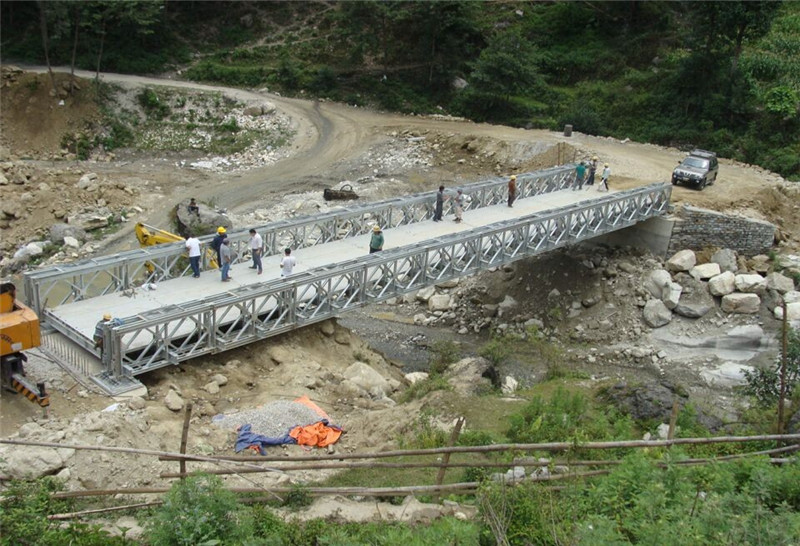
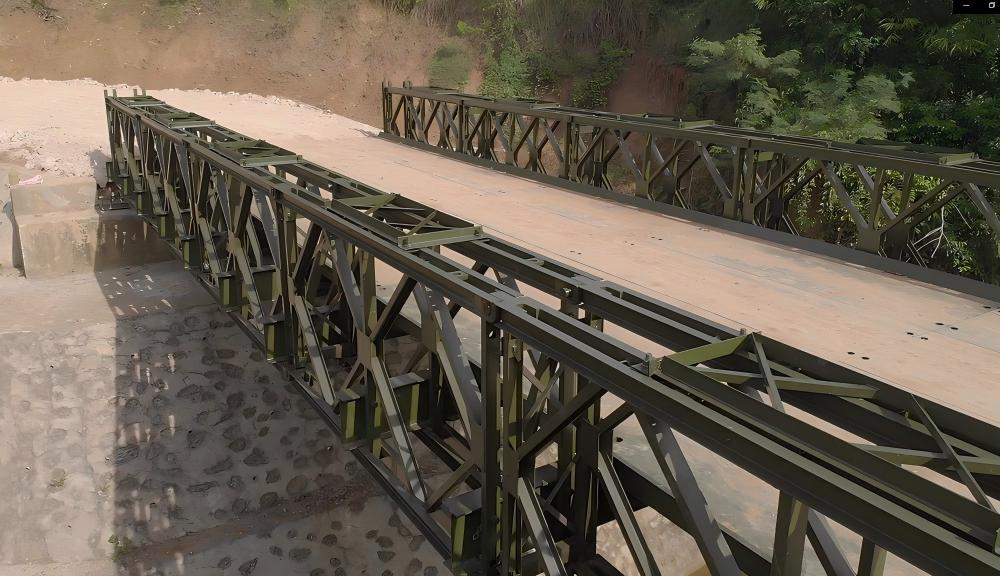
A Bailey Bridge is a modular, prefabricated steel truss system that can be rapidly transported, assembled, and launched to restore road access after a bridge failure. The panels, transoms, and decks are standardized and designed for rapid on‑site assembly with minimal heavy machinery, making them ideal for emergency and temporary infrastructure. Modern Bailey systems, such as the HD200 series supplied by Evercross Bridge, are engineered to meet European, American, and Australian standards while providing high load capacity for trucks and heavy equipment.
A conventional concrete bridge is typically a cast‑in‑place or precast structure built as a long‑term asset within a road or rail network. It requires extensive substructure works, formwork, rebar installation, curing time, and significant construction logistics, often supported by large cranes and batch plants. In normal conditions, concrete bridges provide excellent durability and long service life, but in post‑earthquake contexts they are slow and resource‑intensive to rebuild. [documents1.worldbank]
Factor | Bailey Bridge in Earthquake Response | Conventional Concrete Bridge in Earthquake Response |
Deployment speed | Hours to days for installation with trained crews. | Weeks to months due to design, approvals, and construction cycles. |
Mobility and transport | Modular steel components shipped in containers or trucks, even to remote areas. | Requires heavy materials and equipment, often limited by damaged roads. |
Construction equipment | Light to medium equipment; in many cases no large cranes needed. | Large cranes, concrete plants, and specialized contractors essential. |
Load capacity | Designed for trucks, relief convoys, and heavy vehicles (e.g., HD200 40‑ton load). | High load capacity when completed, but unavailable until full construction is done. |
Flexibility of alignment | Adaptable span configurations, modular length adjustment. | Fixed design; modifications require full re‑engineering. |
Lifecycle role | Temporary or semi‑permanent logistics lifeline. | Long‑term permanent infrastructure. |
Cost in emergency phase | Lower overall cost per restored route during immediate response. | Higher upfront cost and longer payback, unsuitable for rapid restoration. |
From my experience working with Evercross Bridge's HD200 and TSR series, deployment speed is the most decisive factor after an earthquake. Prefabricated steel modules can be shipped as standard freight, staged near disaster‑prone areas, and assembled within days, reconnecting cut‑off communities and enabling relief trucks to move. In contrast, replacing a collapsed concrete bridge demands site surveys, geotechnical assessments, new structural design, permitting, and full construction, which easily extends into months. [baileybridgesolution]
In several mountainous regions of Nepal, for example, Evercross completed HD200 reinforced Bailey bridges with spans above 50 meters to restore rural road networks under humid, high‑rainfall conditions, demonstrating how quickly modular steel can adapt to complex terrain. This rapid connectivity is essential for moving medical supplies, temporary shelters, food, and construction equipment into the affected area. [steelbailey-bridge]
Post‑earthquake, many access roads are partially blocked, and heavy cranes cannot reach fractured valleys or river crossings. Bailey bridge components can be transported in smaller trucks or even picked and carried by local crews, then assembled using makeshift launching noses or simple rollers. In Liberia and other African markets, Evercross customized HD200 Bailey bridges specifically to handle complex road conditions and heavy‑duty transport, showing how modular steel can overcome constrained site access where conventional concrete methods would stall. [bengali.steelbailey-bridge]
Concrete bridge reconstruction at such sites often requires reopening access roads first, bringing in batch plants or ready‑mix supply, constructing temporary work platforms, and waiting on cement curing, which significantly delays logistical throughput. [documents1.worldbank]
Well‑designed Bailey bridges use engineered truss geometries and controlled connections to handle dynamic loads from trucks and seismic aftershocks. Evercross's HD200 projects, for instance, use reinforced three‑row, single‑layer systems, with hot‑dip galvanizing that protects steel from corrosion and maintains structural capacity in harsh climates. Steel's ductility allows the bridge to absorb energy and tolerate some deformation without catastrophic failure, a crucial property in aftershock scenarios.
Because Bailey systems are assembled from standardized modules, inspection is also simplified: crews can visually check connections, pins, and bracings, replace damaged panels, and adjust bearing seats without demolishing the entire structure. [baileybridgesolution]
Conventional reinforced concrete bridges can perform very well when properly designed for seismic zones, using ductile detailing, seismic joints, and base isolation. However, when an earthquake exceeds design assumptions, the failure mechanisms—such as shear in piers, bearing failures, or deck separation—are difficult and time‑consuming to repair. After the event, engineers must often perform detailed damage assessments, core sampling, and structural modeling before deciding between repair and full replacement, prolonging the closure and disrupting logistics. [documents1.worldbank]
In immediate post‑earthquake logistics, this makes concrete bridges more a long‑term rebuilding solution than a rapid connectivity tool. [crocee.grad]
From a government buyer perspective, Bailey bridges deliver excellent value because the same modular inventory can be reused across multiple events and regions. Prefabricated emergency bridges studied in international research have shown high effectiveness in disaster rescue operations, particularly where road networks lack redundancy. Evercross's projects across South Asia, Africa, and Latin America further illustrate that standardized HD200 modules can be configured for varied span lengths and load requirements, optimizing both capital expenditure and deployment time. [ijmerr]
While steel structures require corrosion protection and periodic inspection, hot‑dip galvanizing and modern coating technologies significantly reduce maintenance interventions, allowing many "temporary" Bailey bridges to serve semi‑permanent roles for 10–20 years, especially in rural road networks. [evercrossbridge]
Conventional concrete bridges generally have a longer design life—often 50–100 years—when properly maintained. They become the backbone of regional infrastructure once reconstruction programs shift from emergency response to long‑term recovery. The rational strategy many authorities follow is therefore: [documents1.worldbank]
1. Deploy Bailey bridges immediately after the earthquake to restore critical routes. [baileybridgesolution]
2. Plan and build concrete bridges over a longer time horizon, sometimes using the temporary steel bridge as a detour during construction. [crocee.grad]
This dual approach aligns emergency logistics needs with strategic capital investment.
Evercross Bridge has delivered over 200 large government infrastructure projects in more than 50 countries, focusing on steel Bailey bridges and modular steel solutions for emerging markets with complex logistics. In Africa, HD200 reinforced Bailey bridges have been deployed to meet demanding heavy‑load transport requirements and to overcome difficult road conditions, while also establishing Evercross's presence in the region's infrastructure sector. In South Asia, successive installations of galvanized HD200 bridges in Nepal created replicable models for rural transportation upgrades under mountainous terrain and high rainfall.
From these projects, my team has consistently observed three practical lessons for post‑earthquake logistics:
- Standardization reduces risk: Using proven modular systems accelerates design approvals and simplifies training.
- Corrosion protection extends service life: Galvanized steel provides reliable performance in humid, coastal, or tropical climates.
- Integrated services matter: End‑to‑end support—from design and manufacturing to transport and on‑site installation—minimizes coordination delays.
Global development institutions emphasize the importance of redundant and resilient transport networks for disaster‑prone regions. By pre‑positioning modular Bailey bridge inventories and partnering with experienced manufacturers like Evercross, governments can design contingency corridors that can be rapidly activated after earthquakes, floods, or landslides. This approach turns emergency bridges from a reactive tool into a proactive resilience asset. [evercrossbridge]
For public works departments, military engineers, and emergency logistics planners, an effective bridge strategy after a major earthquake typically involves:
1. Rapid damage assessment of existing concrete bridges to identify critical failures and inaccessible corridors. [documents1.worldbank]
2. Prioritization of logistics routes for medical supply chains, food distribution, and reconstruction materials. [crocee.grad]
3. Selection of Bailey bridge configurations (span length, load class, reinforcement type) tailored to vehicles and terrain at priority crossings. [steelbailey-bridge]
4. Deployment planning with modular steel bridge suppliers to schedule transport, site teams, and installation windows. [baileybridgesolution]
5. Integration with long‑term reconstruction programs, where concrete bridges gradually replace or complement temporary steel structures. [crocee.grad]
By following these structured steps, authorities can compress the time between disaster impact and restored connectivity, reducing economic losses and humanitarian risk. [documents1.worldbank]
From the driver's perspective, the difference between a Bailey bridge and a conventional concrete bridge is noticeable but manageable when properly engineered. Bailey bridges may have narrower carriageways and steel decking that produces more vibration and noise, yet they deliver immediate, safe passage compared with waiting months for a concrete structure. In Evercross's HD200 projects, deck design, anti‑skid surfacing, and optimized lane width (often above 3.5–4.2 meters) help maintain driver comfort and safety even in rugged terrain. [bengali.steelbailey-bridge]
Concrete bridges, once rebuilt, offer smoother decks and wider cross‑sections for long‑term user experience, but that benefit only materializes after construction delays that can be critical in post‑earthquake contexts. For communities, the presence of a steel Bailey bridge often symbolizes the first tangible step toward recovery. [documents1.worldbank]
Bailey bridges are best suited for:
- Emergency river crossings where existing bridges have collapsed. [crocee.grad]
- Mountainous or remote areas with limited heavy equipment access. [steelbailey-bridge]
- Temporary detours around damaged permanent bridges during reconstruction. [baileybridgesolution]
- Humanitarian logistics corridors for food, medicine, and shelter kits.
In these scenarios, prefabricated steel bridges allow authorities to meet both engineering and logistical requirements with speed. [evercrossbridge]
Conventional concrete bridges are best reserved for:
- Primary national highways and expressways requiring high capacity and durability.
- Urban river crossings where aesthetics and long‑term integration into city planning matter.
- Major rail corridors designed for long service life and heavy axle loads. [documents1.worldbank]
Here, the priority is decades‑long performance, and concrete is usually the preferred solution once emergency conditions have passed. [crocee.grad]
For public agencies, engineering consultants, and EPC contractors seeking rapid, reliable post‑earthquake logistics solutions, Bailey bridges offer an unmatched combination of deployment speed, modular flexibility, and proven field performance. If you are planning disaster‑resilient infrastructure or need immediate support after an event, you can engage Evercross Bridge for end‑to‑end prefabricated steel bridge solutions, from design and production to global transport and on‑site installation.
Q1: Are Bailey bridges safe for heavy trucks and construction equipment after an earthquake?
A1: Yes, modern Bailey systems such as Evercross's HD200 series are designed for heavy loads, with typical capacities around 40 tons and reinforced truss configurations suitable for relief convoys and construction machinery. [steelbailey-bridge]
Q2: How quickly can a Bailey bridge be installed compared with a new concrete bridge?
A2: With trained crews and prepared foundations, a Bailey bridge can often be installed within a few days, while a new concrete bridge may take weeks or months due to design, permitting, and full construction requirements. [baileybridgesolution]
Q3: Can temporary Bailey bridges become semi‑permanent solutions?
A3: Many Bailey bridges remain in service for years, especially when galvanized and properly maintained, effectively becoming semi‑permanent links in rural or secondary road networks. [evercrossbridge]
Q4: What standards do Evercross's prefabricated steel bridges comply with?
A4: Evercross designs and manufactures steel bridges to meet major international standards, including European, American, and Australian requirements, ensuring compatibility with government and international funding programs. [evercrossbridge]
Q5: How should governments integrate Bailey bridges into long‑term reconstruction plans?
A5: The recommended approach is to deploy Bailey bridges immediately to restore connectivity, then plan conventional concrete or other permanent bridge replacements over a longer horizon while the steel bridges serve as critical logistics lifelines or detours. [crocee.grad]
1. World Bank – Transport Infrastructure and Disaster Resilience (bridge recovery and logistics planning). [documents1.worldbank]
2. International Journal of Mechanical Engineering and Robotics Research – Design and Analysis of Emergency Deployable Bridge. [ijmerr]
3. Evercross Bridge – HD200 Reinforced Steel Bailey Bridge Shipped to Liberia. [bengali.steelbailey-bridge]
4. Evercross Bridge – About Us and global steel bridge solutions. [baileybridgesolution]
5. Application of the Bailey Bridges in Post‑Earthquake Response (Croatian earthquake case study). [crocee.grad]
6. Evercross Bridge – Global Prefabricated Emergency Steel Bridge Solutions. [baileybridgesolution]
7. Evercross Bridge – The Ultimate Guide to Bailey Bridges for Temporary Infrastructure & Emergency Response. [baileybridgesolution]
8. Evercross Bridge – Evercross Completes Another HD200 Reinforced Bailey Bridge in Nepal. [steelbailey-bridge]
9. Evercross Bridge – AWS Certified Q355B Steel Truss Bridge for Chile, Trending Choices for 2026. [steelbailey-bridge]
10. Evercross Bridge – Official global steel bridge solutions website. [evercrossbridge]


