

Views: 264 Author: Site Editor Publish Time: 2026-07-02 Origin: Site


Content Menu
● Performance Adaptation of Highway Steel Bridges
● Multi-Objective Optimization Design Logic Supported by Q355qd
● Construction Technology Innovation Enabled by Q355qd Material Properties
● Whole-Life Cycle Maintenance System Based on Q355qd Performance Characteristics
Q355qd steel has emerged as a pivotal structural material that redefines the engineering performance boundaries of large and medium-sized highway steel bridges, aligning performance indicators with the full lifecycle resilience requirements of modern transportation infrastructure. This analysis delves into the material properties of Q355qd steel, its performance matching with highway bridge mechanical systems, its fundamental contribution to improving the overall safety margin of bridge engineering, and the multi-dimensional maintenance system supported by its material characteristics.
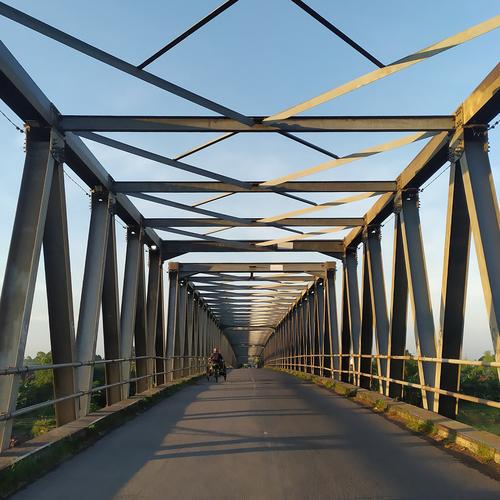
Compared with traditional reinforced concrete bridges, highway steel bridges leverage material properties to break through the span and construction efficiency bottlenecks of conventional bridge structures. The ultra-high strength-to-weight ratio of steel endows the main load-bearing structure with a higher bearing capacity reserve under the dead weight limit, enabling long-span layout designs that avoid dense pier construction in complex environments such as wide rivers, deep valleys, and busy trunk road intersections, greatly reducing the negative impact of bridge construction on regional hydrological conditions and existing traffic operation. The factory prefabrication + on-site assembly construction mode derived from steel structure characteristics shortens the on-site construction period by more than 40% on average compared with cast-in-place concrete bridges, which effectively controls the social cost of traffic interruption during construction and meets the timeliness requirement of infrastructure upgrading in busy transportation networks.
Modern highway steel bridges undertake long-term repeated dynamic loads from multi-type traffic flows, ranging from 1.2t passenger cars to 49t heavy-duty freight vehicles, and the cumulative fatigue load can reach more than 10 million times in the design life cycle. At the same time, the structure is affected by multiple coupled external factors including large temperature difference cycles, alternating dry and wet corrosion environments, wind-induced vibration and occasional seismic actions. The selection of special bridge steel directly determines the structural failure threshold, fatigue life and whole-life cost of the bridge, and is the core carrier of the performance goal of highway bridge engineering.
The design concept of modern highway steel bridges has shifted from the traditional single load-bearing design to the multi-objective collaborative optimization of bearing safety, long-term durability, environmental impact and whole-life cost, and the application of Q355qd steel provides material basis for the realization of this concept. Q355qd is a low-alloy high-strength steel specially developed for bridge engineering, its "q" represents the special performance requirement for bridge structure, and "d" corresponds to the D-level impact toughness requirement that can adapt to low temperature environments below -20℃. Compared with ordinary carbon structural steel, Q355qd has a 30% higher yield strength, and the qualified rate of low-temperature impact toughness is 100% under the requirement of 27J impact energy, which effectively avoids brittle fracture failure of structural parts under low temperature and dynamic load, improves the overall safety redundancy of the bridge.
Modern design relies on computer-aided finite element modeling to complete multi-condition simulation of Q355qd welded joints, plate parts and overall truss/box girder structures, accurately calculate the stress concentration, fatigue damage accumulation and deformation response under extreme loads such as super-heavy vehicles, strong winds and earthquakes, and optimize the thickness distribution and connection mode of Q355qd steel plates on the premise of meeting the code requirements, reducing the amount of structural steel by 8-12% while ensuring structural safety, which realizes the dual optimization of material cost and carbon emission in the construction stage. At the same time, the good weldability of Q355qd reduces the preheating requirement during on-site welding, which supports the flexible design of structural joints and adapts to the adjustment needs of subsequent bridge widening and load upgrading.
The advancement of highway steel bridge construction technology is highly coupled with the development of special bridge steel. The good processing performance of Q355qd makes it possible to prefabricate large-size structural parts in factories: the material has uniform performance and small processing deformation, which can realize the integrated forming of large box girder sections and truss nodes in the controlled environment of the factory, and the dimensional accuracy of components can be controlled within ±2mm, which is much higher than the accuracy of on-site processing. This factory prefabrication mode avoids the impact of on-site weather conditions on processing quality, and greatly improves the consistent stability of Q355qd structural parts.
On this basis, modular integrated construction has become the mainstream construction mode of Q355qd highway steel bridges: large prefabricated modules are transported to the site by self-propelled modular transporters, and completed one-time accurate positioning and docking. This mode reduces the high-altitude operation of on-site welding by more than 60%, improves the construction safety level, and shortens the on-site construction interruption time, which is particularly suitable for reconstruction and expansion projects of existing busy highways and cross-urban trunk line bridges, and realizes the coordinated unification of construction efficiency and social impact. In addition, the high strength of Q355qd allows the design of larger single hoisting modules, reduces the number of on-site joints, reduces the potential weak points of fatigue and corrosion, and improves the overall durability of the structure.
The whole-life cycle performance management of Q355qd highway steel bridges is the core link to ensure long-term safe operation, and the maintenance system has formed a systematic technical path around the material characteristics of Q355qd. First of all, for the fatigue and corrosion damage that may occur in Q355qd steel bridges under long-term load and atmospheric environment, regular non-destructive testing is deployed: ultrasonic phased array testing is used to detect hidden cracks inside the welded joints, and magnetic particle testing is used to identify surface micro-cracks in the stress concentration area, so as to achieve early warning of damage before the crack extends to the critical size. For the corrosion problem of steel structure, the composite anti-corrosion system based on Q355qd matrix is adopted: the bottom layer is zinc-rich primer with cathodic protection effect, and the surface layer is weather-resistant polyurea coating, which can achieve 25 years of anti-corrosion protection under normal atmospheric environment, greatly extending the maintenance interval.
In order to realize predictive maintenance, Q355qd steel bridges widely deploy embedded structural health monitoring systems, and arrange stress sensors, acceleration sensors and corrosion sensors at key stress parts such as main girder mid-span, support and welded joints, collect real-time data of stress change, vibration response and corrosion rate of Q355qd structure, establish a fatigue damage accumulation model based on actual traffic load, predict the remaining service life of the structure, and carry out targeted reinforcement and maintenance before potential safety hazards occur, which changes the traditional maintenance mode of "replacing after damage", avoids the huge cost of large-scale overall rehabilitation, and reduces the average whole-life cycle cost of the bridge by 15-20% while ensuring safety.


