

Views: 211 Author: Evercross Bridge Publish Time: 2026-07-03 Origin: Evercross Bridge


Content Menu
● What Is a Hiking Trail Bridge Really For?
● Core Design Factors You Must Get Right
>> Start With the Big Picture: Context First, Structure Second
>> Material Choices: Steel vs. FRP vs. Wood
>>> Fiber Reinforced Polymer (FRP) Bridges
>>> Wood Bridges
>> Bridge Location and Site Access
>> Dimensions and Load: Getting Numbers Right Early
>> Aesthetics and User Experience
● Advanced Considerations for Modern Steel Trail Bridges
>> Lifecycle Cost and Risk Management
>> Emergency and Resilience Planning (Bailey and Modular Bridges)
>> Sustainability and Environmental Footprint
>> Practical Steps to Plan Your Trail Bridge Project
● Steel Trail Bridges vs. FRP and Wood: At‑a‑Glance
● FAQs
As a steel bridge manufacturer with over 30 years of field experience and more than 200 large government projects delivered worldwide, I've seen trail bridge designs succeed—or fail—based on decisions made long before any steel member arrives on site. This guide distills lessons from real projects and expands on common design advice to help you specify safer, more durable, and more cost‑effective steel trail bridges.
A hiking trail bridge is more than a way to "get across" a creek or ravine. It is a critical safety asset that protects users from water hazards, unstable ground, and seasonal flooding, while preserving sensitive ecosystems by channeling traffic over, not through, natural features. When designed well, the bridge becomes part of the trail experience—framing views, guiding movement, and quietly managing risk for pedestrians, cyclists, and maintenance crews.
Before you decide on steel, FRP, or wood, clarify the project context:
- Trail type: urban greenway, national park, or remote backcountry
- User mix: pedestrians only, or shared with bikes, golf carts, and service vehicles
- Climate: freeze–thaw cycles, heavy snow, high humidity, coastal exposure
- Maintenance capability: local crews vs. limited resources in remote regions
These variables will drive material choices, span length, installation methods, and long‑term costs.
From a manufacturer's perspective, each has a clear role—but not the same lifecycle profile.
Steel trail bridges—especially prefabricated modular systems and Bailey‑type structures—are widely used for both permanent and emergency applications.
Key advantages:
- High strength‑to‑weight ratio suitable for long spans and mixed traffic
- Predictable structural performance and codified design standards
- Excellent compatibility with prefabrication for rapid deployment
Modern protective coatings, weathering steel, and hot‑dip galvanizing significantly reduce corrosion risk, making steel a long‑life option when specified correctly.
Steel components are heavier than FRP and typically require cranes or temporary access roads for installation in very remote sites. Prefabricated modular systems mitigate this by using smaller, repeatable units that can be lifted with lighter equipment.
FRP is presented as a corrosion‑resistant material with a claimed 100‑year lifespan and minimal maintenance, particularly attractive in remote locations. Its low weight—roughly one quarter that of steel—allows components to be hand‑carried to sites where heavy equipment cannot reach.
For trail bridge owners, FRP is compelling when:
- Access is extremely difficult
- Corrosion from salt spray or chemicals is a primary concern
- Available maintenance capacity is minimal
However, FRP often comes with higher upfront costs and requires specialized engineering knowledge, which can limit local support in some markets.
Wood bridges typically deliver around 30 years of service life with frequent maintenance needs, including inspection for rot, insect damage, and deck repairs. They remain popular where budget is tight, aesthetics must be rustic, or environmental permitting favors natural materials.
From an asset‑management perspective, wood usually means lower initial cost but higher lifecycle expense because of recurring maintenance and replacement.
From a practitioner's perspective, location is a core design driver:
1. Accessibility: Is the bridge in a remote mountain valley, a suburban park, or an urban waterfront?
2. Construction logistics: Can you bring in cranes or only small equipment? Will you need to build a temporary access road just to install the bridge?
3. Environmental sensitivity: Are there wetlands, wildlife corridors, or protected habitats that constrain your construction footprint?
Steel trail bridges and modular emergency bridges shine when access is difficult but not impossible—where you can get light to medium equipment on site and benefit from fast assembly. FRP systems dominate only when equipment access is practically excluded and hand‑carried installation is the only realistic option.
Designers often underestimate the span required for a bridge. In practice, underestimating the span is one of the costliest errors, as it can trigger redesigns, engineering changes, and schedule delays.
Key questions to answer upfront:
- Exact horizontal span between stable abutments, allowing for erosion and flood margins
- Vertical clearance over water, flood levels, or trail crossings
- Required bridge width for peak user flow: pedestrians, cycles, or small vehicles
For steel trail bridges, proper geometric definition is vital to selecting an economical truss depth, modular bay length, and deck system.
- Live loads from maintenance vehicles or emergency access (ATVs, pickup trucks, park service trucks)
- Dynamic loads from cyclists or groups moving in cadence
- Wind loads, especially on exposed ridges or coastal sites
When specifying modular steel systems like Bailey bridges for trail or emergency use, understanding load classes ensures you neither overspecify (wasting budget) nor underspecify (creating safety risk).
In practice, aesthetics has a direct impact on user comfort and perceived safety.
Consider:
- Slender truss profiles that maintain sightlines and scenic views
- Color palettes that blend with forest, grassland, or urban materials
- Deck textures that visually signal non‑slip surfaces
- Rail height and transparency that feel secure without feeling "caged"
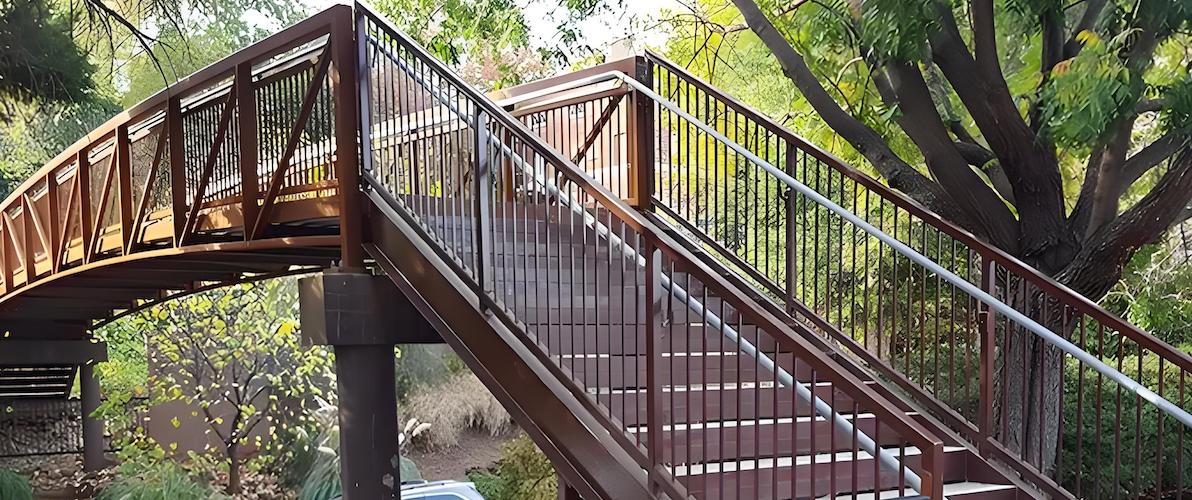
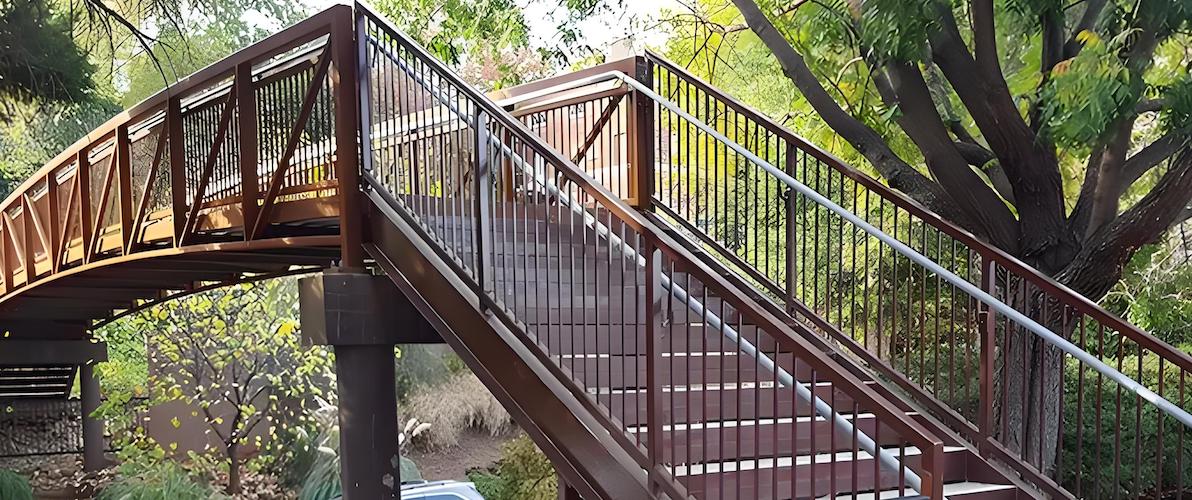
Steel trail bridges can be visually refined with curved chords, tapered members, and integrated lighting, transforming them from purely functional objects into landmarks that elevate the trail's identity.
First‑cost is only part of the story. For a government or park authority, total lifecycle cost and risk exposure matter more.
Key elements:
- Coating system life and repainting cycles for steel bridges
- Inspection regimes and access requirements for remote structures
- Failure consequences: closure of critical trail segments, reputational risk, and emergency repair costs
Steel trail bridges designed with durable coatings and standardized modular components often deliver a favorable lifecycle cost profile, especially when the owner has established inspection routines.
Trail systems increasingly face climate‑driven events: flash floods, landslides, and wildfires. Prefabricated steel systems—Bailey bridges and modern modular equivalents—allow authorities to:
- Rapidly restore trail connectivity after an event
- Temporarily bypass damaged spans while permanent works are planned
- Deploy pre‑stocked bridge units across multiple sites when needed
Including emergency bridge strategies in your trail network plan means specifying interface details (abutment types, standard widths, approach geometry) so future temporary bridges can be installed quickly without major redesigns.
FRP's corrosion resistance and low maintenance are often framed as inherently more sustainable, but the picture is more nuanced.
For steel trail bridges:
- High recyclability at end of life
- Mature supply chain and well‑understood embodied carbon
- Ability to optimize weight through efficient truss design
For wood bridges:
- Renewable material source but frequent replacement and chemical treatments may offset benefits.
For FRP:
- Long lifespan and low maintenance, but recycling and end‑of‑life pathways are still evolving.
An honest sustainability assessment weighs actual service life, maintenance, and replaceability—not just initial material claims.
From an industry practitioner's view, successful projects follow a clear sequence:
1. Define objectives and constraints. Clarify user types, desired lifespan, budget envelope, and maintenance capacity.
2. Survey the site in detail. Capture accurate topography, hydrology, and geotechnical data, including flood levels and erosion patterns.
3. Select a material strategy. Choose steel, FRP, or wood based on logistics, loads, and lifecycle priorities.
4. Engage a specialist bridge manufacturer early. Early input on modular options, fabrication limits, and transportation can prevent costly redesigns later.
5. Plan installation logistics. Define access routes, equipment choices, temporary works, and environmental protection measures.
6. Design for inspection and maintenance. Ensure that bearings, connections, and decks are accessible and that documentation is clear for future teams.
Factor | Steel trail bridge | FRP bridge | Wood bridge |
Structural capacity | High, long spans, vehicles | Moderate to high | Moderate, shorter spans |
Weight | Heavy | Very light | Moderate |
Installation logistics | Needs equipment; modularization helps | Hand‑carry in remote sites | Light equipment, local crews |
Maintenance | Low with good coatings | Very low | High, frequent repairs |
Lifespan | Long with proper protection | 100+ years claimed | Around 30 years |
Aesthetics | Highly customizable | Clean, modern | Rustic, natural |
Emergency use | Excellent with modular systems | Limited | Not typical |
For planners and engineers considering a steel trail bridge or modular emergency bridge solution, the next steps are straightforward:
- Document your site conditions, expected loads, and maintenance capabilities.
- Shortlist material options based on accessibility and lifecycle priorities.
- Contact a specialized steel bridge manufacturer to review whether a prefabricated steel trail bridge or modular Bailey‑type system is the best fit for your project.
By involving an experienced partner early, you can reduce design risk, optimize cost, and ensure your trail bridge enhances both safety and user experience for decades.
Q1: How do I choose between steel and FRP for a remote trail bridge?
If equipment access is nearly impossible and maintenance capacity is very low, FRP may be preferable because of its light weight and minimal upkeep. When access for light machinery is feasible and you need higher capacity or modular emergency options, steel is often the better long‑term choice.
Q2: Are steel trail bridges suitable for mixed pedestrian and vehicle use?
Yes. Properly designed steel trail bridges can safely carry pedestrians, cyclists, and light maintenance vehicles, provided load classes are correctly defined in the design brief.
Q3: How important are aesthetics for trail bridges?
Aesthetics strongly influence user comfort and perceived safety, especially in parks and ecotourism sites. Slim truss profiles, appropriate colors, and transparent railings help bridges blend into landscapes while still feeling secure.
Q4: What is the typical lifespan of a steel trail bridge?
With modern protective coatings, high‑quality fabrication, and regular inspections, steel trail bridges can deliver several decades of service with relatively low maintenance needs.
Q5: Why should I plan for emergency bridge deployment in a trail network?
Climate‑driven events can sever critical trail links, affecting tourism, local access, and safety. Including modular steel emergency bridges in your strategy allows rapid restoration of connectivity when permanent structures are damaged or under repair.
- Areté Structures. "4 Factors To Consider For Your Hiking Trail Bridge Design." [magnific]
- U‑AInSPECT Project. "Bridge Use Case dataset for structural monitoring and post‑disaster assessment." [zenodo]
- IconScout. "AI Images for Bridges – Royalty‑Free AI‑Generated Art." (visual inspiration for bridge illustrations and diagrams) [iconscout]
- Kaze AI. "AI Bridge Generator – Create Stunning Visuals Instantly." (reference for AI‑generated bridge imagery capability) [kaze]
- Magnific (formerly Freepik). "Bridge infrastructure projects vectors." (reference source for infrastructure‑style visuals) [magnific]


