

Views: 211 Author: Site Editor Publish Time: 2025-07-10 Origin: Site


Content Menu
● The Invention of the Bailey Bridge
● Design Features of the Bailey Bridge
● Applications of the Bailey Bridge
>> Military Use
● The Impact of the Bailey Bridge on Engineering
>> Advancements in Bridge Design
>> Training and Skill Development
>> Legacy of the Bailey Bridge
● Frequently Asked and Questions regarding Bailey Bridge
>> 1. What materials are used in the construction of a Bailey Bridge?
>> 2. How long does it take to assemble a Bailey Bridge?
>> 3. Can Bailey Bridges be used for permanent structures?
>> 4. What are the load capacities of a Bailey Bridge?
>> 5. Where have Bailey Bridges been used in disaster relief efforts?
The Bailey Bridge is a type of modular bridge that has been widely used in military and civilian applications since its invention. Its design is notable for its simplicity, ease of assembly, and versatility, making it a popular choice for temporary and permanent structures. This article explores the history, design, applications, and significance of the Bailey Bridge, as well as its impact on engineering and infrastructure.
The Bailey Bridge was invented during World War II, a time when rapid deployment of military infrastructure was crucial. The need for quick and efficient bridge construction arose from the challenges faced by Allied forces in various theaters of war. Traditional bridge-building methods were often too slow and cumbersome to meet the demands of fast-moving military operations. The urgency of the situation was compounded by the need to cross rivers and other obstacles quickly to maintain supply lines and troop movements. As the war progressed, the ability to construct bridges in a matter of hours rather than days became a strategic advantage.
The bridge is named after its inventor, Sir Donald Bailey, a British civil engineer. Bailey was tasked with developing a bridge that could be easily transported and assembled by soldiers with minimal training. His innovative design utilized prefabricated components that could be quickly pieced together, allowing for swift deployment in combat situations. Bailey's background in civil engineering and his experience with modular construction techniques played a crucial role in the development of the bridge. His vision was not only to create a functional structure but also to ensure that it could be operated by personnel without extensive engineering knowledge, thus democratizing bridge construction in military contexts.
The first Bailey Bridge was constructed in 1940. It was designed to be lightweight yet strong enough to support military vehicles and equipment. The bridge's modular design allowed for various configurations, enabling it to span different lengths and support varying loads. This adaptability made it an ideal solution for the rapidly changing conditions of war. The initial prototypes were tested under various conditions to ensure their reliability and performance. The successful deployment of the Bailey Bridge in combat zones demonstrated its effectiveness and solidified its reputation as a revolutionary engineering solution.
One of the defining features of the Bailey Bridge is its modular construction. The bridge consists of a series of prefabricated panels that can be easily transported and assembled on-site. Each panel is made from high-strength steel, providing durability and stability. The modular design allows for quick assembly and disassembly, making it suitable for temporary applications. This feature is particularly beneficial in military operations where time is of the essence. The ability to transport the components in standard military vehicles further enhances its practicality, allowing for rapid deployment in various terrains and conditions.
The Bailey Bridge is designed to support heavy loads, including military vehicles, tanks, and equipment. Its unique truss design distributes weight evenly across the structure, enhancing its load-bearing capacity. This feature is particularly important in military operations, where the ability to support heavy equipment is critical. The design also incorporates safety factors to ensure that the bridge can withstand unexpected loads or stresses. Engineers have conducted extensive testing to determine the maximum load limits, and the bridge has proven to be reliable under various conditions, including adverse weather and rough terrain.
The Bailey Bridge can be configured in various ways to accommodate different spans and load requirements. It can be built as a single-span bridge or as a multi-span structure, depending on the needs of the project. This versatility makes it suitable for a wide range of applications, from temporary military crossings to permanent civilian infrastructure. The ability to customize the bridge design allows engineers to address specific site conditions and requirements, making it a flexible solution for diverse engineering challenges. Additionally, the bridge can be adapted for use in urban environments, rural areas, and even in remote locations where traditional construction methods may be impractical.
The primary application of the Bailey Bridge has been in military operations. Its rapid deployment capabilities have made it an essential tool for armed forces around the world. The bridge has been used in various conflicts, including World War II, the Korean War, and more recent military engagements. Its ability to provide immediate access across rivers and obstacles has been crucial in supporting troop movements and logistics. The bridge has also been utilized in training exercises, allowing military personnel to practice assembly and disassembly techniques in preparation for real-world scenarios. The continued use of the Bailey Bridge in military operations underscores its enduring relevance and effectiveness in modern warfare.
In addition to its military applications, the Bailey Bridge has also been used in civilian infrastructure projects. Its ease of assembly and cost-effectiveness make it an attractive option for temporary and permanent bridges in remote or disaster-stricken areas. The bridge has been employed in various civil engineering projects, including roadways, pedestrian crossings, and emergency access routes. Local governments and organizations have recognized the value of the Bailey Bridge in enhancing connectivity and accessibility, particularly in regions where traditional infrastructure may be lacking. Its use in civilian projects demonstrates the bridge's adaptability and effectiveness beyond military contexts.
The Bailey Bridge has played a significant role in disaster relief efforts. In the aftermath of natural disasters, such as floods and earthquakes, traditional infrastructure may be damaged or destroyed. The Bailey Bridge can be quickly deployed to restore access to affected areas, allowing for the delivery of aid and support to those in need. Its ability to provide immediate access is invaluable in emergency situations. Humanitarian organizations have utilized the Bailey Bridge to facilitate rescue operations and transport essential supplies to isolated communities. The bridge's role in disaster relief highlights its importance as a tool for recovery and rebuilding in times of crisis.
The invention of the Bailey Bridge marked a significant advancement in bridge design and construction. Its modular approach has influenced the development of other types of prefabricated structures. Engineers have studied the Bailey Bridge's design principles to create more efficient and effective bridge solutions in various contexts. The principles of modularity and ease of assembly have been integrated into contemporary bridge designs, leading to innovations that prioritize speed and efficiency. The Bailey Bridge has set a standard for future engineering projects, demonstrating the potential of prefabricated components in construction.
The simplicity of the Bailey Bridge's assembly process has also contributed to the development of training programs for engineers and construction workers. The bridge can be assembled by individuals with minimal training, making it accessible for various applications. This has led to the establishment of training programs that focus on modular construction techniques, enhancing the skill sets of workers in the construction industry. Educational institutions and military organizations have incorporated Bailey Bridge training into their curricula, ensuring that future engineers are equipped with the knowledge and skills necessary to implement modular solutions effectively.
The legacy of the Bailey Bridge continues to influence modern engineering practices. Its design principles are still relevant today, and many contemporary bridges incorporate modular elements inspired by the Bailey Bridge. The bridge's impact on military and civilian infrastructure has solidified its place in engineering history. As engineers face new challenges in infrastructure development, the lessons learned from the Bailey Bridge will remain pertinent. Its enduring legacy serves as a reminder of the importance of innovation and adaptability in engineering, ensuring that we can meet the demands of a rapidly changing world.
The Bailey Bridge is a remarkable example of innovative engineering that has stood the test of time. Its invention during World War II addressed the urgent need for rapid and efficient bridge construction in military operations. The bridge's modular design, load-bearing capacity, and versatility have made it a valuable asset in both military and civilian applications. As we look to the future, the principles established by the Bailey Bridge will continue to inform bridge design and construction. Its legacy serves as a reminder of the importance of adaptability and efficiency in engineering, ensuring that we can meet the challenges of infrastructure development in an ever-changing world. The Bailey Bridge not only revolutionized military logistics but also paved the way for advancements in civil engineering, making it a true icon in the field of bridge construction.
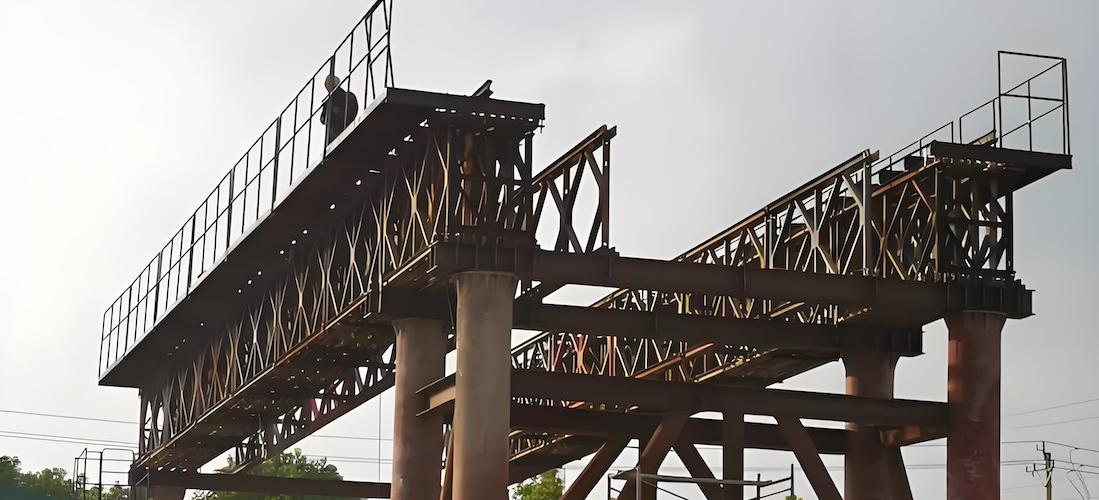
Bailey Bridges are primarily constructed from high-strength steel, which provides durability and stability. The use of steel allows for lightweight yet strong panels that can support heavy loads.
The assembly time for a Bailey Bridge can vary depending on the size and configuration, but it can typically be erected in a matter of hours by a small team of trained personnel, making it ideal for rapid deployment in military and emergency situations.
Yes, while originally designed for temporary use, Bailey Bridges can be adapted for permanent applications. They have been successfully used in civilian infrastructure projects, such as roadways and pedestrian crossings, where quick and cost-effective solutions are needed.
The load capacity of a Bailey Bridge can vary based on its design and configuration, but it is generally capable of supporting heavy military vehicles, including tanks. Specific load ratings are determined during the design process based on the intended use.
Bailey Bridges have been deployed in various disaster relief scenarios, including after earthquakes, floods, and hurricanes. They have been used to restore access to isolated communities, allowing for the delivery of aid and support in emergency situations.


