Views: 217 Author: Site Editor Publish Time: 2025-06-28 Origin: Site


Content Menu
● I. The Triple Revolution in Carbon Reduction
● II. Four-Dimensional Leap in Low-Carbon Construction
● III. The "Carbon Gold Rush" in Future Infrastructure
● IV. Bridging Toward Zero-Carbon Civilization
● V. Trailblazers' New Odyssey
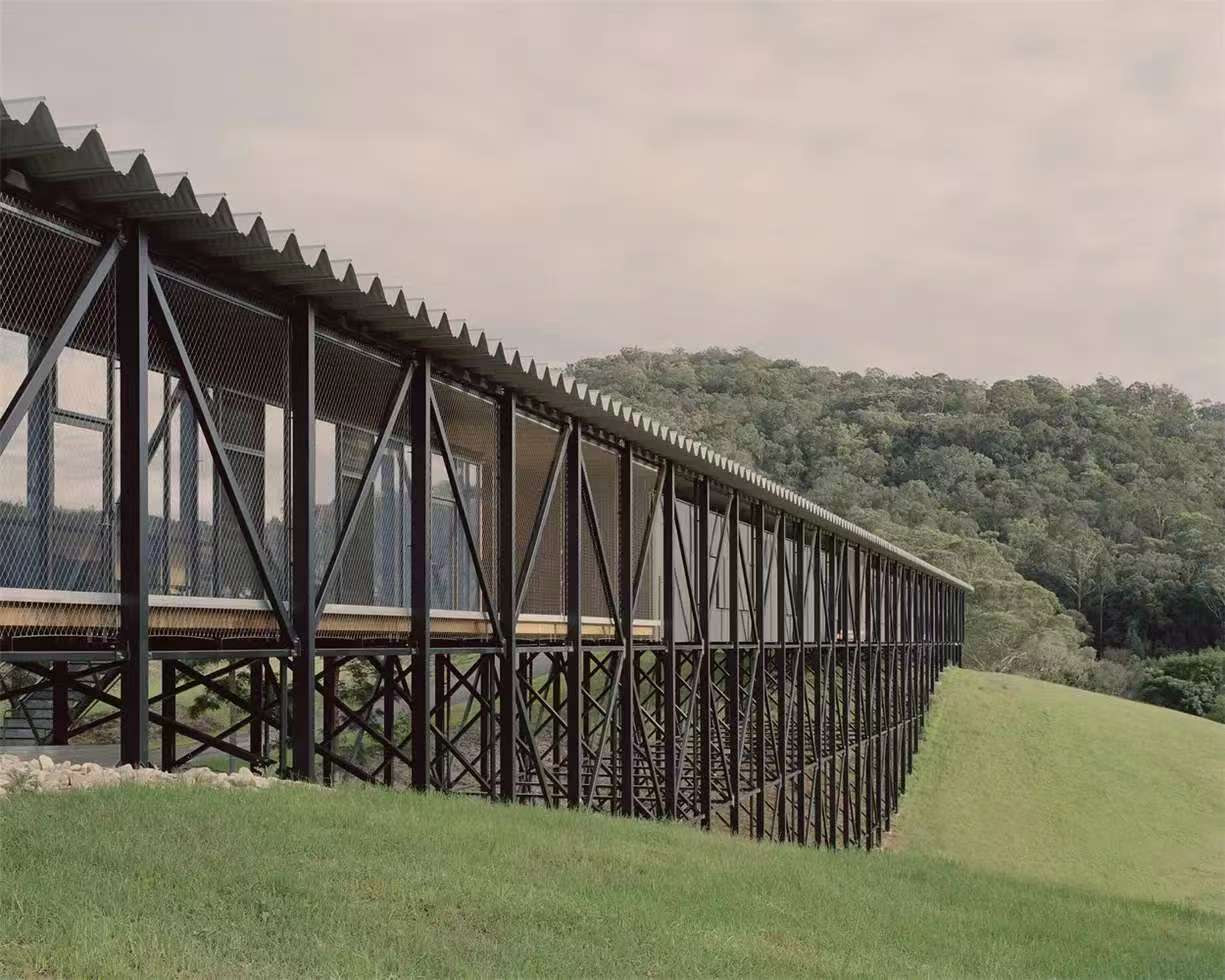
In Shenzhen's Qianhai, the carbon fiber skeleton of the "Cloud Corridor" pedestrian bridge gleams with the cold elegance of industrial aesthetics. Composed of 128 prefabricated modules, this aerial structure generated only 1/8th of the construction waste of traditional bridges during its build phase, while achieving a record-low lifecycle carbon footprint of 38kg CO₂ per square meter. As the International Energy Agency reveals that global construction accounts for 37% of carbon emissions, Chinese engineers are rewriting the foundational logic of infrastructure through modular technology—a transformation that transcends engineering innovation, evolving into a civilizational leap for humanity's future on Earth.

1. Material Revolution: From Steel Jungles to Smart Material Matrices
At Jiangsu Carbon Valley Laboratory, researchers have fused basalt fibers with graphene to create a structural material with 200x enhanced conductivity. These "thinking steel bars" not only monitor stress in real time but also sequester CO₂ through nano-porous structures—Delft University of Technology trials show 4.3kg CO₂ absorption per cubic meter annually. Meanwhile, the University of Michigan's mycelium-based self-healing bio-concrete enables 48-hour crack repair, extending bridge lifespans by 30%.
2. Construction Revolution: Metaverse-Powered Precision Manufacturing
Within CSCEC's "Starlink Factory," 5G-enabled industrial internet creates cyber-physical production lines: Digital twins synchronize 100,000+ sensor data points to optimize manufacturing; laser-induced plasma cutting achieves ±0.02mm precision on carbon fiber; agile AGVs enable 72-hour production line reconfiguration. These innovations delivered 15% steel savings and 83% reduced aerial work risks during the Hong Kong-Zhuhai-Macao Bridge project.
3. Operational Revolution: Blockchain-Driven Carbon Asset Management
Singapore's Temasek-backed CircularBridge platform is building a digital carbon market where NFC-chip-embedded modules autonomously trade carbon credits via smart contracts. Denmark's COWI takes this further with algae bioreactor bridges: A 300-meter cable-stayed bridge equipped with photovoltaic-powered microalgae systems can absorb carbon equivalent to 30 hectares of forest annually.
▶ Lightweighting Breakthroughs
Kawasaki's aerometal foam—1/4 water's density yet strong enough for aircraft carriers—has enabled Tokyo Bay modular approach bridges to reduce weight by 60% and foundation concrete by 75%. MIT's 4D-printed shape-memory polymer components add climate-responsive "morphing intelligence," autonomously adjusting cross-sections under temperature changes.
▶ Clean Energy Production
CRCC's Qinghai Zero-Carbon Factory combines 150,000㎡ photovoltaic facades (21GWh/year) with hydrogen-powered heavy machinery. Its geopolymer concrete modules cut 680kg CO₂/m³ versus traditional cement. Vertical wind trees with carbon capture systems achieve negative emissions during production.
▶ Smart Logistics Transformation
CCCC's "Nebula Logistics System" deploys maglev autonomous transporters slashing energy use by 92%, while satellite networks optimize global supply chains. In Sichuan-Tibet Railway projects, this system compressed 800km mountain transport to 18 hours with 79% emission reductions.
▶ Circular Lifecycle Ecosystems
Aecom's "breathing bridges" integrate photovoltaic skins and vertical-axis turbines powering nearby communities, while artificial reef piers enhance marine carbon sinks by 200 tons/year. Retired modules undergo plasma recycling, with 98% materials repurposed for 3D printing.
At Saudi NEOM, CCCC's modular transport network for "The Line" city has converted carbon credits into $2.4 billion green bonds through innovative financing. VINCI's "Bridges-as-Carbon-Sinks" service monetizes ongoing carbon assets, while Blue Origin's lunar base plans use regolith-sintered modules to eliminate Earth-launch emissions—NASA estimates 500,000-ton CO₂ savings versus traditional space construction.
With Germany mandating infrastructure carbon neutrality by 2045 and California requiring modular techniques for new bridges, this green race has become existential. Chinese Academy of Engineering research suggests nationwide modular adoption could slash 680 million tons annually—equivalent to 1.5x the carbon sink of Northeast China Tiger and Leopard National Park. The newly formed Global Modular Infrastructure Alliance at Boao Forum has released pioneering 《Modular Bridge Carbon Accounting Whitepaper》, establishing a full-chain carbon model that could reshape global carbon tariff negotiations.
Three barriers persist: entrenched cast-in-situ construction interests, interdisciplinary talent gaps, and immature carbon markets. Countermeasures are emerging—Tongji University's "Smart Construction & Carbon Management" interdisciplinary program cultivates engineer-carbon analyst hybrids, while Xiong'an's "carbon performance bonds" penalize high-emission contractors.
In this century-defining transformation, modular bridges represent more than engineering innovation—they embody humanity's shift from nature conquest to symbiotic dialogue, from resource extraction to circular regeneration. When future generations walk these breathing structures, they'll touch not cold concrete, but the fulfilled promise of a species finally making peace with its planet.