

Views: 221 Author: Site Editor Publish Time: 2026-01-29 Origin: Site


Content Menu
● Overview of Bailey Steel Bridges
● Key Features of Bailey Steel Bridges
● Applications of Bailey Steel Bridges
>> 3. Civil Engineering Projects
>> 4. Municipal Infrastructure
● Recent Developments in Bailey Bridge Technology
>> 3. Sustainability Initiatives
>> 1. Emergency Response in Sichuan Province
>> 2. Military Exercise in Xinjiang
● Frequently Asked and Questions regarding Bailey Steel Bridges
>> 1. What are the typical load capacities for different Bailey bridge configurations?
>> 2. How do EVERCROSS BRIDGE's Bailey bridges compare to international standards?
>> 3. What are the maintenance requirements and lifespan considerations for Bailey bridges?
>> 4. In what situations are Bailey bridges most commonly used?
>> 5. What are the advantages of using Bailey bridges over traditional bridge construction methods?
Bailey steel bridges are renowned for their simple structure and rapid assembly, making them a popular choice in defense, transportation, and municipal water conservancy projects. As one of the most widely used modular steel bridges in China, they offer numerous advantages, including ease of transport, quick installation, high load capacity, excellent interchangeability, and strong adaptability. This article delves into the various types of Bailey steel bridges, their applications, and the unique features that set them apart in the industry. Understanding these aspects is crucial for engineers, project managers, and decision-makers involved in infrastructure development.
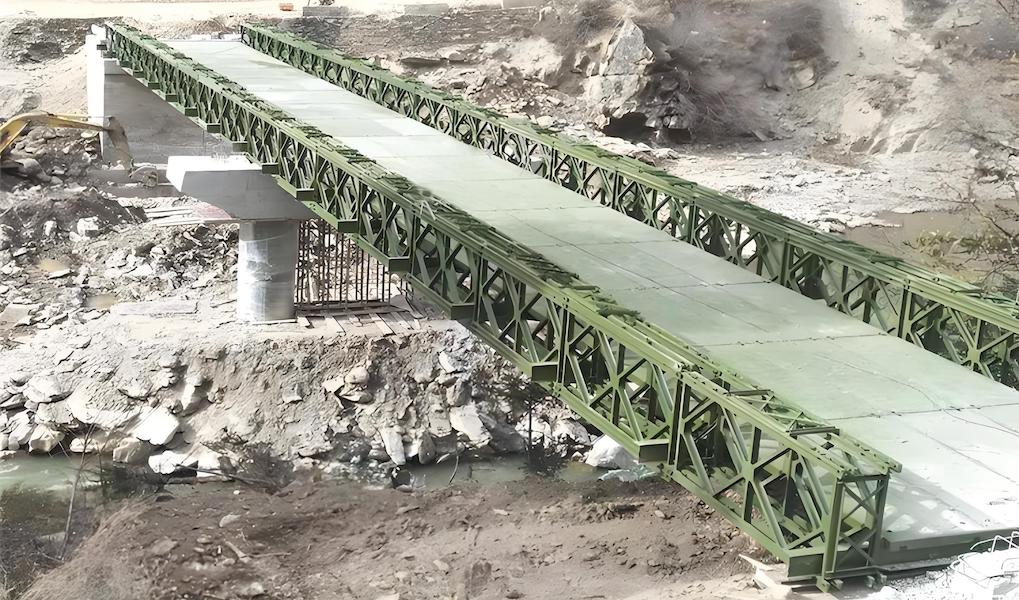
Bailey bridges are prefabricated structures that can be quickly assembled on-site, making them ideal for temporary and permanent applications. They are primarily categorized into two types:
● Type 321 Bailey Bridge
● Type 200 Bailey Bridge
● Single Lane Width: 3.7 meters
● Span Range: 9 to 75 meters
The Type 321 Bailey bridge is designed based on the imperial Bailey truss bridge, tailored to meet China's specific conditions and requirements. It is a modular bridge that can be disassembled and reassembled quickly, making it ideal for emergency situations. The entire bridge is constructed from high-strength steel, featuring a lightweight truss design that allows for easy transport and installation. This bridge type is particularly beneficial in remote areas where traditional construction methods may be impractical or too time-consuming. Its design also allows for various configurations, accommodating different load requirements and site conditions.
● Single Lane Width: 4.2 meters
● Span Range: 9.14 to 76.2 meters
● Double Lane Width: 7.4 meters
● Span Range: 9.14 to 57.9 meters
The Type 200 Bailey bridge can be configured as either a single-lane or double-lane bridge, significantly expanding its application range. It is designed to accommodate various load classifications, including:
● Automobile Load: Class 10 and Class 20
● HS Load: HS15 and HS20
● Tracked Load: Class 50
This versatility makes the Type 200 bridge suitable for a wide range of applications, from rural roads to urban infrastructure projects. Its ability to support heavier loads while maintaining structural integrity is a key advantage, especially in areas with high traffic volumes or where heavy vehicles are common.
One of the standout features of Bailey bridges is their rapid deployment capability. They can be assembled in a matter of hours, making them invaluable in emergency situations where time is of the essence. This speed of installation is critical in disaster response scenarios, where restoring access can save lives and facilitate the delivery of essential services. The modular components can be transported easily to remote locations, allowing for quick setup and use.
Bailey bridges are engineered to support substantial loads, making them suitable for various applications, from military operations to civilian infrastructure projects. Their design allows for a high degree of load distribution, which is essential for maintaining stability and safety under heavy traffic conditions. This capability is particularly important in military contexts, where heavy vehicles and equipment must traverse the bridge without compromising structural integrity.
The modular nature of Bailey bridges allows for easy customization based on specific project requirements. Components can be interchanged, and the bridges can be adapted to different spans and load conditions. This flexibility not only reduces construction time but also minimizes costs, as existing components can be reused for different projects. Engineers can design bridges that meet specific local needs, ensuring that each installation is optimized for its environment.
Due to their prefabricated nature, Bailey bridges can be produced at a lower cost compared to traditional bridge construction methods. This cost-effectiveness makes them an attractive option for both public and private sector projects. Additionally, the reduced labor and time required for installation further enhance their economic viability. Governments and organizations can allocate resources more efficiently, focusing on other critical infrastructure needs.
Bailey bridges are versatile and can be used in a variety of applications, including:
Bailey bridges are often deployed in military settings for rapid troop movement and logistics support. Their ability to be quickly assembled and disassembled makes them ideal for temporary military crossings. In conflict zones, where infrastructure may be damaged or non-existent, these bridges provide a reliable solution for maintaining supply lines and troop mobility.
In the aftermath of natural disasters, Bailey bridges provide a quick solution for restoring transportation routes. They can be installed over damaged infrastructure, allowing for the swift delivery of aid and resources. Organizations such as the Red Cross and various governmental agencies have utilized Bailey bridges in disaster-stricken areas to ensure that emergency services can reach affected populations without delay.
Bailey bridges are widely used in civil engineering projects, including road and rail construction. Their adaptability allows them to be used in various terrains and conditions. Engineers often choose Bailey bridges for temporary crossings during construction, ensuring that work can proceed without significant delays. Their use in civil projects also extends to pedestrian pathways and bike lanes, promoting safe and efficient transportation options.
Local governments utilize Bailey bridges for pedestrian walkways, bike paths, and temporary roadways during construction projects. Their lightweight design makes them suitable for urban environments, where space and weight restrictions may apply. By incorporating Bailey bridges into municipal planning, cities can enhance connectivity and accessibility for residents, improving overall quality of life.
Recent advancements in materials science have led to the development of high-strength, lightweight materials that enhance the performance of Bailey bridges. These materials improve load capacity while reducing overall weight, making the bridges even more efficient and easier to transport. Innovations such as corrosion-resistant coatings also extend the lifespan of these structures, reducing maintenance costs over time.
The integration of smart technology into Bailey bridges allows for real-time monitoring of structural integrity and load conditions. This innovation enhances safety and maintenance efficiency, as engineers can receive alerts about potential issues before they become critical. Smart sensors can track usage patterns, helping to inform future design improvements and maintenance schedules.
As environmental concerns grow, manufacturers are focusing on sustainable practices in the production of Bailey bridges. This includes using recycled materials and reducing the carbon footprint during manufacturing. By prioritizing sustainability, the industry can contribute to broader environmental goals while still meeting the demands of modern infrastructure.
In 2023, a major earthquake struck Sichuan Province, causing significant damage to transportation infrastructure. Bailey bridges were deployed to restore access to remote areas, allowing for the rapid delivery of humanitarian aid. This case highlights the critical role that Bailey bridges play in emergency response, demonstrating their effectiveness in real-world scenarios.
During a recent military exercise in Xinjiang, Type 321 Bailey bridges were used to facilitate troop movements across challenging terrain. The bridges were assembled in less than a day, demonstrating their effectiveness in military logistics. This exercise showcased the adaptability and reliability of Bailey bridges in high-stakes environments.
Bailey steel bridges represent a critical solution for various infrastructure needs, from military applications to disaster relief and civil engineering projects. Their rapid deployment, high load capacity, and modular design make them an invaluable asset in today's fast-paced world. As technology continues to evolve, the future of Bailey bridges looks promising, with innovations that enhance their performance and sustainability. By understanding the capabilities and applications of Bailey bridges, stakeholders can make informed decisions that benefit their projects and communities.
If you are interested in learning more about Bailey steel bridges or exploring how they can benefit your next project, contact us today for expert advice and tailored solutions. Our team at EVERCROSS BRIDGE is ready to assist you in finding the perfect bridge solution for your needs.
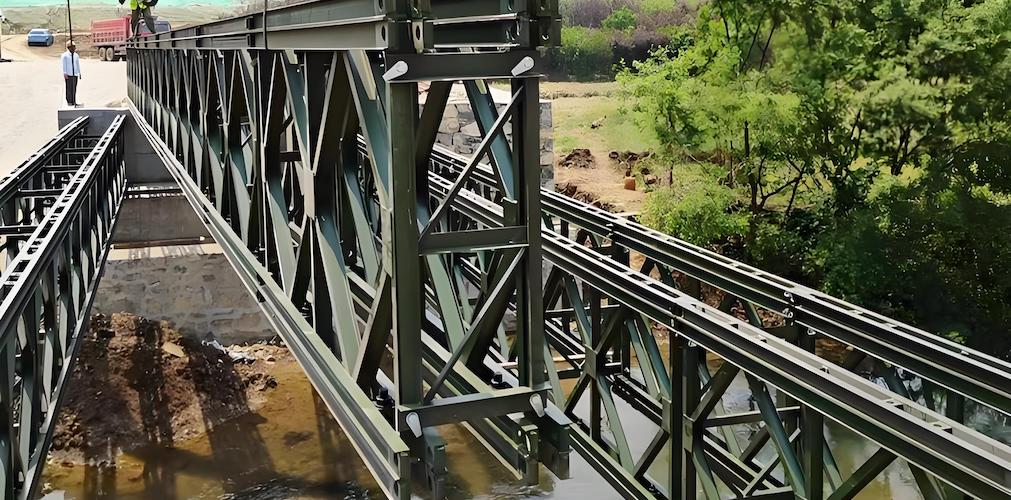
Bailey bridges are designed to accommodate various load classifications. The Type 321 Bailey bridge typically supports loads classified as automobile Class 10, Class 15, and Class 20, as well as tracked loads up to Class 50. The Type 200 Bailey bridge can support similar loads, including automobile Class 10 and Class 20, HS15, HS20, and tracked loads up to Class 50. The specific load capacity may vary based on the configuration and span of the bridge.
EVERCROSS BRIDGE's Bailey bridges are designed to meet or exceed international standards for modular bridge construction. They utilize high-strength materials and advanced engineering techniques to ensure safety, durability, and performance. The bridges are tested for load capacity, stability, and environmental resistance, aligning with global best practices in bridge design and construction.
Bailey bridges require regular inspections to ensure structural integrity and safety. Maintenance typically includes checking for signs of wear, corrosion, and damage to components. The lifespan of a Bailey bridge can vary based on environmental conditions and usage, but with proper maintenance, they can last for several decades. Innovations in materials and coatings are also enhancing the durability and reducing maintenance needs.
Bailey bridges are commonly used in various situations, including military operations for rapid troop movement, disaster relief efforts to restore access after natural disasters, civil engineering projects for temporary or permanent crossings, and municipal infrastructure for pedestrian walkways and bike paths. Their versatility and quick deployment make them ideal for emergency and temporary applications.
The advantages of using Bailey bridges over traditional construction methods include rapid deployment, lower costs, modular design for easy customization, and high load capacity. Bailey bridges can be assembled quickly on-site, making them ideal for emergency situations. Additionally, their prefabricated nature reduces labor and material costs, while their modular components allow for flexibility in design and application.


