

Views: 221 Author: Evercross Bridge Publish Time: 2026-05-27 Origin: Evercross Bridge


Content Menu
● The Small Component That Determines Bridge Safety
>> A Proven Modular Bridge System
● What Is a Bailey Bridge Pin?
>> The Structural "Joint" of the Bridge
● Why 30CrMnTi Alloy Steel Is the Optimal Choice
>> Superior Mechanical Performance
>> Shear Strength in Critical Conditions
● Core Functions of Bailey Bridge Pins
>> 2. Load Transfer Efficiency
>> 4. Rapid Assembly Advantage
● Installation Best Practices for Maximum Safety
● Real-World Application Scenario
>> Case Study: Emergency Bridge Deployment in Southeast Asia
● Common Failure Modes and Preventive Measures
● Inspection and Quality Control Standards
>> Recommended Testing Methods
● How to Choose a Reliable Bailey Bridge Pin Supplier
● Lifecycle Cost vs Initial Price
>> Cost Factors
>> Key Insight
● Future Trends in Modular Bridge Components
● Partner with Evercross Bridge
>> 1. How long do Bailey bridge pins last?
>> 2. Why is 30CrMnTi better than standard steel?
>> 3. Are galvanized pins necessary?
>> 5. What is the most common cause of pin failure?
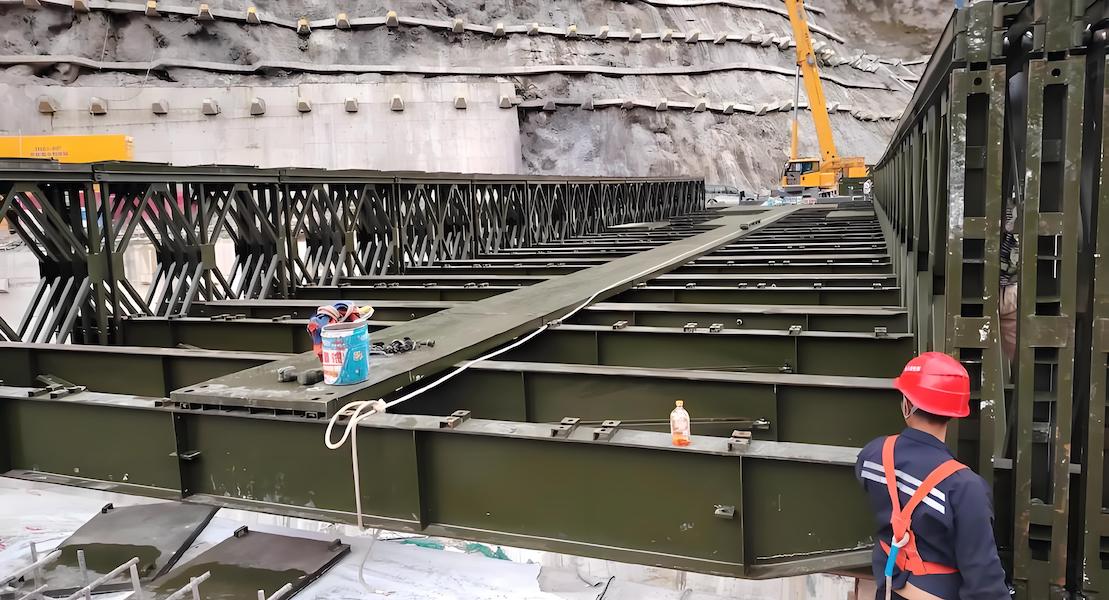
In the world of Bailey bridge systems and modular steel bridge construction, attention is often focused on truss panels, deck systems, and load capacity calculations. However, from a structural engineering standpoint, the safety and performance of the entire bridge frequently depend on a much smaller component—the Bailey bridge pin.
At Evercross Bridge, as a manufacturer providing end-to-end steel bridge solutions including design, fabrication, transportation, and installation, we have observed a consistent reality across international projects:
connection reliability is often the decisive factor between long-term structural success and premature failure.
The 30CrMnTi alloy steel Bailey pin represents a highly engineered solution to this challenge. Its role goes far beyond simple connection—it ensures load continuity, structural stiffness, fatigue resistance, and rapid assembly capability.
This article provides a comprehensive, expert-level analysis of:
- What a Bailey bridge and Bailey pin are
- Why 30CrMnTi alloy steel is used
- How pins function under real load conditions
- Common risks and best practices
- How to select the right supplier and reduce lifecycle costs
The Bailey bridge, invented in 1938 by British engineer Donald Bailey, is a prefabricated, modular steel truss bridge designed for rapid deployment without heavy equipment.
Its core characteristics include:
- Standardized truss panels (e.g., 3m × 1.5m in 321-type systems)
- High-strength steel construction
- Flexible span and load configurations
- Quick assembly and dismantling
Each panel typically weighs around 270 kg, making it manageable for manual or light mechanical handling.
Today, Bailey bridges are widely used in:
- Emergency disaster relief and temporary crossings
- Military logistics and rapid deployment
- Construction site access bridges
- Rural and remote infrastructure projects
- Mining and energy sector transportation routes
A Bailey bridge pin (connection pin) is the primary mechanical connector used to join adjacent truss panels into a continuous structure.
Without these pins, the bridge would remain a collection of independent components rather than a unified load-bearing system.
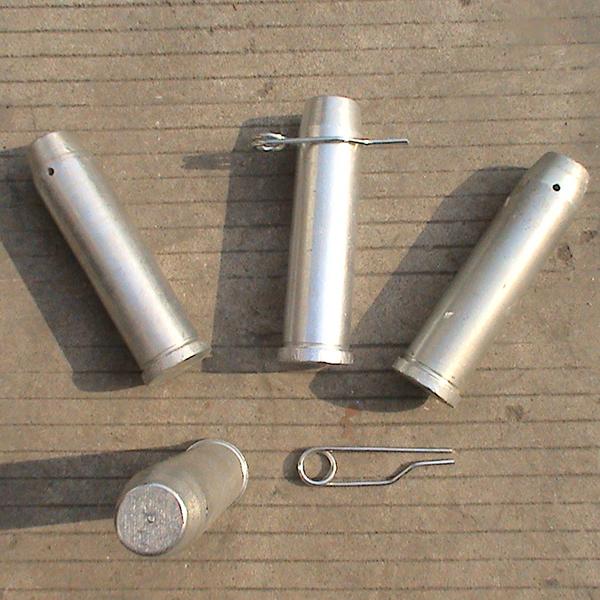
A standard Bailey pin includes:
- A precision-machined cylindrical body
- A retaining hole for inserting a safety clip
- A groove aligned with the hole to ensure correct installation orientation
Typical specifications for a 321-type Bailey bridge pin:
- Diameter: 49.5 mm
- Weight: Approximately 3 kg
- Types: Standard pin and headless pin
- Surface treatments:
- Black oxide (basic protection)
- Galvanized (enhanced corrosion resistance)
The use of 30CrMnTi alloy structural steel is not arbitrary—it is based on strict engineering requirements for strength, toughness, and fatigue resistance.
After proper heat treatment, the material achieves:
- Allowable tensile, compressive, and bending stress: ≈1105 MPa
- Excellent toughness under dynamic loading
- Strong resistance to wear and deformation
In comparison, the main truss material (16Mn steel) has an allowable stress of about 273 MPa.
This means the pin is more than four times stronger than the primary structural members, ensuring that connections are never the weak point.
Under double shear conditions, which are common in bridge joints:
- Allowable shear force: ≈550 kN
- Equivalent load capacity: ≈56 tons per pin
This allows a compact component to safely transmit massive structural forces.
The performance of 30CrMnTi depends heavily on controlled heat treatment processes, including:
- Carburizing
- Quenching
- Tempering
Poor heat treatment can lead to:
- Reduced toughness
- Brittle fracture risk
- Premature fatigue failure
Pins transform separate truss panels into a continuous structural system, enabling the bridge to function as a single unit.
All internal forces—including bending moments and shear forces—are transmitted through the pins at connection nodes.
High-strength pins prevent excessive deformation at joints, ensuring:
- Stable load paths
- Reduced vibration
- Improved driving safety
The pin-and-clip system allows:
- Fast installation without welding
- Easy disassembly and reuse
- Adaptability in emergency situations
Correct installation is critical to ensure performance.
- Align truss panels precisely before insertion
- Insert pins according to structural position:
- Lower inner panels: inside to outside
- Outer panels: outside to inside
- Upper panels: inside to outside
- Secure all pins with safety clips
- Verify full seating and alignment
- Misaligned groove orientation
- Missing safety clips
- Partial insertion of pins
These errors can significantly reduce structural reliability.
In a flood-affected region, a temporary Bailey bridge was installed to restore transportation within 72 hours.
Key observations:
- Use of galvanized 30CrMnTi pins prevented corrosion despite high humidity
- Rapid assembly was achieved due to standardized pin design
- The bridge safely handled heavy truck traffic exceeding initial estimates
Result:
The bridge remained operational for over 5 years, far exceeding its intended temporary use.
- Corrosion in marine or humid environments
- Fatigue cracking due to repeated heavy loads
- Mechanical wear from repeated assembly cycles
- Improper installation
- Use galvanized or anti-corrosion coatings
- Perform routine inspections
- Replace worn or deformed pins promptly
- Ensure trained personnel handle installation
- Dimensional accuracy (diameter tolerance)
- Surface condition (no cracks or defects)
- Heat treatment verification
- Mechanical property testing
- Ultrasonic testing for internal defects
- Hardness testing
- Load testing for batch validation
Selecting the right supplier directly impacts project safety and lifecycle performance.
- Certified material (30CrMnTi compliance)
- Advanced heat treatment capability
- Strict quality control processes
- Proven export experience
- Engineering support and documentation
Projects using certified high-quality pins report:
- Lower maintenance frequency
- Improved long-term reliability
- Reduced total project cost
Focusing only on unit price is a common mistake.
- Initial purchase cost
- Maintenance and inspection costs
- Replacement frequency
- Risk of structural failure
Investing in high-quality pins can:
- Reduce maintenance costs by up to 30%
- Extend service life significantly
- Minimize operational risks
The Bailey bridge system continues to evolve with:
- Advanced alloy materials
- Improved anti-corrosion technologies
- Smart inspection systems (sensor-based monitoring)
- Enhanced modular design for faster deployment
Pins, despite their simplicity, remain a critical focus of innovation due to their structural importance.
At Evercross Bridge, we provide complete Bailey bridge solutions:
- Custom bridge design
- Precision manufacturing
- Global logistics support
- On-site installation guidance
If your project requires reliable, high-performance modular steel bridges, choosing the right components is essential.
Contact Evercross Bridge today to discuss your project and receive expert support tailored to your needs.
Typically 10–20 years, depending on environment and maintenance.
It offers significantly higher strength, toughness, and fatigue resistance.
Yes, especially for coastal or high-humidity environments.
Yes, if they pass inspection for wear and deformation.
Improper installation and lack of maintenance.
- https://en.wikipedia.org/wiki/Bailey_bridge
- https://www.azom.com/article.aspx?ArticleID=6823
- https://www.fhwa.dot.gov/bridge/steel/
- https://www.engineeringtoolbox.com
- Evercross Bridge Internal Engineering Documentation


