

Views: 199 Author: Site Editor Publish Time: 2025-01-16 Origin: Site


Content Menu
● Understanding Bailey Bridges
>> Applications
>> Applications
● Key Differences Between Bailey Bridges and Truss Bridges
● Advantages of Bailey Bridges
>> Versatility
>> Durability
● Limitations of Bailey Bridges
● Limitations of Truss Bridges
>> Higher Costs
● Frequently Asked Questions regarding Bailey Bridge
>> 1. What are the primary uses of Bailey bridges?
>> 2. How do truss bridges distribute loads?
>> 3. Can Bailey bridges be used for permanent applications?
>> 4. What materials are commonly used in the construction of truss bridges?
>> 5. What are the advantages of using Bailey bridges in emergency situations?

Bridges are essential structures that facilitate transportation and connectivity across various terrains. Among the many types of bridges, Bailey bridges and truss bridges are notable for their unique designs and applications. This article delves into the key differences between these two types of bridges, exploring their construction, functionality, advantages, and limitations.
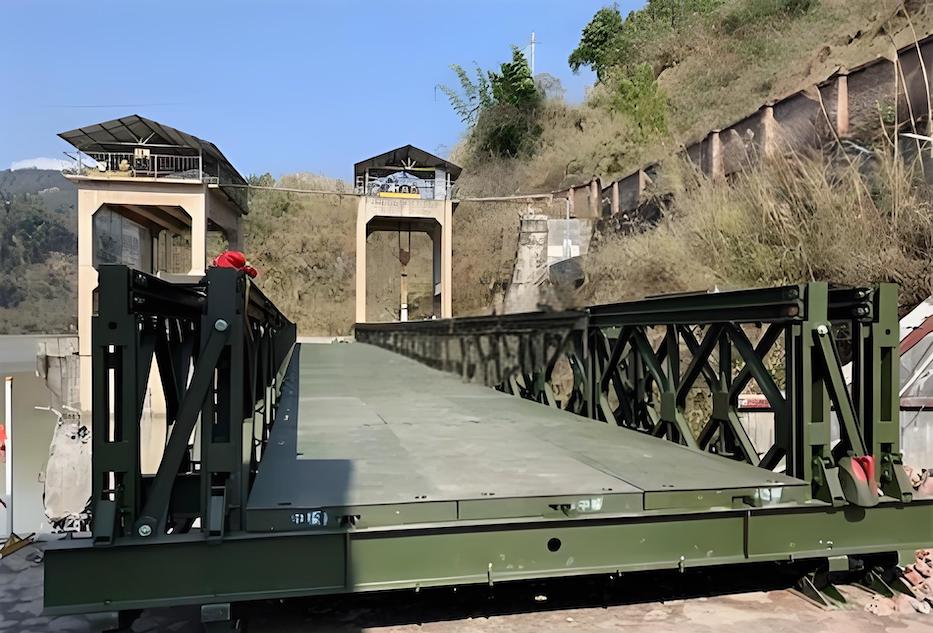
A Bailey bridge is a type of modular bridge that is prefabricated and designed for rapid assembly. It was developed during World War II for military use, allowing for quick deployment in various terrains. The bridge consists of a series of interconnected steel panels that form a lattice structure, providing strength and stability while remaining lightweight. The design of a Bailey bridge is characterized by its simplicity and efficiency, allowing it to be easily transported and assembled in remote locations. The modular nature of the bridge means that it can be extended or shortened by adding or removing panels, making it highly adaptable to different site conditions.
One of the defining features of Bailey bridges is their ease of assembly. The components can be transported separately and assembled on-site without the need for heavy machinery. This modularity allows for quick installation, often within a few hours, making it ideal for emergency situations or temporary crossings. The assembly process typically involves connecting the panels using pins and bolts, which can be done with minimal tools. This simplicity not only reduces the time required for construction but also allows unskilled laborers to participate in the assembly process, making it accessible in various contexts, including disaster relief efforts.
Bailey bridges are primarily used in military operations, disaster relief, and temporary infrastructure projects. They can support significant loads, making them suitable for vehicles and equipment. Their portability and rapid deployment capabilities make them invaluable in situations where traditional bridges cannot be constructed quickly. In addition to military applications, Bailey bridges have been used in civilian contexts, such as providing access to remote areas after natural disasters or during construction projects where permanent structures are not yet feasible. Their versatility extends to various environments, including rivers, valleys, and even urban settings where quick access is necessary.
A truss bridge is a type of bridge that uses a truss structure to support loads. The truss is composed of triangular units that distribute weight efficiently, allowing for longer spans with less material. Truss bridges can be made from various materials, including wood, steel, and concrete. The design of a truss bridge is inherently strong due to the geometric properties of triangles, which provide stability and support. This design allows for the construction of bridges that can span significant distances without the need for intermediate supports, making them ideal for crossing wide rivers or valleys.
Truss bridges are typically constructed on-site, requiring more time and resources compared to Bailey bridges. The assembly involves connecting individual truss members, which can be a complex process depending on the design. While they can be prefabricated, the installation often requires heavy equipment and skilled labor. The construction process may involve detailed engineering calculations to ensure that the bridge can safely support the expected loads. Additionally, the complexity of the design can lead to longer construction times, which may be a disadvantage in urgent situations where quick access is needed.
Truss bridges are commonly used for roadways, railways, and pedestrian crossings. They are suitable for both permanent and temporary applications, depending on the design and materials used. Their ability to span long distances makes them a popular choice for crossing rivers and valleys. Truss bridges are often seen in rural areas where they provide essential connections between communities. They can also be found in urban settings, serving as vital links in transportation networks. The aesthetic appeal of truss bridges, combined with their functionality, often makes them a preferred choice for public infrastructure projects.
One of the most significant differences between Bailey bridges and truss bridges is their portability. Bailey bridges are designed for quick assembly and disassembly, making them ideal for temporary use. In contrast, truss bridges are generally more permanent structures that require extensive construction time and resources. The ability to quickly deploy a Bailey bridge can be crucial in emergency situations, such as after a natural disaster, where immediate access is necessary for rescue and recovery operations. Truss bridges, while durable and long-lasting, may not be suitable for situations requiring rapid response due to their longer construction timelines.
Bailey bridges are primarily made of steel panels that are pre-engineered for strength and stability. Their modular design allows for flexibility in length and width. Truss bridges, on the other hand, can be constructed from various materials and often feature more complex designs that may include additional elements like arches or beams. The choice of materials for truss bridges can significantly impact their weight, load capacity, and overall durability. For instance, steel truss bridges are known for their strength and longevity, while wooden truss bridges may be more aesthetically pleasing but less durable in harsh weather conditions.
Both types of bridges can support substantial loads, but their load capacities can vary based on design and materials. Bailey bridges are engineered to handle significant weight, making them suitable for military vehicles and heavy equipment. Truss bridges can also support heavy loads, but their capacity depends on the specific design and materials used. The load distribution characteristics of truss bridges allow them to span longer distances without additional supports, which can be advantageous in certain applications. However, the specific load capacity of any bridge will ultimately depend on its design, materials, and construction quality.
The construction time for Bailey bridges is significantly shorter than that of truss bridges. Bailey bridges can be assembled in a matter of hours, while truss bridges may take days or even weeks to complete, depending on the complexity of the design and the availability of resources. This difference in construction time can be a critical factor in project planning, especially in scenarios where time is of the essence. For example, in disaster recovery efforts, the ability to quickly establish a crossing can save lives and facilitate the delivery of aid.
Due to their modular nature, Bailey bridges often require less labor and lower costs for installation compared to truss bridges. The ability to quickly assemble and disassemble Bailey bridges makes them a cost-effective solution for temporary needs. Truss bridges, while durable and long-lasting, typically involve higher labor costs and material expenses. The complexity of truss bridge construction often necessitates skilled labor and specialized equipment, which can increase overall project costs. In contrast, the simpler assembly process of Bailey bridges allows for a broader range of workers to participate in the construction, potentially reducing labor costs.
The primary advantage of Bailey bridges is their rapid deployment capability. They can be set up quickly in emergency situations, providing immediate access where traditional bridges may not be feasible. This speed of deployment is particularly valuable in military operations, where the ability to establish supply routes and access points can be critical to mission success. Additionally, in civilian contexts, the rapid construction of Bailey bridges can facilitate recovery efforts after natural disasters, allowing for the swift delivery of aid and resources to affected areas.
Bailey bridges are often more cost-effective for temporary projects. Their modular design reduces labor costs and the need for heavy machinery, making them an economical choice for short-term use. The ability to reuse Bailey bridge components in different locations further enhances their cost-effectiveness, as they can be disassembled and relocated as needed. This flexibility makes them an attractive option for organizations that require temporary infrastructure solutions without the financial burden of permanent construction.
Bailey bridges can be adapted to various terrains and conditions. Their design allows for flexibility in length and width, making them suitable for different applications, from military operations to disaster relief. The ability to customize the bridge to fit specific site conditions is a significant advantage, as it ensures that the structure can effectively meet the needs of the situation. Furthermore, Bailey bridges can be used in a wide range of environments, including rural, urban, and remote locations, making them a versatile solution for many infrastructure challenges.
Truss bridges are known for their durability and longevity. When constructed with high-quality materials, they can withstand harsh environmental conditions and heavy traffic for many years. The robust design of truss bridges allows them to resist deformation and failure under load, making them a reliable choice for permanent infrastructure. This durability is particularly important in areas with high traffic volumes or extreme weather conditions, where the longevity of the structure can significantly impact maintenance costs and safety.
Truss bridges can be designed with aesthetic considerations in mind, often becoming landmarks in their locations. Their architectural beauty can enhance the surrounding environment, making them a popular choice for public infrastructure. The visual appeal of truss bridges can contribute to community pride and tourism, as well-designed bridges often attract visitors. Additionally, the ability to incorporate artistic elements into the design allows for creative expression in engineering, resulting in structures that are not only functional but also visually striking.
The triangular design of truss bridges allows for efficient load distribution, making them capable of spanning longer distances without the need for additional supports. This feature is particularly beneficial in areas where space is limited. The efficient load distribution also contributes to the overall stability of the bridge, reducing the risk of structural failure. As a result, truss bridges are often favored for large-scale infrastructure projects, such as highways and railways, where the ability to support heavy loads over long spans is essential.
While Bailey bridges can support significant loads, they do have weight limitations. They may not be suitable for extremely heavy vehicles or equipment, which could exceed their load capacity. This limitation can restrict their use in certain applications, particularly in industrial settings where heavy machinery is common. Additionally, the weight restrictions may necessitate careful planning and assessment of expected traffic loads to ensure the safety and integrity of the bridge.
Bailey bridges are primarily designed for temporary use. While they can be used for extended periods, they are not intended to serve as permanent structures, which may limit their application in some scenarios. The temporary nature of Bailey bridges means that they may require replacement or upgrading over time, particularly if they are subjected to heavy use. This aspect can be a disadvantage in situations where long-term infrastructure solutions are needed, as the ongoing need for temporary structures may lead to increased costs and logistical challenges.
The construction time for truss bridges can be a significant drawback, especially in emergency situations where quick access is needed. The complexity of their design often requires more time and resources to complete. This extended construction period can delay critical infrastructure projects, impacting transportation and access in affected areas. In scenarios where immediate solutions are necessary, the longer timelines associated with truss bridge construction may not be feasible.
Truss bridges typically involve higher material and labor costs compared to Bailey bridges. This can make them less appealing for temporary projects or situations where budget constraints are a concern. The investment required for truss bridge construction may be justified in permanent applications, but for short-term needs, the costs can be prohibitive. Additionally, the need for skilled labor and specialized equipment can further increase expenses, making it essential for project planners to carefully consider their budget and requirements before proceeding with a truss bridge project.
Both Bailey bridges and truss bridges serve essential roles in infrastructure development, each with its unique advantages and limitations. Bailey bridges excel in rapid deployment and cost-effectiveness, making them ideal for temporary applications. In contrast, truss bridges offer durability and aesthetic appeal, suitable for permanent structures. Understanding these differences is crucial for selecting the appropriate bridge type for specific needs and conditions. By carefully evaluating the requirements of a project, including factors such as load capacity, construction time, and budget, engineers and planners can make informed decisions that ensure the successful implementation of bridge infrastructure.
Bailey bridges are primarily used in military operations, disaster relief, and temporary infrastructure projects. They are ideal for situations requiring rapid deployment, such as providing access after natural disasters or during military campaigns.
Truss bridges distribute loads through a series of triangular units that efficiently transfer weight across the structure. This design allows for longer spans with less material, making them capable of supporting heavy loads without the need for additional supports.
While Bailey bridges are primarily designed for temporary use, they can be utilized for extended periods in certain situations. However, they are not intended to serve as permanent structures, which may limit their application in long-term infrastructure projects.
Truss bridges can be constructed from various materials, including steel, wood, and concrete. The choice of material affects the bridge's strength, durability, and overall design, with steel being the most common due to its high strength-to-weight ratio.
The advantages of using Bailey bridges in emergency situations include their rapid deployment capability, cost-effectiveness, and ease of assembly. They can be quickly transported and set up, providing immediate access and support for rescue and recovery operations.


