

Views: 221 Author: Site Editor Publish Time: 2025-12-31 Origin: Site


Content Menu
● Understanding Modular Steel Bridges
>> Definition and Characteristics
>> Advantages of Modular Steel Bridges
● Customization for Specific Site Conditions
>> Importance of Customization
>> Factors Influencing Customization
>>> Geographical Considerations
● Design Considerations for Custom Modular Steel Bridges
● Construction Process of Custom Modular Steel Bridges
>> Transportation and Assembly
● Applications of Custom Modular Steel Bridges
>> Transportation Infrastructure
>> Emergency and Temporary Solutions
>> Long-Term Infrastructure Projects
● Future Trends in Modular Steel Bridge Customization
>> Sustainability Considerations
>> Integration of Smart Technologies
● Frequently Asked and Questions regarding Custom Modular Steel Bridge
>> 3. How can modular steel bridges be adapted for seismic zones?
>> 4. What role do community preferences play in the customization of modular steel bridges?
Modular steel bridges have emerged as a revolutionary solution in the field of civil engineering, offering flexibility, efficiency, and durability. As the demand for infrastructure grows, the need for adaptable bridge designs that can meet specific site conditions becomes increasingly important. This article explores the customization of modular steel bridges, focusing on their design, construction, and application in various environments.
Modular steel bridges are prefabricated structures made from steel components that can be assembled on-site. These bridges are designed to be transported in sections, allowing for quick installation and reduced construction time. The primary characteristics of modular steel bridges include their lightweight nature, high strength-to-weight ratio, and resistance to environmental factors such as corrosion and extreme weather conditions. The use of high-quality steel ensures that these bridges can withstand significant loads while maintaining structural integrity. Additionally, modular designs allow for various configurations, making them suitable for different spans and applications.
The advantages of modular steel bridges are numerous. They are cost-effective due to reduced labor and material costs, and their modular nature allows for easy transportation and installation. The prefabrication process minimizes on-site construction time, which is particularly beneficial in urban areas where traffic disruption must be kept to a minimum. Additionally, these bridges can be designed to meet specific load requirements and can be adapted to various site conditions, making them suitable for a wide range of applications. Their durability and low maintenance needs further enhance their appeal, as they can provide long-term solutions for communities and infrastructure projects.
Customization is crucial when it comes to modular steel bridges, as each site presents unique challenges and requirements. Factors such as geographical location, environmental conditions, and intended use must be considered to ensure the bridge's functionality and longevity. Customization allows engineers to tailor the design to meet these specific needs, enhancing the bridge's performance and safety. By addressing site-specific challenges, such as soil stability or flood risk, customized designs can significantly improve the overall effectiveness of the bridge, ensuring it serves its intended purpose for many years.
Several factors influence the customization of modular steel bridges. These include:
The geographical features of a site, such as terrain, soil type, and elevation, play a significant role in bridge design. For instance, a bridge built in a mountainous area may require a different structural approach compared to one located in a flat region. Engineers must assess these factors to determine the appropriate design and materials. In hilly or uneven terrains, for example, the bridge may need to incorporate additional supports or a specific arch design to distribute weight effectively and ensure stability. Understanding the local geography is essential for creating a bridge that not only fits the landscape but also enhances it.
Environmental conditions, including weather patterns, temperature fluctuations, and potential natural disasters, must also be taken into account. Bridges in areas prone to flooding or earthquakes may require additional reinforcements or specific design features to ensure safety and durability. For example, in flood-prone regions, bridges can be designed with higher clearance or specialized drainage systems to mitigate water damage. Similarly, in seismic zones, engineers may incorporate flexible joints and base isolators to allow the structure to absorb and dissipate seismic energy, thereby enhancing safety during earthquakes.
The intended use of the bridge dictates its load requirements. A bridge designed for heavy vehicular traffic will need to be constructed with different specifications than one intended for pedestrian use. Customization allows for the incorporation of features that meet these load demands while maintaining structural integrity. Engineers can analyze traffic patterns and expected loads to design a bridge that can accommodate future growth, ensuring that it remains functional and safe as usage increases over time.
The structural design of a modular steel bridge is critical to its performance. Engineers must consider factors such as span length, load distribution, and material selection. Custom designs can incorporate various steel grades and shapes to optimize strength and reduce weight. Advanced modeling software allows engineers to simulate different design scenarios, ensuring that the final structure meets all safety and performance criteria. This level of precision in design not only enhances the bridge's functionality but also contributes to its aesthetic appeal, as engineers can create visually striking structures that blend seamlessly with their surroundings.
Aesthetic considerations are also important in the customization process. The visual impact of a bridge can significantly affect its acceptance by the community. Custom designs can include architectural elements that enhance the bridge's appearance while maintaining functionality. Features such as decorative railings, unique shapes, and integrated lighting can transform a utilitarian structure into a landmark. By engaging with local communities during the design process, engineers can ensure that the bridge reflects the cultural and historical context of the area, fostering a sense of pride and ownership among residents.
Safety is paramount in bridge design. Custom modular steel bridges can be equipped with various safety features, such as guardrails, lighting, and anti-slip surfaces. These features can be tailored to meet the specific needs of the site and its users. For instance, in high-traffic areas, enhanced lighting and visibility measures can be implemented to improve safety for both vehicles and pedestrians. Additionally, the incorporation of smart technologies, such as sensors that monitor structural health and traffic flow, can provide real-time data to enhance safety and maintenance efforts.
The construction of modular steel bridges begins with prefabrication in a controlled environment. This process allows for precise manufacturing and quality control, ensuring that each component meets the required specifications. Custom designs can be easily implemented during this phase, allowing for adjustments based on site conditions. The use of advanced fabrication techniques, such as robotic welding and automated cutting, enhances the accuracy and efficiency of the manufacturing process. This level of precision not only reduces waste but also ensures that the final product meets the highest standards of quality and safety.
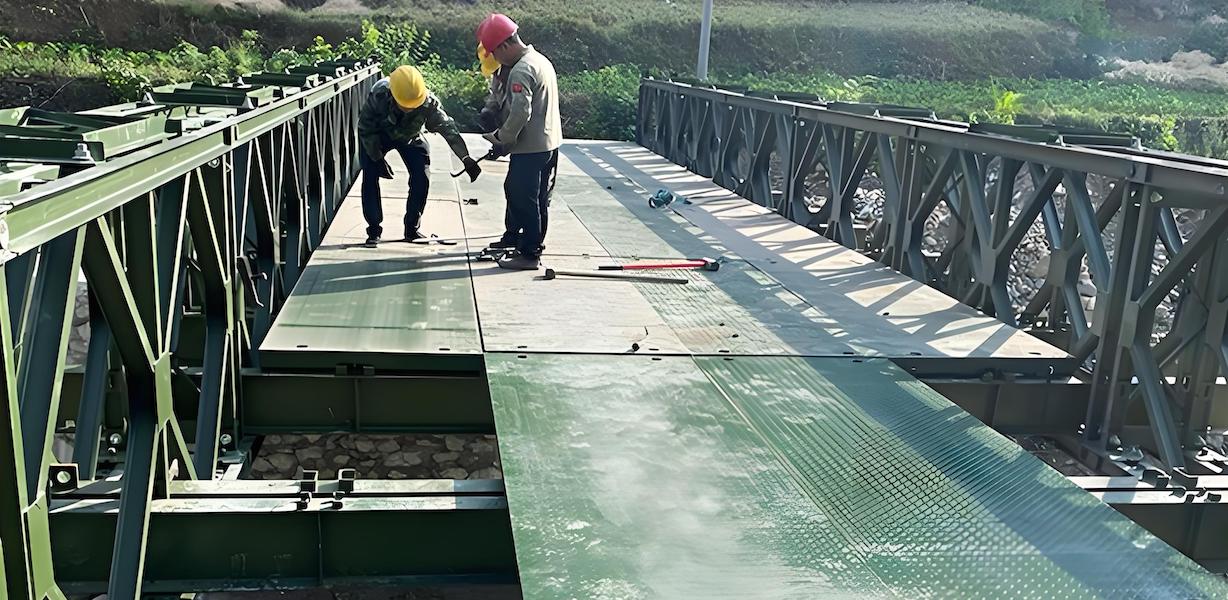
Once prefabricated, the bridge components are transported to the site. The modular nature of these bridges allows for efficient transportation, reducing logistical challenges. Upon arrival, the components are assembled using cranes and other equipment, minimizing the time spent on-site and reducing disruption to the surrounding area. The assembly process can often be completed in a matter of days, allowing for rapid deployment of the bridge. This quick turnaround is particularly advantageous in emergency situations, where restoring connectivity is critical for affected communities.
Quality assurance is a critical aspect of the construction process. Engineers and construction teams must conduct thorough inspections to ensure that the assembled bridge meets all safety and performance standards. Custom features must be tested to verify their effectiveness in the specific site conditions. This rigorous quality control process includes load testing, structural assessments, and compliance checks with local regulations. By prioritizing quality assurance, engineers can ensure that the bridge will perform reliably throughout its lifespan, providing peace of mind to stakeholders and users alike.
Custom modular steel bridges are widely used in transportation infrastructure projects. They can be designed to accommodate various types of traffic, including vehicles, bicycles, and pedestrians. Their adaptability makes them suitable for urban environments, rural areas, and even remote locations. In urban settings, these bridges can help alleviate congestion by providing alternative routes, while in rural areas, they can enhance access to essential services and promote economic development. The versatility of modular steel bridges allows them to be integrated into diverse transportation networks, improving overall connectivity.
In situations where rapid deployment is necessary, such as after natural disasters, custom modular steel bridges can provide immediate solutions. Their quick assembly and transportability make them ideal for emergency response efforts, allowing communities to restore connectivity swiftly. These temporary solutions can be designed to meet immediate needs while longer-term infrastructure solutions are developed. The ability to customize these bridges for specific emergency scenarios ensures that they can effectively address the unique challenges posed by different types of disasters.
For long-term infrastructure projects, custom modular steel bridges offer a sustainable solution. Their durability and low maintenance requirements make them a cost-effective choice for municipalities and governments looking to invest in lasting infrastructure. By utilizing high-quality materials and advanced design techniques, these bridges can withstand the test of time, reducing the need for frequent repairs or replacements. This longevity not only saves costs in the long run but also minimizes disruptions to traffic and local communities.
As technology continues to evolve, the customization of modular steel bridges will become even more sophisticated. Innovations in materials, design software, and construction techniques will enable engineers to create bridges that are not only functional but also environmentally friendly and aesthetically pleasing. The integration of Building Information Modeling (BIM) allows for enhanced collaboration among stakeholders, improving the design and construction process. These advancements will lead to more efficient and sustainable bridge solutions that can adapt to changing needs and conditions.
Sustainability is becoming a key focus in bridge design. Custom modular steel bridges can be designed with eco-friendly materials and construction practices, reducing their environmental impact. The use of recycled steel and energy-efficient manufacturing processes will likely become standard in future projects. Additionally, the incorporation of green technologies, such as solar panels and rainwater harvesting systems, can further enhance the sustainability of these structures. By prioritizing environmental considerations, engineers can contribute to the development of infrastructure that supports both economic growth and ecological preservation.
The integration of smart technologies into modular steel bridges is another trend on the horizon. Features such as sensors for monitoring structural health, traffic flow, and environmental conditions can enhance the functionality and safety of these bridges. Custom designs can incorporate these technologies to create intelligent infrastructure solutions. For example, real-time data collection can inform maintenance schedules and improve safety protocols, ensuring that bridges remain safe and functional throughout their lifespan. This shift towards smart infrastructure represents a significant advancement in the field of civil engineering, paving the way for more responsive and adaptive transportation networks.
Custom modular steel bridges represent a significant advancement in bridge design and construction. Their ability to be tailored to specific site conditions makes them a versatile solution for a wide range of applications. As technology continues to evolve, the potential for customization will only increase, paving the way for innovative and sustainable infrastructure solutions. The future of modular steel bridges is bright, with endless possibilities for enhancing connectivity and improving the built environment. By embracing customization and innovation, engineers can create bridges that not only meet the needs of today but also anticipate the challenges of tomorrow.

Environmental regulations can significantly influence the design and construction of modular steel bridges. These regulations may dictate materials used, construction methods, and environmental impact assessments. For instance, bridges in protected areas may require designs that minimize ecological disruption, while those in flood-prone regions must adhere to specific elevation and drainage standards. Compliance with these regulations is crucial for project approval and sustainability.
Beyond traditional steel, innovative materials such as high-performance concrete, fiber-reinforced polymers, and weathering steel are gaining popularity in modular bridge construction. High-performance concrete offers enhanced durability and resistance to environmental factors, while fiber-reinforced polymers provide lightweight and corrosion-resistant alternatives. Weathering steel develops a protective rust layer, reducing maintenance needs and extending the bridge's lifespan.
Modular steel bridges can be designed to withstand seismic activity by incorporating features such as flexible joints, base isolators, and reinforced connections. These elements allow the bridge to absorb and dissipate seismic forces, reducing the risk of structural failure during an earthquake. Engineers can also use advanced modeling techniques to simulate seismic impacts and optimize the design for specific seismic conditions.
Community preferences play a vital role in the customization of modular steel bridges. Engaging with local stakeholders during the design process helps ensure that the bridge meets aesthetic, functional, and cultural needs. Community input can influence design elements such as color, shape, and additional features like pedestrian walkways or viewing platforms. This collaborative approach fosters a sense of ownership and acceptance among residents, enhancing the bridge's integration into the local environment.


