

Views: 221 Author: Site Editor Publish Time: 2025-04-24 Origin: Site


Content Menu
● Understanding Bailey Bridges
● Vehicle Support Capabilities
>> Design Variations for Vehicle Use
● Applications of Bailey Bridges
>> Military Use
● Limitations of Bailey Bridges
>> Environmental Considerations
● Frequently Asked Questions regarding Bailey Bridges
>> 1. What are the typical weight restrictions for vehicles crossing a Bailey bridge?
>> 2. How do engineers assess site conditions before installing a Bailey bridge for vehicle use?
>> 3. What maintenance is required to ensure a Bailey bridge remains safe for vehicular traffic?
>> 4. Can Bailey bridges be used in permanent applications?
>> 5. What materials are commonly used in the construction of Bailey bridges?
Bailey bridges are a type of modular bridge that has been widely used since their invention during World War II. They are known for their ease of assembly, portability, and versatility. This article explores the capabilities of Bailey bridges, particularly focusing on their ability to support vehicles as well as pedestrians. We will delve into the design, construction, applications, and limitations of Bailey bridges, providing a comprehensive understanding of their functionality.
The Bailey bridge was developed by the British during World War II as a means to quickly construct bridges in combat zones. Named after its designer, Sir Donald Bailey, the bridge was intended to be lightweight yet strong enough to support military vehicles. Its modular design allows for rapid assembly and disassembly, making it an ideal solution for temporary crossings. The original design was a response to the urgent need for reliable infrastructure in war-torn areas, where traditional bridge-building methods were impractical due to time constraints and resource limitations. Over the decades, the Bailey bridge has evolved, but its core principles of simplicity and efficiency remain unchanged, making it a staple in both military and civilian engineering.
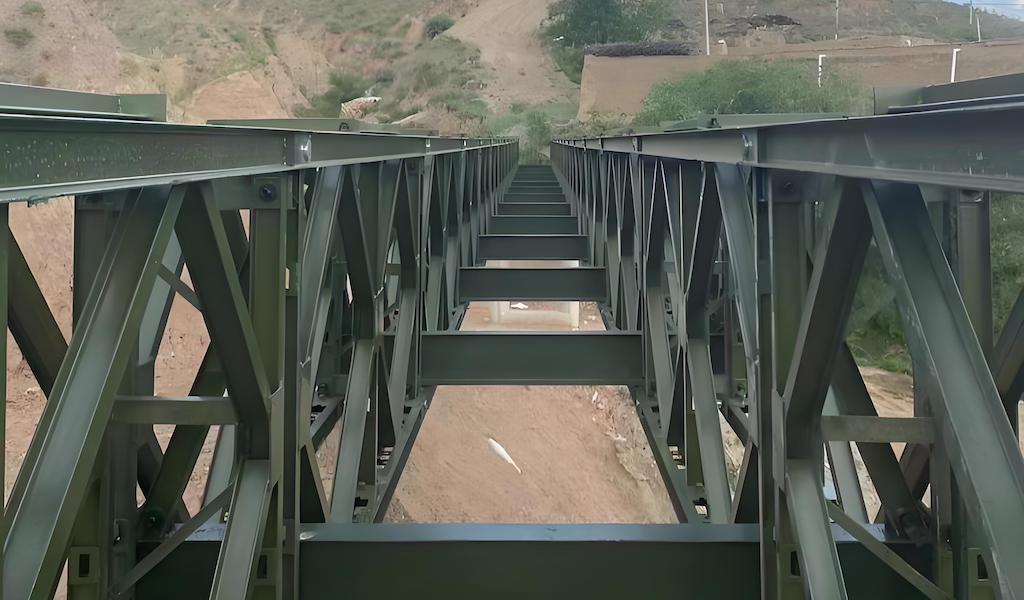
Bailey bridges are constructed from prefabricated steel components, which can be easily transported and assembled on-site. The primary elements of a Bailey bridge include panels, trusses, and girders. The panels are made of steel plates and are connected to form a lattice structure that provides strength and stability. The trusses distribute the load evenly across the bridge, allowing it to support various types of traffic. This design not only enhances the structural integrity of the bridge but also allows for flexibility in length and width, accommodating different site conditions and traffic requirements. The use of standardized components means that repairs and replacements can be made quickly, further extending the lifespan of the bridge.
One of the most significant advantages of Bailey bridges is their load-bearing capacity. Depending on the specific design and materials used, a Bailey bridge can support a range of vehicles, from light cars to heavy military trucks. The standard Bailey bridge can typically accommodate loads of up to 40 tons, making it suitable for various applications beyond pedestrian use. This capability is particularly important in scenarios where heavy equipment needs to cross, such as in construction sites or during military operations. Engineers can calculate the required load capacity based on expected traffic, ensuring that the bridge remains safe and functional under various conditions. Additionally, the ability to support heavy loads makes Bailey bridges a reliable choice for emergency services, allowing fire trucks and ambulances to access areas that may otherwise be cut off.
Bailey bridges can be customized to meet specific load requirements. For instance, the design can be modified to include additional panels or reinforcements to increase the load capacity. This flexibility allows engineers to create bridges that can support heavier vehicles, such as fire trucks or construction equipment, while still maintaining the ease of assembly that Bailey bridges are known for. The modular nature of the bridge means that it can be adapted to different scenarios, whether it’s a temporary crossing for a few weeks or a more permanent solution for several years. Furthermore, advancements in materials and engineering techniques have led to the development of hybrid designs that incorporate modern materials, enhancing the overall performance and durability of Bailey bridges.

Bailey bridges were initially designed for military applications, and they continue to be used by armed forces around the world. Their ability to be rapidly deployed in remote or challenging environments makes them invaluable for military operations. They can be used to create temporary crossings over rivers, ravines, or damaged infrastructure, allowing for the swift movement of troops and equipment. The strategic advantage of being able to establish a bridge in a matter of hours can be crucial in combat situations, where time is of the essence. Additionally, the lightweight nature of Bailey bridges means they can be transported by air, further enhancing their utility in military logistics.
In addition to military applications, Bailey bridges are also utilized in civil engineering projects. They are often employed as temporary solutions during road construction or repairs, providing essential access for vehicles and pedestrians. Their modular nature allows for quick installation, minimizing disruption to traffic flow. Civil engineers appreciate the cost-effectiveness of Bailey bridges, as they can be a more affordable option compared to traditional bridge construction methods. Moreover, the ability to quickly erect a bridge can significantly reduce project timelines, allowing for faster completion of infrastructure improvements. In urban areas, where road closures can lead to significant traffic delays, Bailey bridges offer a practical solution to maintain connectivity.
Bailey bridges play a crucial role in disaster relief efforts. After natural disasters such as floods or earthquakes, existing infrastructure may be damaged or destroyed. Bailey bridges can be rapidly deployed to restore access to affected areas, enabling emergency services to deliver aid and support recovery efforts. The speed at which these bridges can be assembled is vital in crisis situations, where every moment counts. Humanitarian organizations often rely on Bailey bridges to facilitate the movement of supplies and personnel, ensuring that help reaches those in need as quickly as possible. Additionally, their adaptability allows them to be used in a variety of terrains, from urban environments to rural landscapes, making them a versatile tool in disaster response.
While Bailey bridges are versatile, they are not without limitations. One significant concern is their environmental impact. The use of steel in construction raises questions about sustainability, particularly in terms of resource extraction and energy consumption during manufacturing. Additionally, the installation of a Bailey bridge may disrupt local ecosystems, especially in sensitive areas. Environmental assessments are often necessary before deploying a Bailey bridge, ensuring that potential impacts on wildlife and habitats are considered. Engineers and planners are increasingly looking for ways to mitigate these effects, such as using recycled materials or designing bridges that minimize their footprint on the environment.
Bailey bridges are functional but may not always blend well with their surroundings. Their industrial appearance can be a drawback in areas where aesthetics are a priority. In urban settings or scenic locations, the visual impact of a Bailey bridge may be considered undesirable, leading to resistance from local communities. To address these concerns, some engineers have explored ways to enhance the visual appeal of Bailey bridges, such as incorporating landscaping or using decorative elements. Additionally, public engagement in the planning process can help address aesthetic concerns, allowing communities to feel more involved in the decision-making process regarding infrastructure projects.
Bailey bridges are capable of supporting vehicles, making them a versatile solution for various applications. Their design allows for rapid assembly and disassembly, making them ideal for military, civil engineering, and disaster relief efforts. While they have limitations, such as environmental and aesthetic concerns, their benefits often outweigh these drawbacks in situations where quick access is essential. As infrastructure needs continue to evolve, Bailey bridges will likely remain a valuable tool in the engineering toolkit, capable of meeting the demands of both pedestrian and vehicular traffic. The ongoing development of new materials and technologies will further enhance their functionality, ensuring that Bailey bridges remain relevant in the face of changing engineering challenges.
Bailey bridges can typically support loads ranging from 20 to 40 tons, depending on the specific design and configuration. Some variations can be engineered to support even heavier loads, making them suitable for military vehicles and heavy construction equipment.
Engineers evaluate several factors, including soil stability, water flow, and existing infrastructure. They conduct site surveys to determine the best location for the bridge, ensuring it can safely support the expected traffic loads and withstand environmental conditions.
Regular inspections are essential to check for signs of wear, corrosion, or structural damage. Maintenance may include repainting to prevent rust, tightening connections, and replacing any damaged panels or components. Routine assessments help ensure the bridge remains safe and functional.
While Bailey bridges are primarily designed for temporary use, they can be adapted for more permanent applications with appropriate reinforcements and modifications. However, they are often replaced with more aesthetically pleasing and durable structures for long-term use.
Bailey bridges are primarily constructed from steel, which provides strength and durability. Some modern designs may incorporate composite materials or aluminum to reduce weight while maintaining structural integrity, enhancing portability and ease of assembly.


